How Big Is a 25-Liter Backpack? The Ultimate Guide to Size, Capacity, and Buying
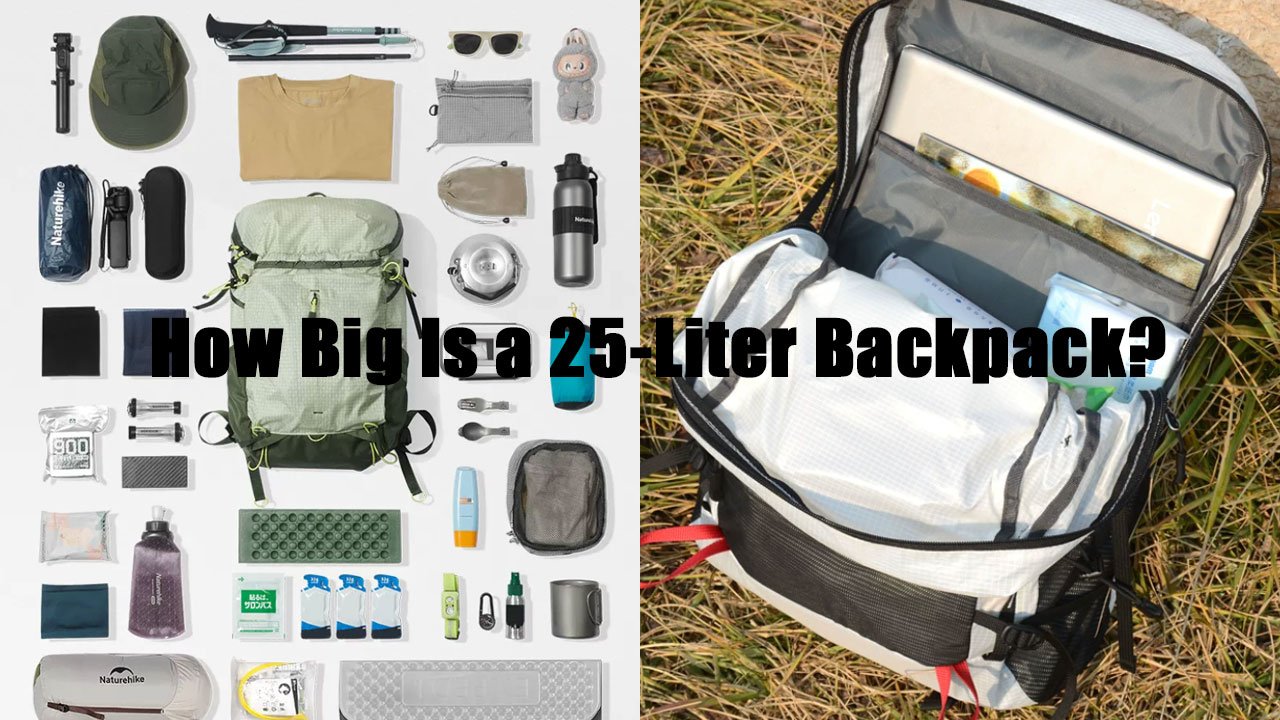
Based on long-standing industry consensus in the luggage sector and feedback from extensive real-world testing by Amazon users, 20–30 L is considered the ideal capacity range for everyday backpacks, with 25 L serving as the mid-range benchmark.When you recommend the Gold Standard 25-Liter Backpack to clients, they may often ask, “How big is a 25-liter backpack?” Although it’s just a small question, if your answer makes them feel you’re not professional enough, you could lose their trust and the order as a result. That’s why I’ve written this separate article, which breaks down the backpack’s storage capabilities, dimensions, capacity, and weight; covers 25-liter backpack styles and storage solutions for various scenarios; and compares it to other sizes. A Comprehensive Guide to “How Big Is a 25-Liter Backpack?” When your clients ask this kind of question, you can simply copy and paste the relevant content from this article as your response, or share this ultimate guide with them. By demonstrating your expertise through detailed and comprehensive information, you’ll win over clients and secure their orders.
(As an aside: Since I get asked “How big is a 25-liter backpack?” almost every day while handling custom bag wholesale orders, I decided to write this article. Now everything is simple and professional—I just copy and paste the information they want to know.)
Quick Takeaway: What Can You Pack in a 25-Liter Backpack?
When your project client or supervisor asks, “How big is a 25-liter backpack?” the simplest and most straightforward way to answer is to tell them exactly what items it can hold. Here’s a quick reference table to help you provide the answer your client is looking for more efficiently:
| Usage Scenario | Items That Can Be Stored | Remarks |
| Daily Commute | 15.6‑16‑inch laptop, power adapter, mouse, A4 documents / folders, umbrella, water bottle, wallet, keys, light snacks | Standard full load: approx. 5‑6 kg. Bag size fits city subway and office environments |
| School / College Students | Multiple A4 textbooks, notebooks, folders, stationery sets, 15.6‑inch laptop, water bottle, lunch box, small sports accessories | Holds supplies for a full day of classes without excessive bulk |
| 1‑2 Day Short Overnight Trip | 15.6‑inch laptop, 2 sets of change‑of‑clothes, undergarments & socks, toiletries kit, charger, umbrella, lightweight outer jacket | Suitable for overnight stays; size complies with carry‑on luggage standards for most airlines |
| Light‑Weight Day Hike | Water bladder / water bottle, lightweight windbreaker, simple packed lunch & snacks, first‑aid kit, hat, power bank, small essentials | Not suitable for multi‑day heavy‑load hiking |
| Fitness & Sports | Workout change‑of‑clothes, towel, toiletries, water bottle, sneakers, personal electronics | Fits one pair of standard sneakers; does NOT fit large‑size basketball shoes |
| Same‑Day Business Trip | Business laptop, folders, business cards, charger, lightweight suit jacket, travel toiletries kit | For one‑day round‑trip business travel; no checked luggage required |
| City Sightseeing | Camera + lenses, power bank, umbrella, drinking water, souvenirs, lightweight sun‑protective jacket | Lightweight carry, ideal for long‑hours urban walking tours |
| Everyday Tactical EDC | Tactical tool pouch, flashlight, spare power source, first‑aid kit, PPE, 15.6‑inch laptop | For field duty & urban EDC; not built for heavy combat gear |
| Technician Field Service | Assorted screwdriver sets, pliers, hand tools, digital multimeter, 15.6‑inch work laptop, electrical tape, work gloves, power bank, basic PPE | For light‑to‑moderate on‑site repair; cannot accommodate large heavy power tools |
Tip: When answering, consider the customer’s profession or determine their industry based on the selected bag category. Providing examples of storage capacity using items they use in their daily life will help project clients better understand your response and perceive it as more professional.(At the end of this article, you can request a free physical sample of the 25-liter backpack to learn more about its features.)
25-Liter Backpack: A Breakdown of Dimensions, Capacity, and Weight
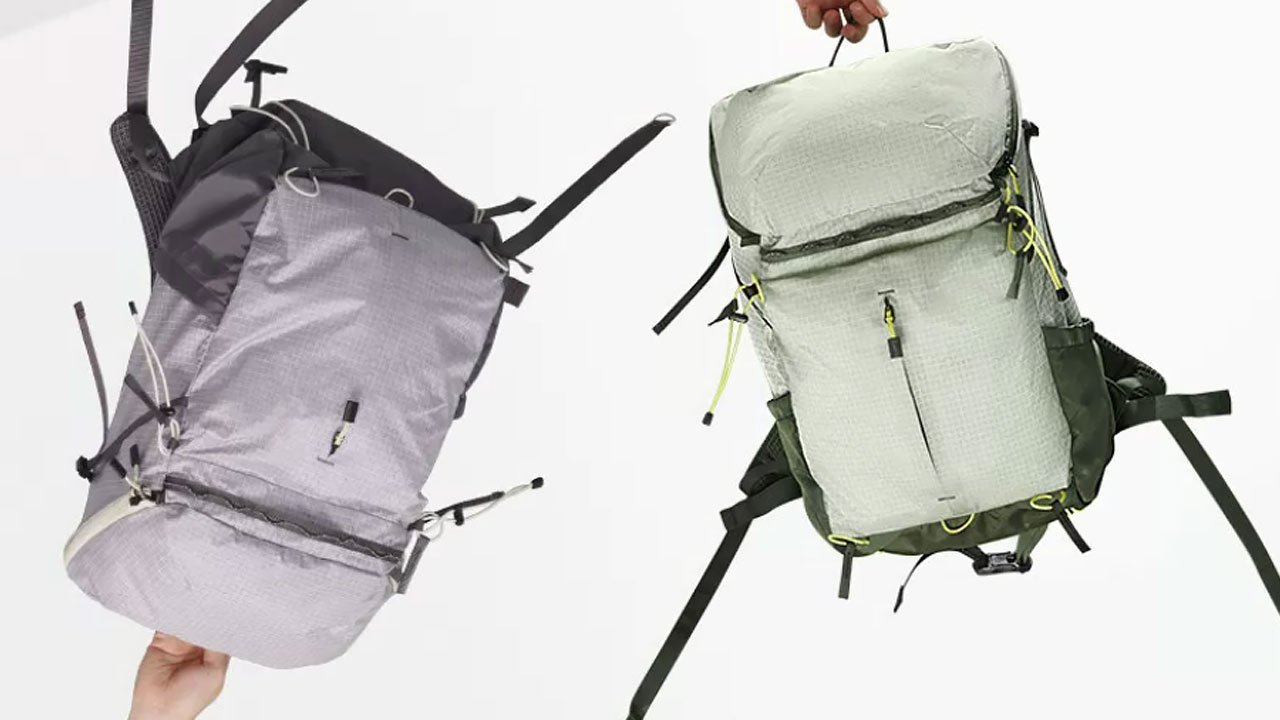
When searching for the keyword “25-liter backpack” on Amazon and various independent bag retail platforms, the phrase “one bag for work, school, and short trips” frequently appears in customer reviews. This is a capacity that customers around the world have spontaneously identified as the ideal balance. Now, I’ll break it down by dimensions, capacity, and the net weight of the materials used to help you understand the details.
size
Typical Dimensions
Most 25-liter backpacks range in height from 17 to 19 inches (43.2–48.3 cm), with a width typically between 11 and 13 inches (27.9–33.0 cm) and a depth between 6 and 9 inches (15.2–22.9 cm). These dimensions are sufficient to accommodate a standard 15–16-inch laptop and allow the backpack to conform to the contours of an adult’s back when worn. This design ensures ease of movement while navigating daily commutes on subways and buses, as well as in classrooms, offices, and construction sites.
| Parameter | Inches | Centimeters | Key Notes |
| Backpack Height | 17‑19 in | 43.2‑48.3 cm | Fits adult torso; accommodates 15‑16‑inch laptops |
| Backpack Width | 11‑13 in | 27.9‑33.0 cm | Slim side profile; avoids bumping in crowded spaces |
| Backpack Depth | 6‑9 in | 15.2‑22.9 cm | Controls overall thickness to prevent excessive bulk |
| Overall Compliance | Max 19×13×9 in | 48.3×33.0×22.9 cm | Meets most airlines’ personal‑item carry‑on requirements; fits under airplane seats |
If your project client is assigned a task that requires long-distance travel (a common situation for equipment engineers), the 25-Liter Backpack meets the carry-on size restrictions of most airlines and can be stored directly under the airplane seat for easy access.
How to Measure
Some customers may even have a backpack they’ve been using for a long time but still don’t know its exact dimensions. When a customer asks you about the dimensions and capacity of a backpack they purchased previously, if you’ve lost that information, you can simply tell them how to measure it:
Measurement Preparation:
- Tools: Flexible tape measure (preferably a tailor’s tape measure), paper and pen or a smartphone to record data; rigid rulers are only suitable for flat samples and are not suitable for flexible backpacks.
- Preliminary Steps: Empty the backpack of all items, close all zippers, and allow the backpack to lie flat naturally. Do not pull on the fabric forcefully, and do not squeeze or flatten it.
Measurement Points:
- Height: From the lowest point on the bottom surface of the backpack → measured vertically to the top of the main compartment; do not include the top handle, shoulder straps, or external webbing.
- Width: Measure horizontally across the widest point on either side of the main body of the backpack; do not include any outward protrusions from side pockets.
- Depth: Measure vertically from the fabric of the back panel to the front of the main compartment; do not include any outward protrusions from the front pocket or side pockets.
Volume Calculation
- Formula: Height (cm) × Width (cm) × Depth (cm) ÷ 1000 × 0.70–0.75 (reduction factor to account for the space occupied by fabric thickness, partitions, zippers, and internal linings) ≈ Approximate Volume (L)
- Example: External dimensions 48 cm × 33 cm × 23 cm
48 × 33 × 23 = 36,432 cm³; 36,432 ÷ 1,000 = 36.43; 36.43 × 0.7 ≈ 25.5 L, which falls within the standard 25 L backpack category.
- Precise testing: Fill the backpack to normal capacity with uncompressed plastic pellets or beads, then pour all the pellets into a measuring cup to read the volume and obtain the actual number of liters; although water can also be used for capacity calculations, it is not suitable for bag products.
Tip: When a client asks about your project, it’s best to either take the measurements for them or help them do the calculations after they’ve taken their own (no one likes complicated formulas). Then let them know which everyday items will fit. This is easy for anyone to understand.
Capacity
When your client questions whether the 25-liter backpack is a bit too small to hold much, you can clearly tell them that it’s not small at all and can hold almost all the items you’d typically need for daily outings:
- Electronic devices: 15–16-inch laptop, power adapter, mouse, tablet, portable charger
- Personal items: Wallet, keys, sunglasses, umbrella, water bottle
- Clothing: 2–3 changes of clothes, a light jacket, underwear and socks—suitable for a short overnight trip of 1–2 nights
- Field Work: Basic hand tools, a multimeter, electrical tape, work gloves, a notebook for work documents
- Daily Supplies: Snacks, travel-size personal hygiene kit, sunscreen
Note: A 25-liter tactical backpack with a MOLLE system that allows for the attachment of mesh pouches to increase external capacity; or for securing tripods, hiking poles, power tools, and more.
Weight
Most 25-liter tactical backpacks typically weigh between 1.0 kg and 2.1 kg (2.2–4.6 lbs). The weight is primarily determined by the materials used and the hardware (which accounts for a relatively small proportion, 8%–12%). Here, I’ve listed the materials commonly used in the manufacture of 25-liter tactical backpacks, along with their weight ranges:
| Fabric Material | Finished Weight of 25L Backpack (kg) | Finished Weight (lbs) | Remarks |
| 500D Cordura Nylon | 1.4‑1.6 kg | 3.1‑3.5 lbs | Balanced wear‑resistance and tear‑resistance. Suitable for commuting, field work and outdoor use; can be finished with PU/TPU water‑repellent coating |
| 1000D Cordura Nylon | 1.6‑1.8 kg | 3.5‑4.0 lbs | High strength and excellent abrasion resistance; heavier weight. Ideal for frequent rough‑use conditions |
| 420D Rip‑stop Standard Nylon | 1.2‑1.4 kg | 2.6‑3.1 lbs | Light‑weight fabric for travel and daily commuting; less durable than Cordura |
| 600D Polyester Oxford | 1.1‑1.3 kg | 2.4‑2.9 lbs | Mass‑market general‑purpose fabric; light‑weight and cost‑effective. PU coating delivers water repellency |
| 900D Polyester Oxford | 1.3‑1.5 kg | 2.9‑3.3 lbs | Thickened polyester, better abrasion resistance than 600D. For students, field service and short trips |
| 12oz Polyester‑Cotton Blend Canvas | 1.5‑1.7 kg | 3.3‑3.7 lbs | Sturdy texture, vintage look. Not water‑resistant by default; extra water‑repellent treatment required |
| X‑Pac VX21 Laminated Composite Fabric | 1.2‑1.35 kg | 2.6‑3.0 lbs | Premium lightweight fabric with built‑in waterproof performance. Widely used in outdoor hiking & travel packs; high cost |
| Dyneema Composite Fabric | 1.0‑1.2 kg | 2.2‑2.6 lbs | Ultra‑light and high‑strength, optimized for lightweight travel; very high procurement cost |
| 600D Recycled Polyester | 1.15‑1.35 kg | 2.5‑3.0 lbs | Eco‑friendly fabric with performance comparable to standard 600D polyester. For green‑focused B2B projects and promotional custom gifts |
| 16oz 100% Cotton Canvas | 1.6‑1.9 kg | 3.5‑4.2 lbs | Cotton‑rich texture, artistic appearance; heavy weight, gains weight when wet |
| 420D Polyester Rip‑stop | 1.15‑1.3 kg | 2.5‑2.9 lbs | Lightweight tear‑resistant material for travel and student backpacks; moderate abrasion resistance |
If your project client is looking for a lighter weight, we recommend the 25L polyester tactical backpack. Although backpacks made of other materials weigh more than polyester ones, there isn’t actually a very noticeable difference when carrying an empty backpack.
25-Liter Backpack Styles and Storage
When your customers ask for your help in recommending a suitable 25-liter backpack, it’s not enough to simply suggest one that meets their capacity needs. You need to understand their typical usage scenarios and then recommend the appropriate category—this will help your brand earn more positive reviews. Here are some common categories of 25-liter backpacks:
25l laptop backpack
When commuting with a laptop every day, everyone wants a bag that’s lightweight enough to carry easily while still protecting the laptop inside from bumps and scrapes. The 25L laptop backpack meets these needs with its practical capacity and compact design:
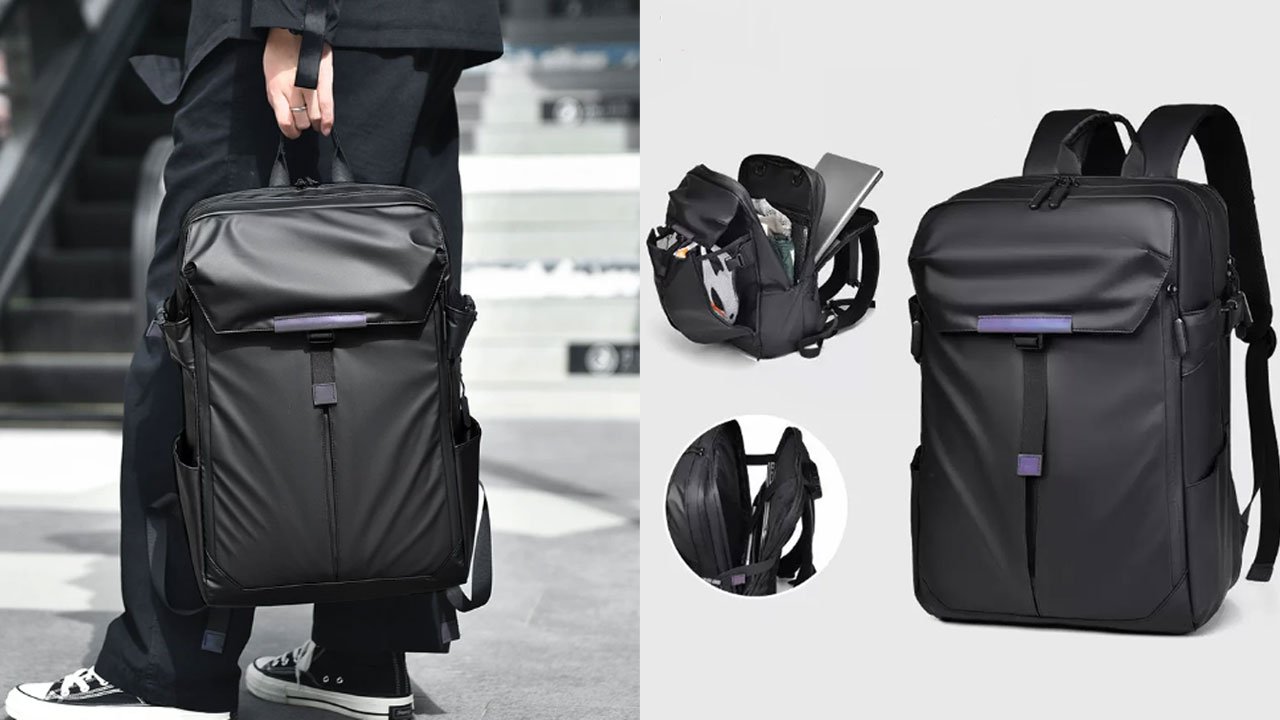
- Size Compatibility: Standard height 17–19 inches (43.2–48.3 cm), width 11–13 inches (27.9–33.0 cm), depth 6–9 inches (15.2–22.9 cm); accommodates mainstream 15–16-inch laptops.
- Internal Structure:
- 1. Laptop Compartment: EVA foam / high-density PU foam cushioning, scratch-resistant flannel lining, and reinforced corners for impact protection; most models include a tablet compartment.
- 2. Organizer Pockets: Designed to hold chargers, mice, cables, documents, and stationery; some models feature a hidden security pocket and a side water bottle holder.
- Capacity: In addition to a laptop and office equipment, a 25L laptop backpack can hold 2–3 sets of a change of clothes and a light jacket, making it suitable for short overnight trips of 1–2 nights.
- Fabric Weight Range: The overall weight of the finished product ranges from 1.0 to 2.1 kg. It can be made from a variety of materials, ranging from lightweight polyester and recycled polyester to nylon, Cordura, canvas, and high-end X-Pac fabrics.
The laptop compartment, foam padding, and multiple pockets of the 25L laptop backpack take up some of the internal space; after packing your belongings, we recommend measuring the dimensions to ensure the bag does not exceed airline carry-on restrictions.
25l hiking backpack
When backpacking, compared to leg fatigue, the pressure marks on the shoulders, the stuffiness on the back, and the backpack shifting downward tend to cause users to feel more exhausted and burdened. A 25L hiking backpack isn’t too bulky, and the added padding and ventilation on the shoulders and back panel make the hike much more comfortable:
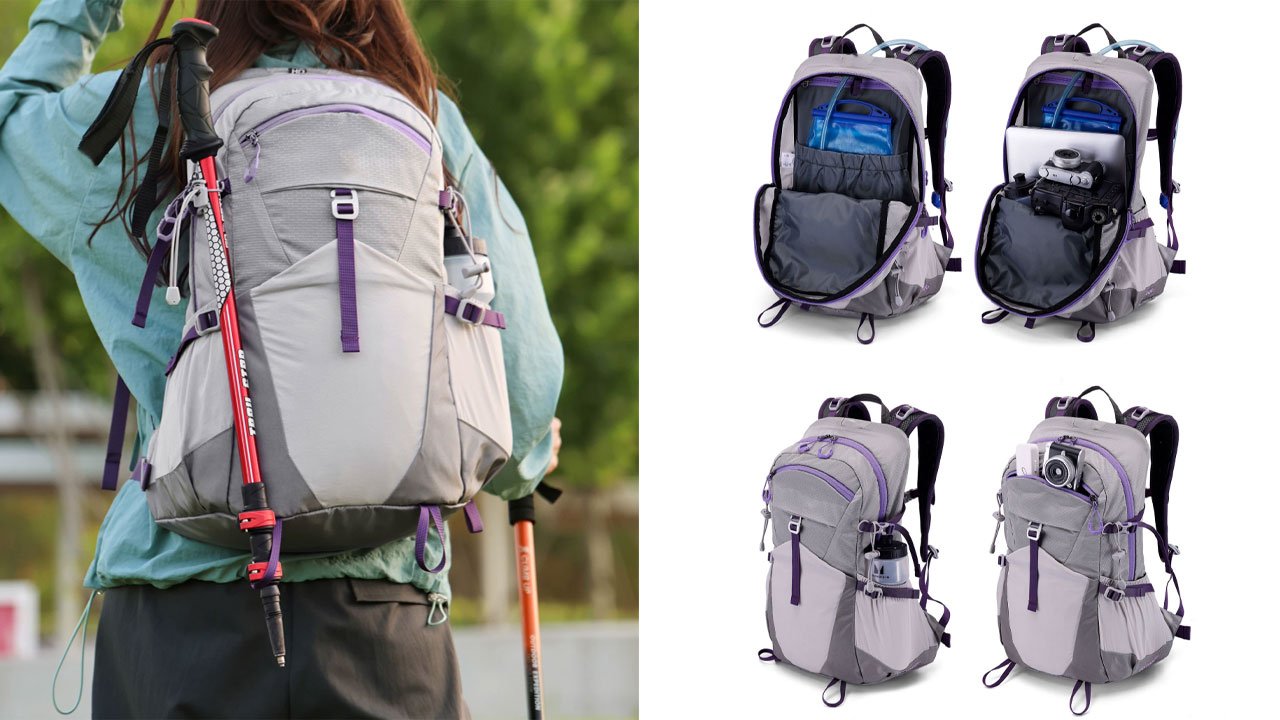
- Size Compatibility: Standard height 18–20 inches (45.7–50.8 cm), width 10–12 inches (25.4–30.5 cm), depth 7–10 inches (17.8–25.4 cm); suitable for day hikes and light 1–2-night camping trips
- Internal Structure:
1. Main Compartment: Wide-opening design, partially featuring a roll-top or flap closure
2. Hydration System: Comes standard with a dedicated hydration compartment and a pre-drilled tube outlet
3. External Strap Attachment Points: For securing trekking poles, helmets, and ice axes
4. Organized Storage: Separate compartments for headlamps, first-aid kits, and energy snacks; some models feature elastic side pockets to accommodate larger water bottles.
- Carrying Performance: Specially designed outdoor ergonomic back panel with ventilation channels to reduce back sweating; padded, breathable shoulder straps paired with a chest strap and adjustable hip belt to distribute the load; hip pocket allows for quick access to small items, reducing physical strain during long hikes.
- Capacity: A 25L hiking backpack is designed to carry hiking gear, rain gear, food and water, and first-aid supplies; it can also hold 1–2 sets of lightweight spare clothing, making it suitable for day hikes or minimalist 1–2-night light camping trips.
- Fabric Weight Range: The finished product weighs 0.9–2.0 kg. Available fabric options include tear-resistant polyester, recycled polyester, ripstop nylon, Cordura, and X-Pac composite fabrics; key fabric characteristics to look for include tear resistance, abrasion resistance, and DWR (durable water repellency).
The external attachment points on the 25L hiking backpack—designed for hanging trekking poles, flashlights, walkie-talkies, and other items—are not included in the 25L capacity, and the ventilated back panel, hip belt, and webbing loops will all add to the pack’s weight.
25l tactical backpack
Tactical backpacks aren’t just for military personnel and police officers. If your project clients need to carry heavy tools on a daily basis and use them frequently, a 25L tactical backpack—with its lightweight design, compact size, durability, tear resistance, and MOLLE webbing for attaching various tools—can help them tackle complex work environments with greater ease:
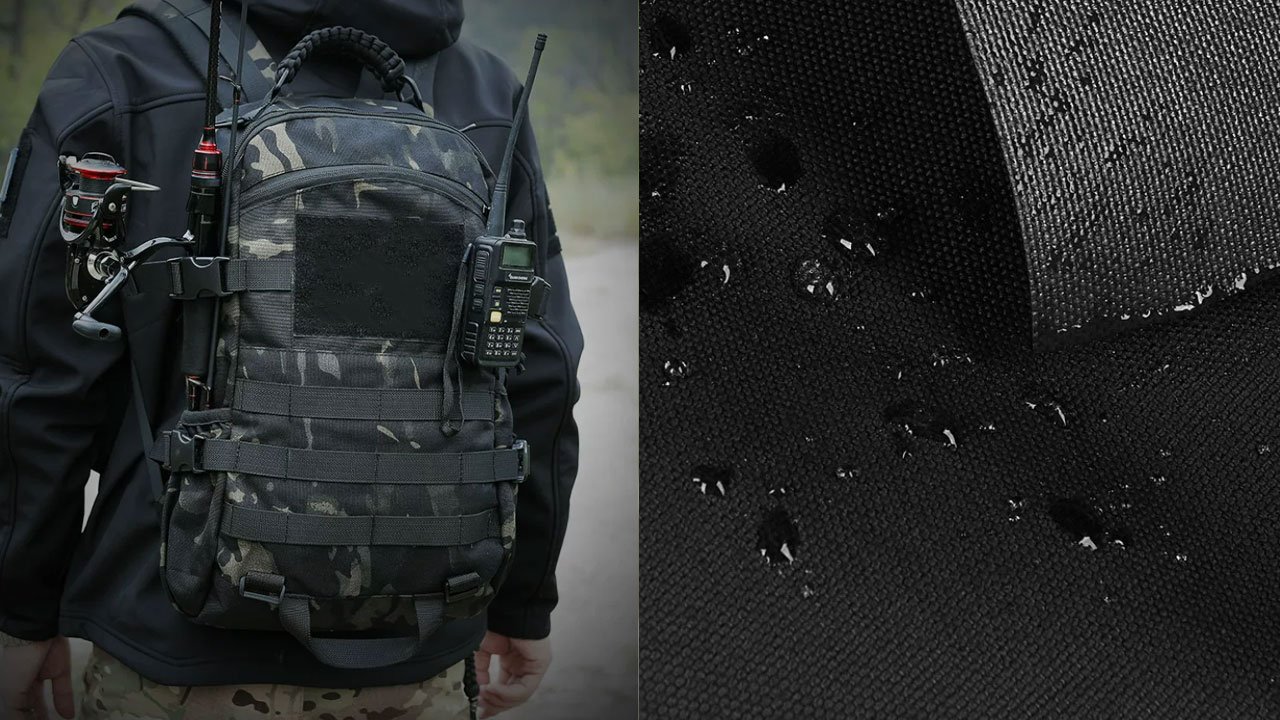
- Size Compatibility: Standard height 18–20 inches (45.7–50.8 cm), width 10–12 inches (25.4–30.5 cm), depth 7–10 inches (17.8–25.4 cm). External volume is approximately 20.65–39.33 L; after accounting for space occupied by the back panel, fabric, and compartments, the nominal internal capacity is 25 L.
- Internal Structure:
1. The main compartment typically features a wide-opening flap design; some models include a dedicated hydration bladder compartment with a hose outlet.
2. Multiple organized pockets are provided for storing tools, documents, electronic devices, and personal items.
3. Some models feature a padded laptop compartment (with EVA foam or high-density PU foam cushioning, scratch-resistant fleece lining, and reinforced corners for impact protection).
- External Structure: The pack features MOLLE/PALS webbing attachment points for expanding with additional pouches; elastic side pockets can hold water bottles or gloves; multiple D-ring attachment points are provided for hanging small accessories.
- Carrying Performance: Ergonomically designed, padded back panel with ventilation channels; wide, padded shoulder straps with a standard chest strap and a removable waist belt to distribute the load; the waist belt includes a small waist pouch for quick access to small items, making it suitable for extended wear.
- Capacity: The 25L interior accommodates personal gear, field tools, clothing, food, and water, with space for 1–2 sets of lightweight spare clothing, making it suitable for day trips and short excursions.
- Fabric Weight Range: Total weight of the finished product is 1.0–2.1 kg; available fabric options include 600D polyester, recycled polyester, 420D ripstop nylon, 500D/1000D Cordura nylon, and X-Pac composite fabric.
However, when it comes to everyday, high-intensity use of a 25-liter backpack, you can recommend a 25-liter tactical backpack with a laptop compartment to your customers—after all, there’s hardly a job these days that doesn’t require a laptop.
25l travel backpack
When people think of travel bags, the first thing that comes to mind is that they’re big, heavy, and backpack-like. But for short trips of 1–3 days, no one wants to carry them—which is where a 25L travel backpack, with its ideal capacity, comes in:
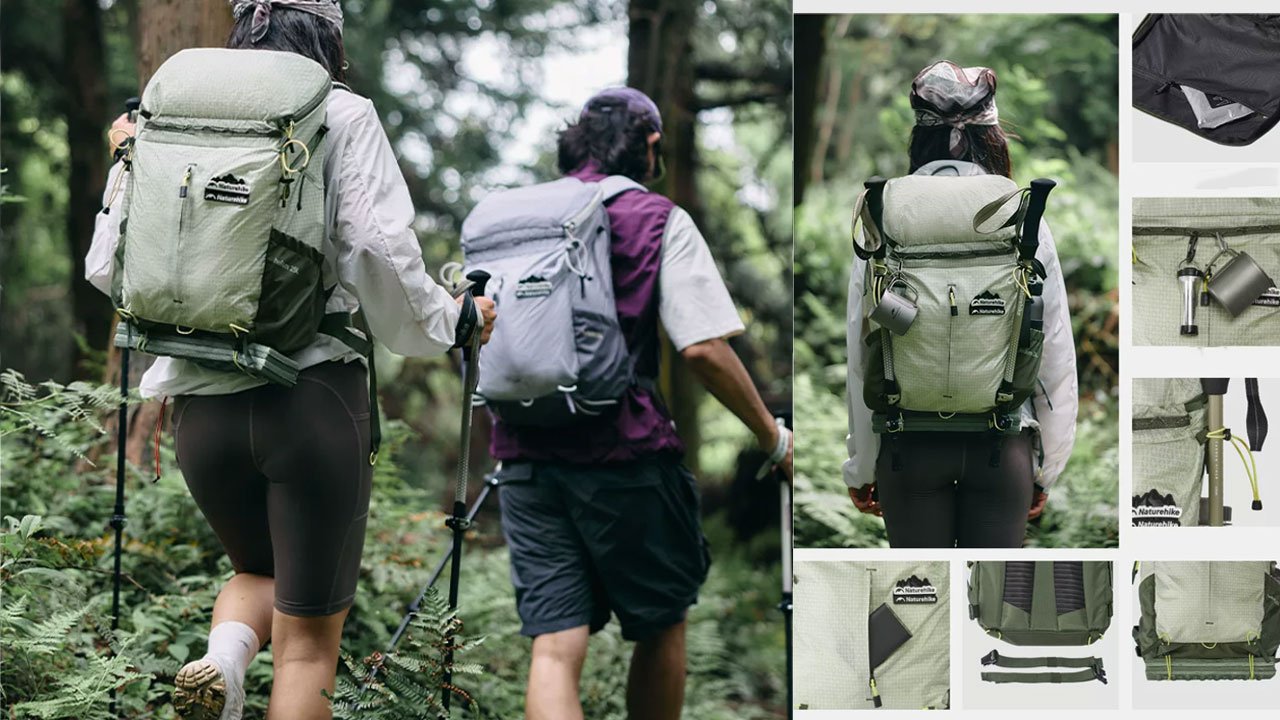
- Size Compatibility: Standard dimensions: 17–19 inches (43.2–48.3 cm) in height, 11–13 inches (27.9–33 cm) in width, and 6–9 inches (15.2–22.9 cm) in depth. Meets the carry-on luggage standards of the vast majority of airlines and can be stored directly under the seat on the plane without needing to be checked.
- Internal Design: Features a dedicated laptop compartment, a private hidden pocket, and card slots for storing passports and boarding passes. It also includes a separate dry/wet compartment for toiletries and damp items; side pockets hold water bottles and folding umbrellas for easy access.
- Carrying Comfort: Padded shoulder straps paired with a breathable back panel enhance comfort and reduce strain when rushing through airports or walking long distances in the city.
- Capacity: The 25-liter capacity is ideal for 1–3-day trips, accommodating a change of clothes, a toiletries bag, a 15–16-inch laptop, chargers, and travel documents without becoming bulky when fully packed.
- Fabric Weight Range: The product weighs 0.7–1.2 kilograms. Common materials include 420D–600D polyester or nylon with a water-repellent coating that protects against light rain and splashes, balancing durability with lightweight construction.
The 25L travel backpack is ideal for short business trips, weekend city getaways, and layovers; however, it is not suitable for multi-day backpacking trips with heavy gear.
25l gym backpack
Helps you quickly switch from work to the gym after your daily shift, while maintaining a compact size and a 25L capacity that’s just right for carrying your everyday workout gear:
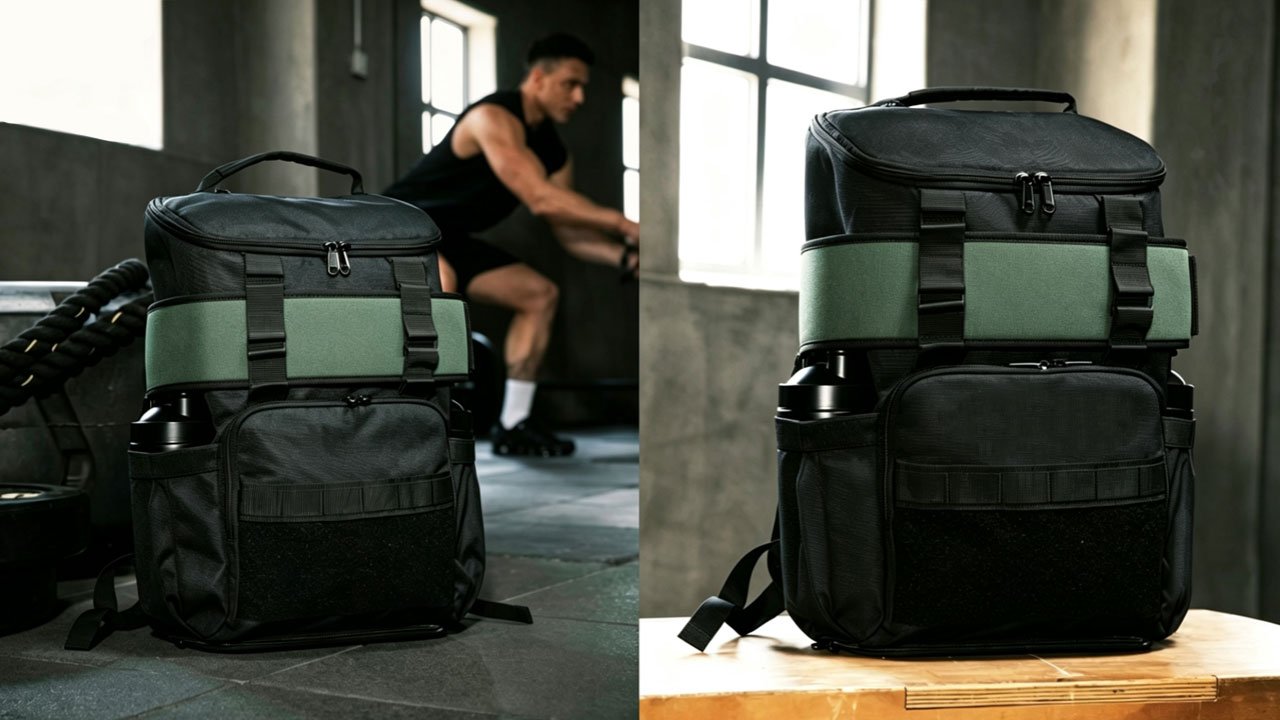
- Size Compatibility: Standard dimensions: 17–19 inches (43.2–48.3 cm) in height, 11–13 inches (27.9–33 cm) in width, and 6–9 inches (15.2–22.9 cm) in depth. These dimensions fit the vast majority of gym lockers, and the bag won’t look too bulky when carried during your daily commute.
- Internal Design: Features a dedicated shoe compartment to keep dirty shoes separate and prevent them from soiling clean clothes; an internal dry/wet divider allows you to store sweaty clothes and toiletries separately. Multiple built-in pockets make it easy to organize headphones, keys, and various workout accessories; stretchy side pockets hold water bottles and workout gloves for quick access.
- Carrying Comfort: Padded shoulder straps and a back panel help alleviate the strain of carrying heavy gym gear; a top carry handle makes it easy to pick up and carry the bag around the gym.
- Capacity: The 25-liter capacity is ideal for regular gym use, accommodating workout clothes, towels, sneakers, water bottles, and protective gear, while also fitting a 15–16-inch laptop—making it suitable for both the gym and commuting without appearing overly bulky.
- Fabric Weight Range: The product weighs 0.75–1.3 kilograms. Common materials include 600D polyester or 420D nylon, which are abrasion-resistant and stain-resistant. They feature a water-repellent coating that protects against sweat and water splashes, making them easy to wipe clean in a gym environment.
The 25L gym backpack is suitable for both daily workouts and commuting to the gym, but it is not suitable for carrying a variety of sports gear for multi-day training camps.
25l school backpack
For students who are still growing and developing, using a backpack that is too large can put a significant strain on their backs and may even cause their posture to become distorted due to the weight pulling downward. The 25L school backpack, however, is not only the right size but also provides ample space for carrying textbooks and a lunchbox every day, and fits standard school lockers:
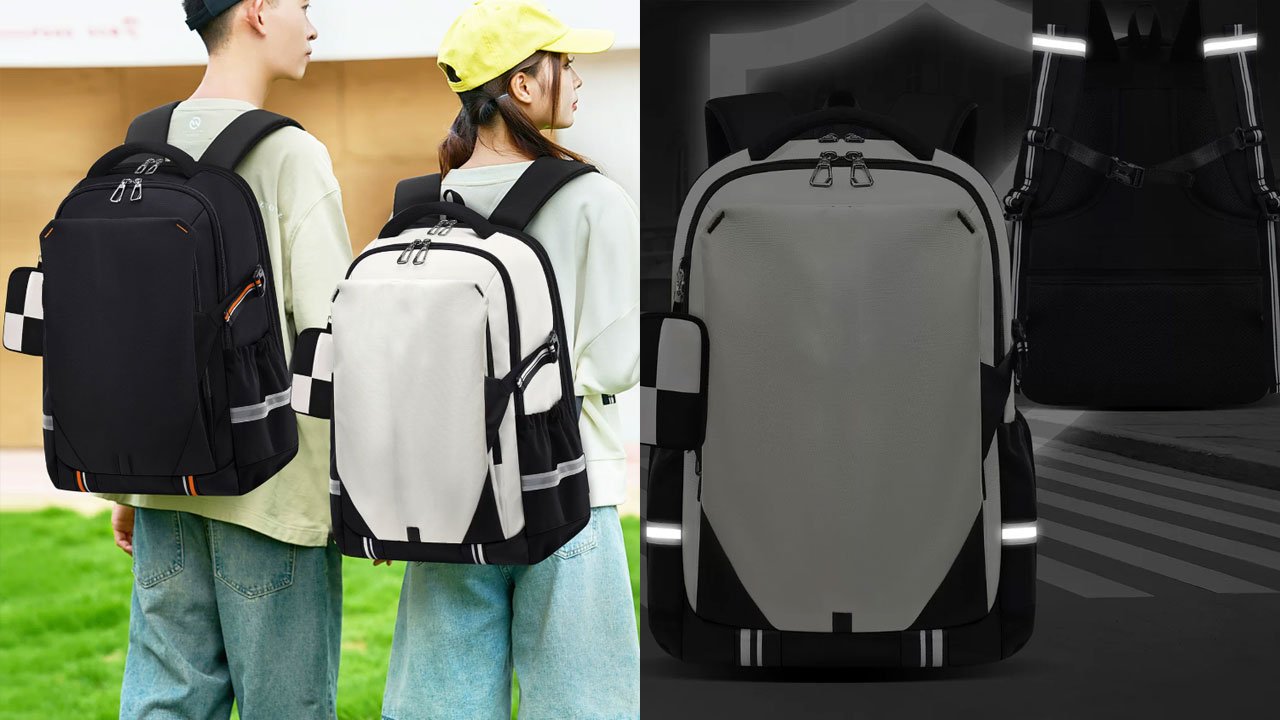
- Size Compatibility: Standard dimensions: 17–19 inches (43.2–48.3 cm) in height, 11–13 inches (27.9–33 cm) in width, and 6–9 inches (15.2–22.9 cm) in depth. These dimensions allow it to fit under a desk and in standard campus lockers, and it won’t feel bulky as you move around campus.
- Internal Design: Features book compartments and small stationery pockets for easy organization of school supplies, as well as a dedicated laptop/tablet compartment; elastic side pockets hold water bottles and umbrellas; a front quick-access pocket keeps campus ID cards within easy reach.
- Carrying Comfort: Padded shoulder straps and a back panel reduce the strain from heavy textbooks, while the breathable back panel ensures all-day comfort. Many models come with a chest strap to stabilize the backpack while walking or running, reducing the basic carrying burden on students.
- Capacity: The 25-liter capacity accommodates textbooks, notebooks, folders, stationery, a laptop or tablet, a water bottle, an umbrella, and a lunchbox, meeting all-day school needs with ample storage space without becoming overly bulky.
- Fabric Weight Range: The product weighs 0.65–1.1 kilograms. Common fabrics include 420D–600D polyester or lightweight nylon, which are tear-resistant and abrasion-resistant to withstand everyday bumps and scrapes on campus. The water-repellent outer layer protects books from light rain and splashes, and the fabric is easy to wipe clean when soiled.
The 25L school backpack is suitable for daily use in middle and high school, after-school tutoring classes, and short educational field trips; however, it is not ideal for extended educational trips or multi-day outdoor adventures.
25 Liter Backpack Packing Tips
When packing a 25-liter backpack for a trip, it’s not just your customers—in fact, we all want to pack as much as possible without making the backpack bulky, which can affect both comfort and appearance. Now I’ll show you a smart way to pack your 25-liter backpack so you can fit everything you need without making it too bulky:
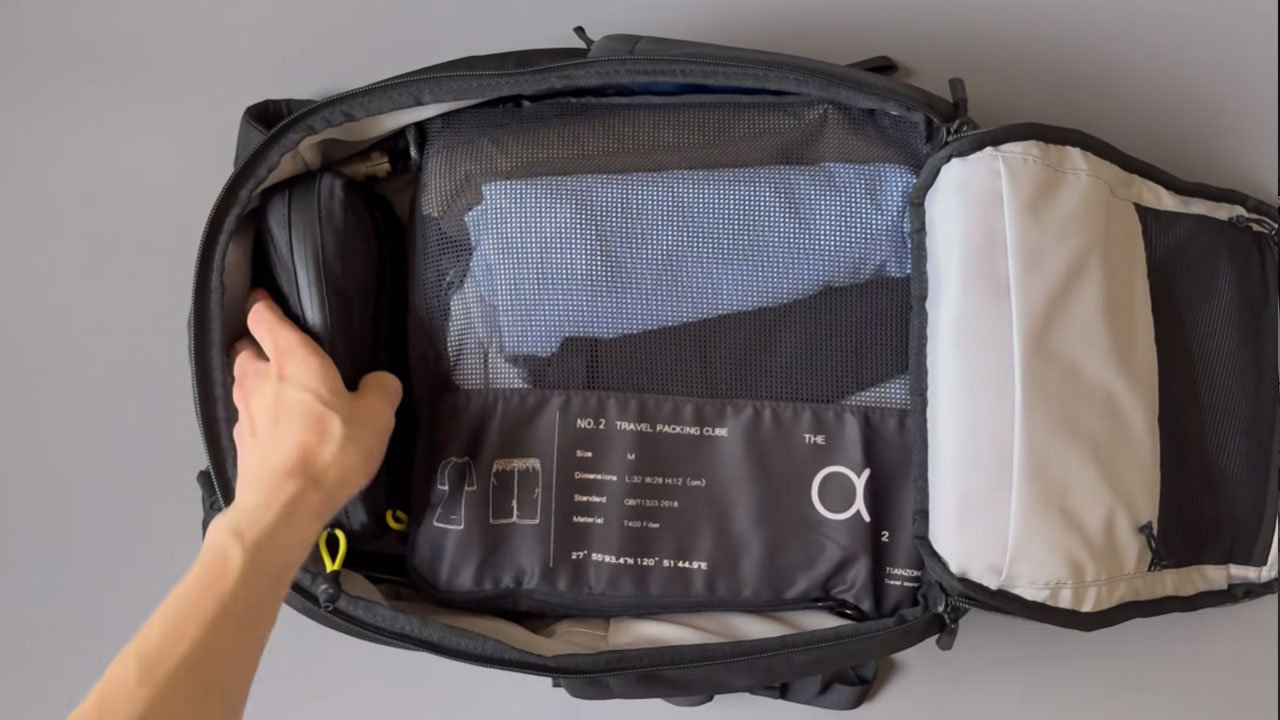
1. Clothing: When packing, start by folding your clothes and placing them at the very bottom. This not only fills the bottom corners but also provides soft cushioning for the remaining items (roll up your socks to save even more space).
2. Electronics: If there is a dedicated compartment, place them there first; if not, place them on top of the pre-folded clothes and close to your back. This not only protects the electronics but also concentrates the weight near your back, making the backpack feel lighter when carried.
3. Toiletries: If there is no separate compartment for wet and dry items, pack them in a waterproof plastic bag before placing them in the backpack (try to keep them away from electronics to prevent moisture from seeping into them)
4. Miscellaneous Small Items: Place headphones, keys, cell phones, ID cards, and other small items in the front quick-access pockets or side pockets, as these items are accessed more frequently than others.
5. Emergency Gear: Keep umbrellas and raincoats in side pockets or other easily accessible pockets so you can respond promptly in the event of sudden inclement weather.
| Packing Location | Packing List | Why It Works |
| Bottom of Backpack | Thick warm clothing (jackets, sweaters, jeans); roll socks to fill gaps | Fills bottom corners and crevices, acts as soft cushion base |
| Middle Main Compartment – Against Back Panel | Heavy‑weight items: laptop, tablet, books, power bank. Place laptop into its built‑in padded sleeve first | Heavy items sit close to your back for centered weight distribution. Reduces shoulder strain. Clothing adds cushioning to protect electronics |
| Upper Main Compartment | Light‑weight T‑shirts, undergarments and soft apparel; toiletries sealed inside waterproof bag | Easy access to upper‑layer items. Waterproof bag contains leaks and prevents toiletries from damaging electronics |
| Top Section, Front Quick‑Access Pockets, Side Elastic Pockets | Cell phone, ID documents, wallet, tissues, umbrella, rain jacket, water bottle | High‑frequency items within reach without opening the main compartment. Grab rain gear quickly during sudden rainfall |
When using a 25-liter backpack, if you need to carry shoes, try to limit yourself to just one pair due to their bulkiness. Wrap them in a plastic bag before placing them in the main compartment to prevent them from soiling other items inside the bag—especially clothing.
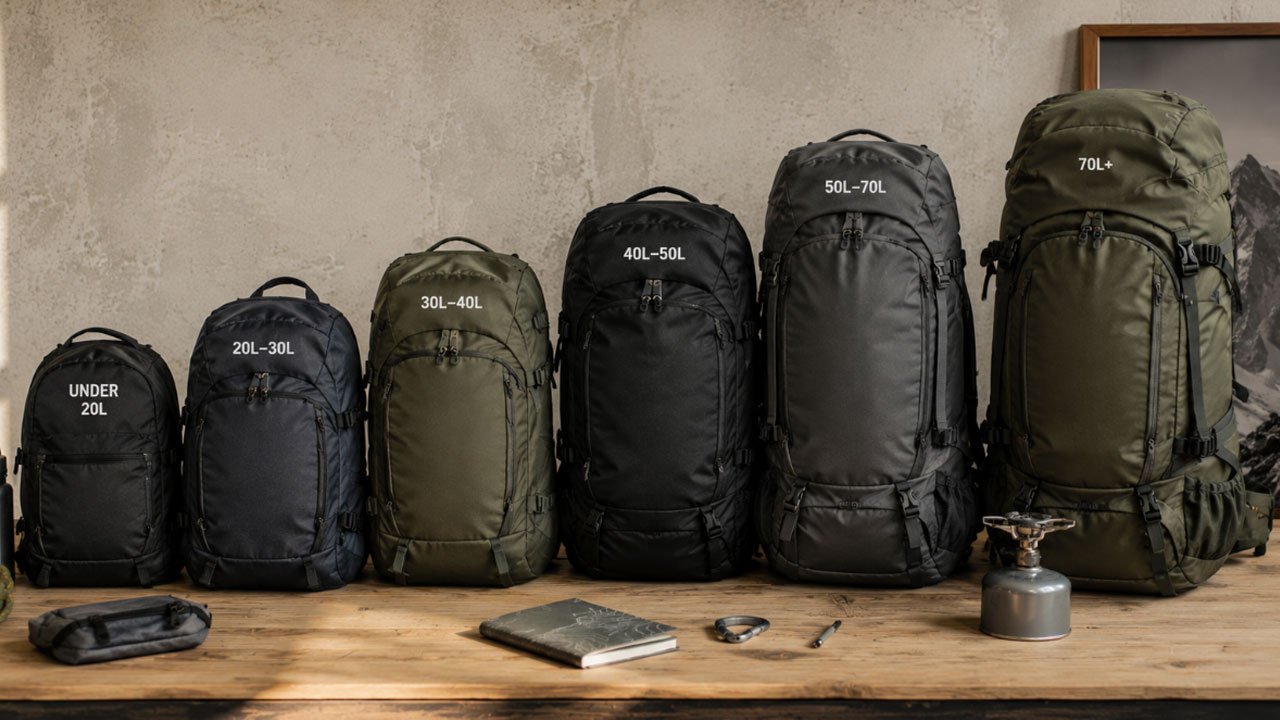
25I backpack size comparison
By now, I think you’ve learned a lot about the details and benefits of the 25I backpack. Now let’s compare it with other 20L and 40L backpacks so you can get a clearer understanding of the advantages of each capacity:
25L VS 20L Backpack
The 20L Backpack offers a more compact size and is lighter, making it better suited for carrying smaller items—such as a tablet, tissues, or a water bottle—during everyday activities like shopping, commuting, or taking a walk in the park. However, if you need to carry a 15-inch laptop and A4 documents on your commute to work, the 25L Backpack is a better choice.
Although there’s only a 5L difference in capacity, the 25L Backpack is a better choice than the 20L Backpack when you need to carry items for a typical workday.
25L VS 40L Backpack
The 40L Backpack provides ample space for multi-day trips and can hold enough outdoor gear for a weekend camping trip. When you’re preparing to pack multiple changes of clothes and office supplies for a multi-day trip, the 40L Backpack’s capacity makes it easy to store everything. However, if your project clients don’t need to travel for multiple days—but rather use the backpack for daily commutes and weekend city trips—the 25L Backpack is clearly a better choice, as it easily holds everyday essentials and an extra jacket while remaining lightweight and compact.
Check if the 25-liter backpack is right for your project
Before purchasing a large quantity of 25-liter backpacks, first check whether this capacity is suitable for your project clients and your brand style to avoid ending up with excess inventory due to a misjudgment.
Assess Usage Needs
Whether you’re a wholesale manager at a retail mall or a corporate gift program buyer, before making a formal purchase, you should first analyze what your project clients typically carry in these 25L backpacks. If they only need to carry small office supplies and other everyday items, a 25L backpack is the perfect fit; however, if your project clients frequently travel long distances and need to carry several days’ worth of clothing and office supplies, the capacity of a 25L backpack will not meet their needs.
Matching Based on Job Characteristics
From the descriptions of various 25L backpacks, you’ve probably already realized that this capacity isn’t limited to specific professions or usage scenarios; rather, it offers greater portability while still being sufficient for everyday use. Below is a table listing professions, usage scenarios, items to carry, and recommended 25L backpack categories:
| Occupation | Usage Scenarios | Items Carried | Recommended 25l Backpack Type |
| Office White‑Collar Worker | Daily commute, 1‑3‑day short business trips, client visits | 15‑16‑inch laptop, power adapter & mouse, paper documents / folders, power bank, business card holder, wallet & ID, commute umbrella, 2 sets of change‑of‑clothes, travel toiletries, travel‑size skincare | 25l travel backpack / 25l laptop backpack |
| Middle & High School Student | Daily classes, after‑school tutoring, club activities, short study tours | Multiple textbooks, workbooks, notebooks, stationery, tablet, calculator, campus ID, water bottle, lunch box, raincoat, small snacks, lightweight outer jacket | 25l school backpack |
| Fitness Enthusiast | Gym workouts, commute‑to‑gym, ball sports | Quick‑dry sportswear, bath towel, travel‑size toiletries, sneakers, wrist & knee supports, sports water bottle; also holds laptop, phone, wallet for commuting | 25l gym backpack |
| Equipment Maintenance Technician | On‑site equipment repair, field inspection, jobsite work | Compact tool kits, test parts, 15‑inch laptop, power bank, work ID, work gloves, water bottle, spare masks, personal essentials, light outerwear | 25l laptop backpack / 25l everyday backpack |
| Light‑Hiking Enthusiast | Short local hikes, one‑day outdoor trips, nearby camping | Quick‑dry apparel, lightweight windbreaker, drinking water, energy snacks, headlamp, compact first‑aid kit, sun hat, phone & power bank, small personal gear | 25l hiking backpack |
| Field Sales Representative | Client visits, out‑of‑town trips, trade‑show attendance | Laptop, product brochures & samples, business cards, power bank, business documents, umbrella, change‑of‑clothes, travel toiletries, water bottle | 25l travel backpack /25l laptop backpack |
| Teacher | Daily teaching, off‑campus research activities, short work trips | Lesson plans, textbooks, tablet, teaching supplies, laptop, water bottle, personal items, compact toiletries, change‑of‑clothes | 25l everyday backpack / 25l laptop backpack |
| Field Medical Staff | Community rounds, home visits, off‑site training | Compact medical supplies, work ID, laptop, water bottle, masks & PPE, personal belongings, simple change‑of‑clothes | 25l everyday backpack |
When a customer walks into your store, you can identify the items they need to carry in their daily work and life based on their profession, and recommend a 25-liter backpack from the corresponding category; they’ll make the purchase because of your expertise and understanding of their profession.
Assist project clients in measuring the dimensions of their belongings
When your client isn’t sure if a 25-liter backpack is right for them, the easiest way to help is to assist them in listing the items they need to carry daily and taking measurements. Here are the dimensions of some commonly carried items for your reference:
| Item Name | Standard Size (L × W × H cm) | Estimated Volume (L) | Remarks | Fits in 25l backpack |
| 16‑inch Laptop | 35.5 × 24 × 2.2 | 1.9 | Power adapter not included | Yes |
| Laptop Power Adapter | 13 × 6 × 3 | 0.23 | Laptop charger | Yes |
| Tablet (10.9‑inch) | 25 × 17 × 0.7 | 0.3 | iPad‑style tablet device | Yes |
| Folding Umbrella | 28 × 6 × 6 | 1.0 | 3‑fold business umbrella | Yes |
| 500 ml Water Bottle | 22 × 7 ×7 | 0.85 | Standard insulated tumbler | Yes |
| Quick‑Dry Sports T‑Shirt | 30 ×22 ×6 | 0.4 | Volume after rolling | Yes |
| Light‑Weight Sweatshirt | 34 ×25 ×10 | 0.85 | Roll‑and‑compress packing | Yes |
| Jeans | 32 ×24 ×12 | 1.2 | Roll‑and‑compress packing | Yes |
| Short‑Trip Toiletry Kit | 22 ×14 ×8 | 2.5 | Contains travel‑size toiletries | Yes |
| Book / A4 Document Folder | 31 ×22 ×4 | 2.7 | Single thick textbook / document binder | Yes |
| Small Tool Pouch | 20 ×12 ×8 | 1.9 | Compact technician tool & accessory bag | Yes |
| 20000mAh Power Bank | 16 ×8 ×2.5 | 0.32 | High‑capacity portable charger | Yes |
Of course, you can also request a free sample here to take to your project client for storage testing of the 25-liter backpack.
Purchasing/Customizing a 25-Liter Backpack: Common Mistakes to Avoid
When purchasing or customizing products, simply selecting a 25-liter capacity does not mean that mass production can begin or that the product can be delivered to the customer. Even if the capacity is appropriate, errors may still occur in the external dimensions and internal compartment layout.
Focusing only on the 25L capacity while ignoring the external dimensions and carry-on regulations
Even with the same 25L capacity, the external dimensions (length, width, and depth) can vary significantly depending on the model. Some 25L backpack models are designed with excessive depth, causing the overall dimensions to exceed airline carry-on limits. As a result, customers cannot fit them directly under the seat on the plane, meaning that even though they are intended for short trips, they cannot be carried on board as carry-on luggage; Therefore, when recommending a 25L backpack to customers, prioritize models with a height of 45–50.8 cm, a width of 25.4–30.5 cm, and a depth of ≤23 cm, and verify compliance with the carry-on size standards of major airlines, rather than relying solely on the nominal 25L specification.
The dimensions of the internal computer compartment do not match those of the 25L bag
Although the 25L backpack can accommodate a 15–16-inch laptop directly, the internal laptop compartment may be too small to fit the laptop, or too large, causing the laptop to shift around inside while walking. When customizing this product, we request that the dimensions of the internal laptop compartment be standardized to 36 × 25 × 3 cm and that cushioning foam be added. This will ensure a snug fit for 15–16-inch laptops while providing ample protection.
Conclusion
The 25-liter backpack, with its ideal capacity, is the perfect choice for daily commutes and short trips. The next time a customer in your store asks, “How big is a 25-liter backpack?” you can simply copy and paste the relevant section from my article—it’s both professional and easy.
If you’re planning to add 25-liter backpacks to your product line but don’t have a reliable, professional, and affordable bag supplier, feel free to contact us. Let’s work together to turn your business vision into reality, and we’ll send you a free physical sample before your order begins.