Foam vs Aluminum Foil Insulation for Cooler Bags: 6 Uses & Specs
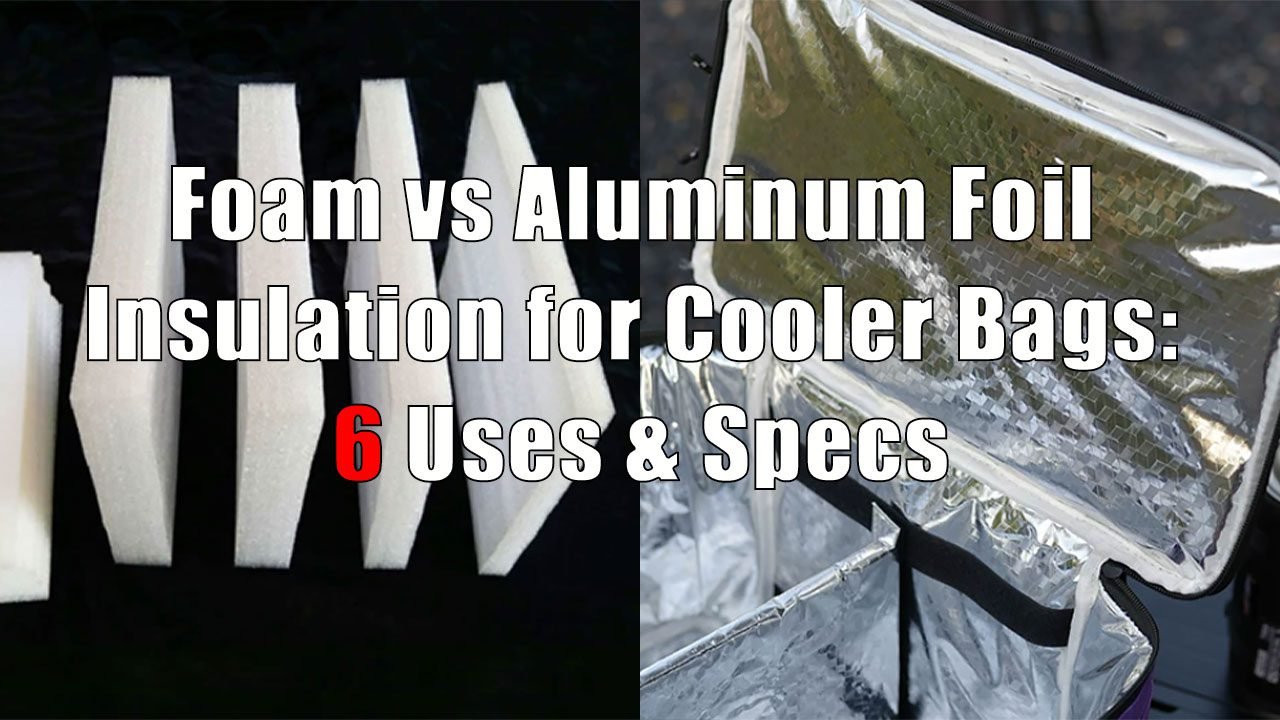
Are you unsure whether to choose aluminum foil or foam insulation when custom cooler bags for your business project? Although both of these insulated materials are widely used in the production of cooler bags, using them incorrectly not only prevents you from fully leveraging their performance but can also damage your brand’s reputation if the bags fail to maintain the required cooling duration. In this article, I’ll break down the structure, pros, and cons of aluminum foil versus foam insulation, and explain how they should be used in your custom cooler bag project.
(I understand how tedious it can be to look at a dense block of text, so I’ll do my best to explain this article in simple terms. At the end of the article, you can apply to receive a physical sample of a Cooler Bag for your study and research.)
What is Aluminum Foil Insulation?
The aluminum foil insulation layer used in Cooler Bags can be simply understood as an extremely thin, highly reflective layer of aluminum bonded to the surface of the base material. Its primary function is to block radiant heat transfer through its high reflectivity—much like the silver sunshade you use in your car, which reflects sunlight away to lower the temperature inside the vehicle.
Advantages of Aluminum Foil Insulation for Cooler Bags
High Reflectivity: Features a radiant heat reflectivity of 90–95%; in unobstructed, direct outdoor sunlight, it reduces the amount of radiant heat entering the Cooler Bags by 70–80%
Lightweight: Aluminum foil weighs only 28–35 g/m², so it has a minimal impact on the overall weight of the Cooler Bags. Additionally, its flexible and foldable nature does not affect the ability to fold and store the finished Cooler Bags
Low Cost: Priced at just $0.32–0.48 per square meter (as of September 1, 2026), it allows for easy control of wholesale procurement budgets for custom projects.
Moisture Barrier: The complete aluminum foil insulation blocks 100% of internal moisture penetration and can be easily wiped clean during maintenance.
Limitations of Aluminum Foil Insulation in Cooler Bags
Reflects only radiant heat: Although aluminum foil has a radiant heat reflectivity of 90–95%, its extreme thinness allows conductive and convective heat to pass directly through the material.
Prone to damage: The Martindale abrasion resistance of the aluminum coating is only 300–500 cycles; when scratched by hard objects, the coating can easily peel off and oxidize, resulting in a decrease in reflectivity. Furthermore, once gaps form, they create thermal pathways, allowing heat to enter the package through these gaps.
Requires foam backing: Aluminum foil must be attached to foam or other thicker insulating materials to block heat conduction. When used alone, it can only reflect radiant heat.
What Is Foam Insulation?
As the true core of Cooler Bags’ insulation, the foam insulation is filled with numerous tiny, sealed air pockets that trap still air within the foam chambers. By leveraging the low thermal conductivity of still air, it slows the penetration of heat transfer and convection. You can think of it in the same way a thick winter down jacket traps cold air from entering and prevents your body heat from escaping.
Foam Insulation Category
Expanded Polyethylene: An entry-level foam (with an R-value of approximately 1.4–1.8 per inch), primarily used to make disposable promotional cooler bags due to its light weight and low cost.
PE Foam (Polyethylene Foam): Its closed-cell structure is superior to that of EPE (with an R-value of approximately 1.8–2.2 per inch), and it offers better resistance to bending. It is primarily used in the manufacture of lunch cooler bags and commuter cooler bags.
XPE Cross-linked Polyethylene Foam: With a denser cell structure, it is moisture-resistant and resistant to shedding and delamination (R-value of approximately 2.0–2.4 per inch). It is primarily used in baby bottle cooler bags and infant cooler bags.
EVA Foam (Ethylene-Vinyl Acetate Copolymer Foam): Primarily used in semi-rigid cooler bags, it has a relatively firm texture and excellent resistance to moisture (R-value of approximately 2.2–2.6 per inch).
PU Foam (Polyurethane Foam): With an R-value of approximately 2.8–3.4 per inch, it currently offers the highest R-value and strongest thermal insulation performance among conventional foams.
Advantages of Foam Insulation for Cooler Bags
Excellent thermal insulation: The closed-cell structure inside Foam Insulation effectively blocks both conductive and convective heat transfer. By simply adjusting the thickness, it can reliably meet refrigeration retention requirements ranging from 3 to 22 hours (tested at thicknesses of 5–25 mm).
Durability: With the exception of entry-level EPE, PE, XPE, EVA, and PU materials withstood 3,000–10,000+ repeated folds during the ASTM D3575 flex test without cracking or flaking, demonstrating far greater durability than aluminum foil
Cushioning: The closed-cell structure of the foam provides cushioning against bumps and jolts when transporting items.
Suitable for All Scenarios: With a full range of models available—from budget-friendly options to high-end refrigeration solutions—the foam meets the needs of custom cooler bags across all budget levels and refrigeration duration requirements.
Limitations of Using Foam Insulation in Cooler Bags
Lack of Radiant Heat Reflectivity: This is the exact opposite of aluminum foil insulation; it can only block conductive and convective heat, but is ineffective against radiant heat. When exposed to direct sunlight outdoors, radiant heat from the sun will continuously penetrate the foam, leading to a significant decrease in cooling efficiency.
Poor Moisture Resistance: EPE and standard PE foam will gradually absorb moisture when exposed to condensation over time, causing the pores to fail and ultimately leading to a gradual decline in thermal insulation performance.
Volume constraints: Simply put, to achieve longer cooling duration, the foam’s density and thickness must be increased. This directly increases the finished product’s weight, volume, and material costs, making it impossible to achieve both extreme thinness and long-lasting cooling simultaneously. In particular, during bulk procurement and transportation, the larger volume directly leads to higher shipping costs.
Summary of the Differences Between Aluminum Foil and Foam Insulation
Do you fully understand the characteristics of these two types of insulated fabric? I’ve put together a comparison chart to clearly outline the differences:
| Comparison Item | Aluminum Foil Insulation | Foam Insulation |
| Type of Heat Blocked | Radiant heat | Conductive heat, convective heat |
| Can it work as primary insulation alone | No, must be paired with foam | Yes |
| Water‑Vapor Barrier Performance | Intact coating delivers 100% vapor‑blocking; performance fails once coating is scratched / damaged | EPE / standard PE: poor water‑vapor resistanceXPE / EVA / PU: excellent water‑vapor resistance |
| Abrasion Resistance | 300‑500 dry rubs; aluminum coating easily wears off | Except for EPE: 3000‑10000+ flex cycles per ASTM D3575, stable performance |
| Cost (Surveyed Sep 1, 2026) | $0.32‑0.48 /㎡ | $0.80‑3.60 /m² (varies by material & thickness) |
| Product Role | Auxiliary composite reinforcing layer | Primary insulating base material |
If you’ve read my other article, “How Do Cooler Bags Work,” and learned about the three principles of heat transfer, you can simply think of “Aluminum Foil and Foam Insulation” as follows: aluminum foil is responsible solely for reflecting radiant heat, while foam insulation blocks both conductive and convective heat. This core knowledge is especially important when you’re designing custom cooler bags for a project—it can even determine whether you’ll be able to close the deal with a client.
Why Do High-Performance Cooler Bags Need to Use Both of These Materials?
When you use Cooler Bags or inspect the samples you receive, you’ll notice that high-quality Cooler Bags feature a combined design of aluminum foil and foam insulation. As I’ve summarized, “Aluminum foil is responsible solely for reflecting radiant heat, while foam insulation blocks both conductive and convective heat.” When combined into a composite structure, they can more effectively prevent heat transfer.
The Most Effective Insulation Structures for Cooler Bags
In addition to aluminum foil and foam insulation for heat resistance, complete Cooler Bags also feature an outer layer that provides protection and aesthetic appeal (your brand logo will be printed on this outer layer).
Outer Layer: High-density polyester or Oxford fabric is commonly used to protect the insulation layer. In challenging outdoor environments, more durable nylon is used as the outer material (at a higher cost), and your brand’s design and logo are primarily printed on this outer fabric.
Middle Layer: Foam is used to block both conductive and convective heat transfer (this is the core component that determines the basic cooling duration).
Inner Layer: An aluminum-coated foil layer that reflects heat radiating from the interior outward (preventing condensation and protecting the middle foam layer).
When aluminum foil and foam insulation are combined, the cold retention time under direct outdoor sunlight can be increased by 25–35% compared to coolers using only foam of the same thickness; compared to products with aluminum foil alone, the cold retention capacity can be increased by several times.
As a reminder: Aluminum foil serves only as a reflective layer against radiant heat; the core insulation layer is foam. Furthermore, this composite structure of foam and aluminum foil insulation is the optimal combination compared to any single material.
How can we improve the cold storage shelf life of aluminum foil combined with foam insulation?
As the core layer of a cooler bag’s insulation structure, foam directly determines the basic cooling duration. So, simply put, “increase the foam thickness based on your project’s cooling duration requirements.” I’ve listed the applicable scenarios and performance characteristics for various common foam thicknesses below:
3 mm Foam + Aluminum Foil
Recommended Uses: Promotional gifts in supermarkets and short-term indoor use
Refrigeration Duration: 3–5 hours
Note: Although the cost is very low, this product is only suitable for short-term indoor use or single-use applications.
5-millimeter Aluminum Foil
Ideal for: Keeping food warm during weekday commutes and for lunch on the go
Cooling Duration: 5–7 hours
Note: This bag features the most common standard thickness on the market, striking a balance between lightweight design and basic cooling performance.
6–8 mm Aluminum Foil
Ideal for: Short trips cooler bags outdoor picnics, and transporting breast milk when traveling with an infant
Cooling duration: 7–10 hours
Note: Although it can handle half a day of outdoor use, avoid direct sunlight as much as possible when using it outdoors
8–10 mm Aluminum Foil
Recommended Uses: Beer cooler bag, cooler bag for all-day outdoor camping
Cooling Duration: 10–14 hours
Note: Although the cooling duration is longer, the bag’s volume and thickness will also increase accordingly
All of the above refrigerated shelf-life results were obtained from tests conducted at an ambient temperature of 25°C.
Aluminum Foil vs. Foam Insulation: Which Is Better for Your Project?
By now, you should have a clear understanding that when it comes to aluminum foil versus foam insulation, neither is inherently better than the other; rather, they work together to enhance cooling performance when combined into a composite structure. I’ve listed several project use cases for you to consider when purchasing wholesale materials for your Custom Cooler Bags project:
Weekday Commute
Recommended: 5 mm PE Foam + Aluminum Foil
Reason: A 5–7-hour cooling duration is more than sufficient for bringing lunch to work on weekdays, and the overall lighter, thinner design makes it easy to fit into a backpack. The material costs are moderate, making it suitable for large-volume custom orders.
Weekend Trip
Recommended: 8–10 mm XPE/EVA Foam + Aluminum Foil
Reason: The 8–10 mm foam provides built-in cushioning to protect glass bottles of beverages from impact (can be used with fixed dividers). The built-in foil layer reduces heat radiation from outdoor sunlight, helping to maintain cooling performance.
Restaurant Delivery
Recommended: 5 mm PE Foam and 6–8 mm XPE Foam + Aluminum Foil
Reason: For short-distance food delivery, use 5 mm PE foam to balance basic insulation with procurement costs; for long-distance food delivery and fresh produce delivery, use the 6–8 mm XPE + aluminum foil combination, which provides longer cooling retention while resisting moisture and preventing soup or sauce leakage, effectively addressing both impact protection and insulation needs.
Medical Transportation
Recommended: 8–10 mm PU Foam + Aluminum Foil
Reason: PU foam with an R-value of approximately 2.8–3.4 per inch provides longer-lasting and more stable refrigeration, which helps minimize the impact of significant temperature fluctuations on the efficacy of pharmaceuticals (must comply with EU Regulation 10/2011 and FDA 21 CFR when used in medical settings).
Promotional Giveaways
Recommended: 3 mm–5 mm PE/EPE foam; aluminum foil optional
Reason: For promotional giveaways, the focus is on keeping the unit price low; for indoor use, the aluminum foil layer can be omitted; if the event takes place outdoors, an aluminum foil laminate layer can be added.
Brand Retail
Office Supplies Store: 5 mm PE foam + aluminum foil, primarily offering cooler bags for office workers’ commutes
Outdoor Gear Store: 8–10 mm EVA/PU foam + aluminum foil, primarily offering travel cooler bags, camping cooler bags, and fishing cooler bags for campers, anglers, and road trippers
Bicycle Store: 6–8 mm XPE Foam + Aluminum Foil, balancing portability (be sure to include straps) and insulation, suitable for carrying on short cycling trips
Reminder
Aluminum foil is always considered a performance-enhancing accessory and cannot be used on its own as the primary insulation material for cooler bags. No matter how tight your budget is, the product must include a foam base material of the appropriate thickness. If you’d like to learn more about cooler bag fabrics for your project, you can read my other article, “Thermal Insulation Fabric for Cooler Bags.”
FAQ
Can pure aluminum foil cooler bags work without foam insulation?
No. The primary function of aluminum foil is to reflect radiant heat, but when it comes to maintaining the temperature of items being carried, heat transfer and convection play a much more significant role. Therefore, due to the properties of pure aluminum, a cooler made solely from aluminum foil has virtually no practical cooling capacity.
Is aluminum foil necessary for cooler bags if I already use thick foam?
In indoor settings, where only basic insulation is required, it is not necessary to use the aluminum foil layer because there is less radiant heat to contend with. However, in outdoor settings, foam alone cannot block solar radiation; moreover, the aluminum foil layer not only reflects radiant heat but also protects the foam insulation layer from moisture penetration.
Which is more important: the foam thickness or the aluminum foil layer?
Foam serves as the core component for cold storage aging, while aluminum foil acts as a supplementary reinforcement; the two have always functioned in a complementary relationship within a composite structure, rather than in a competitive one.
Why do some foam‑and‑aluminum cooler bags still have poor cold‑keeping effect?
In fact, in addition to the foam and aluminum foil layers, the sealing effectiveness of the zippers, the stitching gaps, and the outer fabric of cooler bags all affect their cooling duration. Even if all quality standards are met, improper use can still significantly reduce the cooling duration. We recommend teaching customers “How to Use Cooler Bags” when providing them with these products. (Many of my wholesale cooler bag clients have received numerous complaints from end customers due to improper usage, even though the products themselves met all performance standards—so this step is crucial.)
Summary
Aluminum foil and foam insulation don’t have a clear winner—they play different roles in working together to slow heat transfer and keep cooler bags functioning effectively. Do you now understand how to use aluminum foil and foam insulation for your project? If you don’t yet have a professional, affordable custom cooler bag manufacturer that provides free physical samples for every design, please contact us. At 367 Bags Factory, we’ve been dedicated to bag production and R&D since 2004. With our extensive experience, we’re here to help you turn your business vision into reality.