Shopping Bag Types & Materials: Best B2B Custom Guide
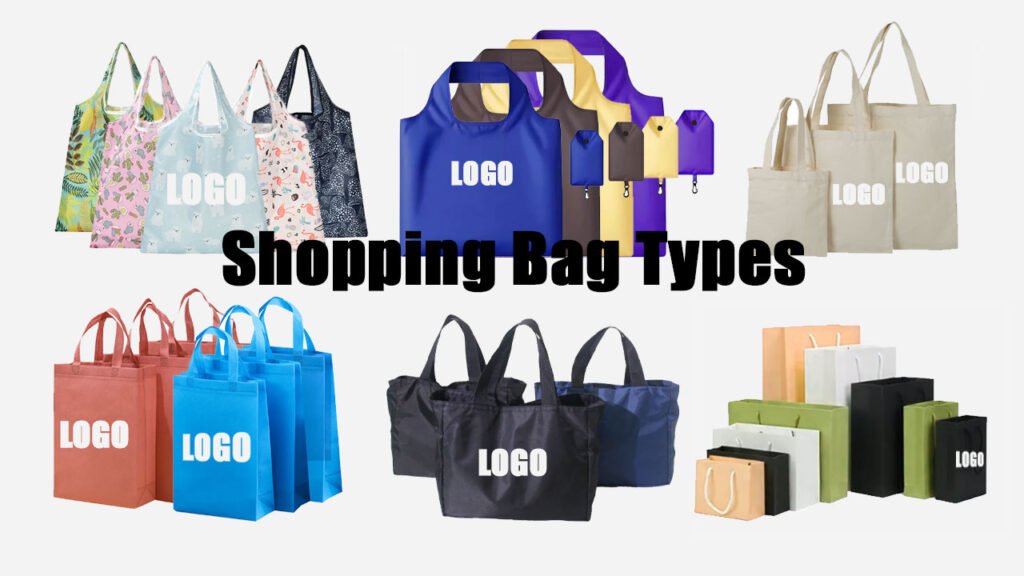
Are you looking for shopping bags for your retail chain, fresh produce supermarket, or brand promotion campaign? Do you feel overwhelmed by the vast variety of shopping bag types available on the market? Although shopping bags are simple and commonplace, choosing the wrong type or material weight can seriously impact your customers’ experience—and, in turn, your brand’s reputation—or even render the entire batch of shopping bags unusable due to non-compliance with local regulations. As a professional manufacturer specializing in shopping bag production since 2004, this article will provide an in-depth explanation of shopping bag types, material suitability, and regional regulations. We aim to offer expert guidance for your custom wholesale orders and help you make the right choice. (At the end of the article, you can request free physical samples of shopping bags to help you examine the details more closely.)
Quick Takeaway: Choose the Right Shopping Bag Based on the Project Type
Is your supervisor pushing you to finish the project plan for shopping bag procurement? Before you dive into the full document, I’ve put together a quick reference table (covering shopping bag types, suitable scenarios, materials, and weight capacity) to help you quickly reference the information when placing wholesale orders (or simply take a screenshot to send to your supervisor as part of your project report).
| Shopping Bag Types | Application Scenarios | Recommended Materials | Load‑bearing Capacity |
| Disposable PE plastic shopping bag | Community supermarket retail | HDPE / LDPE plastic | 2kg–8kg |
| Compostable disposable shopping bag | Supermarkets in Europe, fresh‑food retail, eco‑themed campaigns; replacement for conventional plastic bags | PLA+PBAT blended material (EN13432 certified) | 1.5kg–6kg |
| Disposable paper shopping bag | Apparel stores, gift packaging, bakeries | White kraft paper, yellow kraft paper, laminated kraft paper | 2kg–7kg |
| Non woven tote bag | Trade‑show promotional giveaways, short‑term event distribution, low‑cost promotional bags | Polypropylene non‑woven fabric (regular / laminated) | 3kg–6kg |
| Cotton shopping tote bag | Brand gifts, cultural‑creativity retail stores, sustainability‑focused events, souvenir giveaways | 4oz‑12oz pure cotton fabric, recycled cotton | 4kg–10kg |
| Canvas shopping bag | Apparel retail, boutique stores, long‑term repeated use, premium gifts | 8oz‑16oz canvas | 6kg–15kg |
| RPET polyester shopping bag | Supermarket retail, outdoor shopping, ESG‑focused brand projects, foldable style | 210D / 600D RPET recycled polyester | 5kg–12kg |
| Jute shopping bag(Hessian bag) | Wedding favors, organic farmers’ markets, resort retail, luxury gifts | Natural jute, laminated jute | 5kg–12kg |
| Linen shopping bag | High‑end cultural‑creativity goods, natural organic brands, premium souvenirs | Natural linen fabric | 3kg–8kg |
| Reusable mesh produce bag | Fresh‑food supermarkets, farmers’ markets, fruit & vegetable sorting & storage | Polyester mesh fabric | 2kg–5kg |
| Foldable shopping bag | Supermarket self‑checkout retail, daily commuter shopping | Light‑weight RPET polyester, thin nylon | 3kg–9kg |
| Drawstring shopping bag | Simple packaging, trade‑show gifts, small‑item storage | Polyester, cotton fabric, non‑woven fabric | 2kg–6kg |
Quick Summary: If your shopping bag project is intended for packaging apparel products, simply choose paper shopping bags or canvas shopping bags. However, for heavier, high-value electronic products, we recommend thickened canvas shopping bags or 600D RPET polyester tote bags to prevent your brand’s customers from dropping their electronics due to bag damage during use. For more details, please read on. After reviewing the entire article, you’ll become a pro at sourcing shopping bags.
Shopping Bag Categories and Differences
Disposable shopping bags
plastic shopping bag
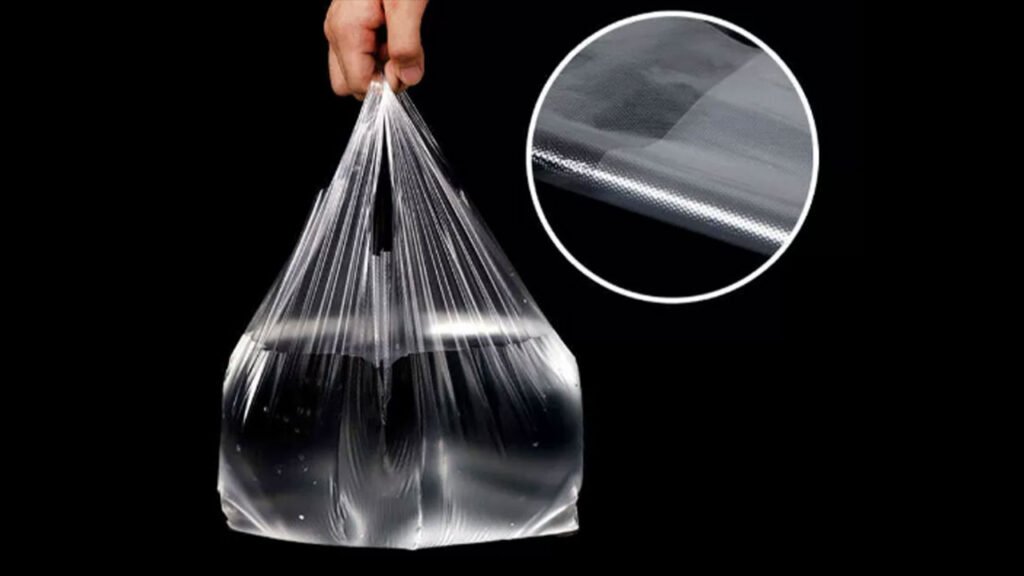
As the most common type of shopping bag in our daily lives, plastic shopping bags are widely used in virtually every supermarket and retail store due to their extremely low unit cost, water- and oil-resistant properties, transparent texture, ability to be printed in any color, and excellent flexibility—which allows them to accommodate items of any irregular shape. You can see them being used for:
- Checkout and bagging of fresh produce, fruits and vegetables, and daily necessities at supermarkets and grocery stores
- Simple packing and bagging of merchandise at clothing stores (commonly used for small items such as socks and gloves)
- Packing takeout orders at restaurants and bakeries
However, due to their low load-bearing capacity (for example, those with a thickness of 13 μm to 18 μm have a load-bearing range of 3–5 kg) and poor wear resistance, they are classified as single-use products. Since ordinary PE plastic shopping bags are prone to causing microplastic pollution, they are currently subject to regulations restricting the use of ultra-thin single-use plastic bags (<15 μm) in many regions, including the European Union, the United Kingdom, and Canada.
1 μm = 0.001 millimeters
Note: If your procurement project is primarily for distribution at supermarket chains and convenience stores, and if you need to distribute items on a temporary basis without worrying about reusability, then plastic shopping bags—which have a low unit cost and are lightweight—are an excellent choice.
HDPE shopping bag

Disposable HDPE shopping bags are a type of plastic shopping bag. The most common variety is the tank-top style shopping bag (which, like the sleeves of a tank top, can be used as handles). While offering the same advantages as standard disposable plastic shopping bags, they feature higher tensile strength and puncture resistance. Taking a 15-micrometer-thick bag as an example, its longitudinal tensile strength is ≥18 MPa, and its puncture resistance is approximately 3.2 N. Compared to standard LDPE bags of the same thickness, its puncture resistance is improved by about 25%, making it less prone to tearing when carrying items with sharp edges. It is currently widely used in:
- Packaging of bulk goods at vegetable markets and farmers’ markets
- Packaging of perishable foods at bakeries and delis
- Simple packaging of small items at small retail stores (including hardware)
However, since HDPE is not biodegradable, and the industry uses a thickness of 15 μm as the threshold for ultra-thin materials, you must confirm the μm value in advance when procuring materials for your project to avoid penalties or usage restrictions resulting from a thickness of less than 15 μm.
Note: For procurement projects with slightly higher durability requirements—such as supermarkets and produce markets with high foot traffic where customers frequently pass through checkout lanes—we recommend selecting HDPE shopping bags, which are more cost-effective and offer greater durability than standard plastic shopping bags.
paper shopping bag
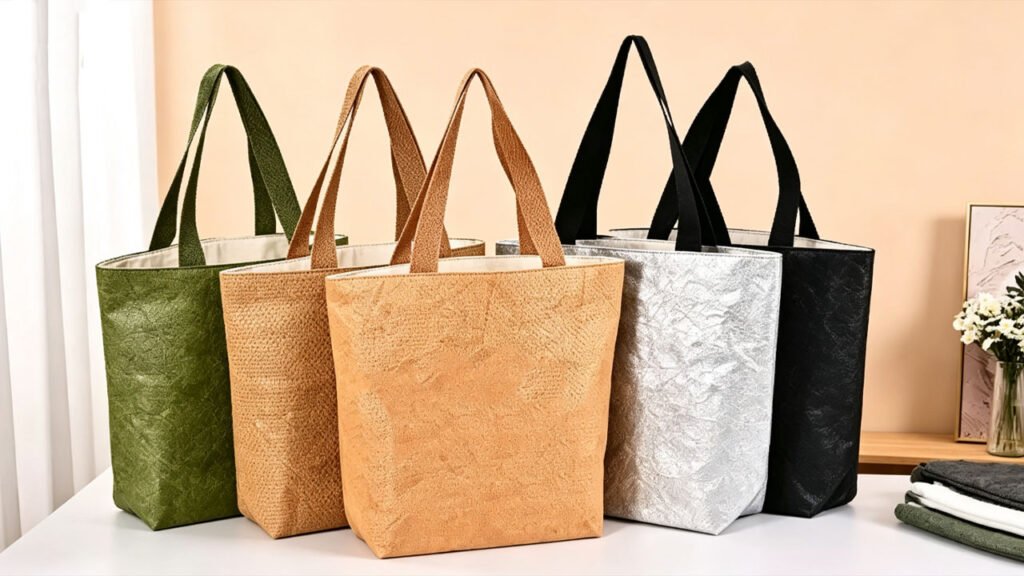
Disposable paper shopping bags are typically made from high-strength kraft paper. Because they are 100% biodegradable, have a sturdy structure, and can feature high-quality designs using various printing techniques—such as foil stamping, UV coating, and embossing—they are commonly used for:
- Clothing Retail Stores
- Premium Product Packaging
- Gift Packaging for Bakeries and Coffee Shops
- Coordinated Packaging for Jewelry Gift Boxes
- Elegant Gift Packaging for Brand Events and Trade Shows
However, it is important to note that paper shopping bags have poor water resistance and puncture resistance; they are prone to tearing when exposed to water or sharp objects (avoid storing them in damp environments in warehouses). Additionally, because they are heavier and bulkier than plastic bags, they take up more storage space during procurement and transportation for the same quantity.
Tip: If your project does not involve carrying wet goods and you want to highlight your brand’s refined quality, we recommend choosing a paper shopping bag with a hot-stamped logo.
biodegradable plastic bag
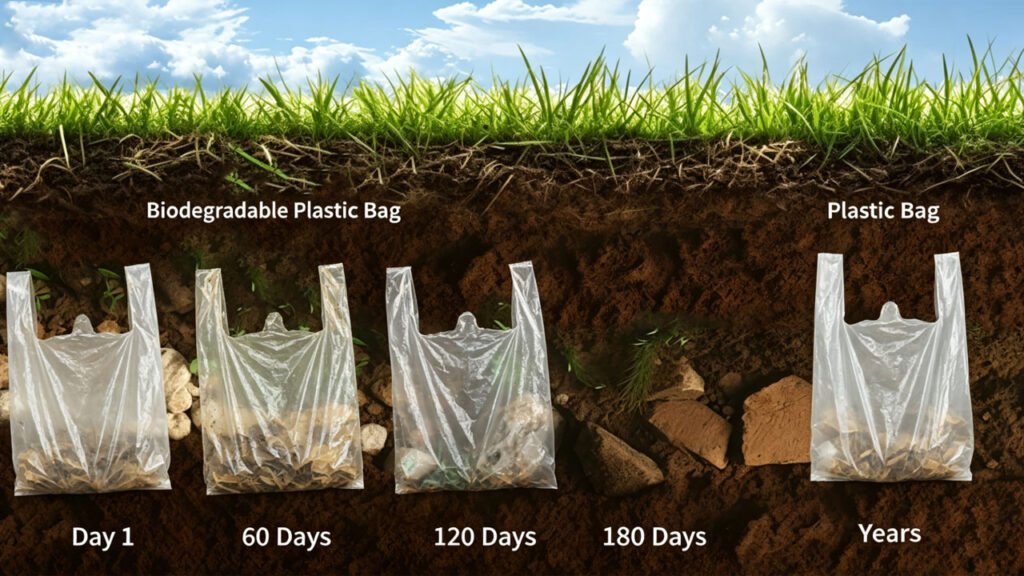
Unlike ordinary disposable plastic shopping bags, biodegradable plastic bags are made from PLA+PBAT material. In addition to being waterproof, grease-resistant, and suitable for printing, they are fully biodegradable in industrial composting environments, making them compliant with environmental regulations. They are commonly used for:
- Packaging for fresh produce, fruits, and vegetables at supermarkets in regions with plastic bag restrictions
- Takeout packaging for baked goods, prepared foods, and wet food items from casual dining establishments
- Packaging for products at eco-friendly events and organic markets
- Retail projects requiring compliant alternatives to ultra-thin PE plastic bags
Use in the EU market requires EN 13432 industrial composting certification.
Although biodegradable plastic bags are capable of natural degradation, this process occurs only under industrial composting conditions; in the natural environment, they degrade very slowly. Furthermore, for the same thickness, they are less durable than ordinary PE plastic bags and have a higher unit cost. Taking 18 μm as an example: HDPE disposable plastic bags have an effective load-bearing capacity of 3–5.5 kg and a tensile strength in the longitudinal direction of ≥18 MPa, whereas biodegradable plastic bags have an effective load-bearing capacity of only 1.5–4 kg and a tensile strength of 12–14 MPa. They also tend to become brittle in low-temperature environments and cannot be reused repeatedly over the long term.
Note: If your goal in sourcing shopping bags is to find a transitional alternative to virgin plastic packaging, then biodegradable plastic bags are an excellent choice.
compostable shopping bag
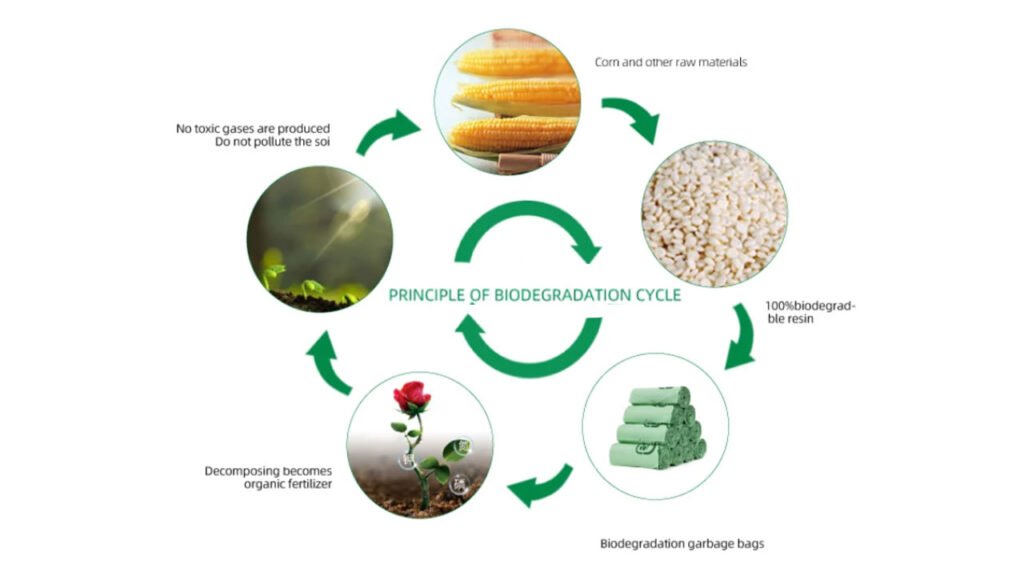
The main difference between disposable compostable shopping bags—which also have eco-friendly properties—and biodegradable plastic bags is that the former are made from renewable plant starch, have a soft texture, and can be folded for storage. Although their water and oil resistance is superior to that of biodegradable plastic bags and comparable to that of ordinary plastic bags—allowing them to hold items containing moisture—their performance in typical usage scenarios is virtually identical. However, it is important to note that in high-temperature environments (above 45°C), the bag material will age more rapidly, significantly shortening its storage life and service life. Additionally, the degradation process requires industrial composting conditions, as the rate of degradation in the natural environment is extremely slow.
Tip: When looking for eco-friendly bags, if your items are slightly too heavy for biodegradable plastic bags, try compostable shopping bags instead. Under the same conditions, compostable shopping bags offer a better balance of durability and puncture resistance, with a higher weight capacity.
Summary of the Differences in the Above Disposable Shopping Bags
Feeling a little overwhelmed by all the text? I’ve put together a comparison chart highlighting the differences between the various single-use shopping bags listed above:
| Product Type | Core Material | Main Specifications & Load‑bearing Range | Advantages | Disadvantages | Application Scenarios |
| Plastic Shopping Bag | HDPE / LDPE Polyethylene | 13‑18μm regular: 3‑5kg20‑28μm heavy‑duty: 5‑8kg | Low cost, water & oil resistant, printable, good flexibility | Poor eco‑friendliness; thin variants tear easily; basic look | General supermarket packaging, e‑commerce shipping, take‑out order packing |
| HDPE Shopping Bag | High‑density Polyethylene | 18μm standard: 3‑5.5kg20‑28μm heavy‑duty: 5‑8kg | Higher tensile strength & puncture resistance than regular PE bags, good low‑temperature performance | Non‑degradable, low‑end brand appearance | Fresh‑food markets, grocery stores, packaging goods with sharp edges |
| Paper Shopping Bag | Kraft paper (lamination optional) | 80‑100g light: 2‑4kg120‑160g standard: 4‑7kg180‑250g heavy‑duty:7‑10kg | Rigid 3‑D shape, rich printing options, premium texture | Not water‑resistant; tears when wet; weak puncture resistance | Apparel & boutique gifts, bakeries, brand event packaging |
| Biodegradable Plastic Bag | Modified degradable plastics, no universal formula | 18‑24μm regular:1.2‑3.5kg | Basic water resistance, printable, eco‑marketing value | Inconsistent quality, low toughness, export requires valid Compostable certification | Eco‑event simple packaging, markets without certification mandates |
| Compostable Shopping Bag | PLA+PBAT Plant‑starch material (EN13432 certified) | 18‑24μm regular Regular:1.5‑4kg25‑35μm heavy‑duty:4‑6kg | Water & oil resistance Performance close to PE, better toughness than ordinary degradable bags | Lower load capacity at equal thickness Inferior to HDPE; degrades under high heat; higher cost | EU / Australia compliant markets Supermarkets, take‑out food, organic farmers’ markets |
Although disposable shopping bags offer significant cost advantages in commercial applications, their appeal is gradually diminishing due to rising global environmental awareness and stricter regional environmental regulations. When sourcing materials for your project, you need to balance regional environmental regulations, brand image, and cost to avoid the risks of regulatory penalties and damage to your brand’s reputation.
Reusable shopping bags
non woven shopping bag
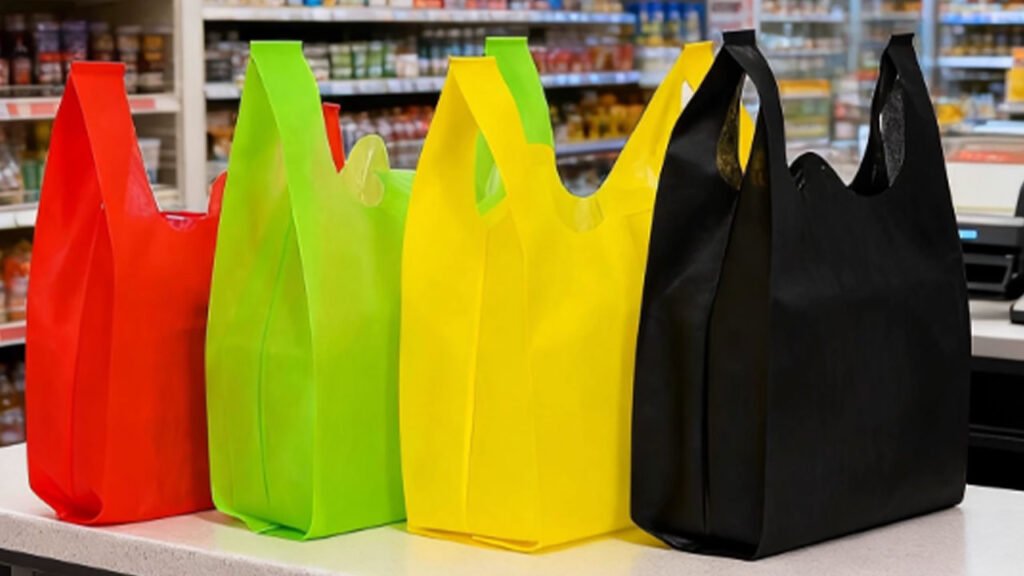
These soft, felt-like woven shopping bags are highly tear-resistant and durable. They come in a variety of styles, including tote bags, long bags, and foldable bags. Thanks to their smooth surface, they offer excellent print quality, making them ideal for printing your brand logo and promotional slogans for use at trade shows and shopping malls.
Suitable for:
- Apparel: Clothing, pants, scarves, shoes and hats, small home textiles
- General Merchandise: Skincare products, beauty gift sets, stationery, books, documents, gift sets
- Supermarket Items: Snacks, daily necessities, bottled personal care products, dry goods
- Exhibition Materials: Brochures, flyers, small promotional giveaways
Although non-woven shopping bags have a felt-like texture, they are actually made of polypropylene fibers bonded together through heat or chemical processes. Since they are not woven, they are not biodegradable and are prone to snagging and tearing when carrying sharp objects.
Note: If you’re looking for an affordable alternative to disposable shopping bags for supermarkets, reusable and inexpensive non-woven shopping bags offer the best value for money. We recommend choosing bags with a weight range of 80g–100g, which can hold up to 8kg and are suitable for carrying standard supermarket items.
polyester shopping bag
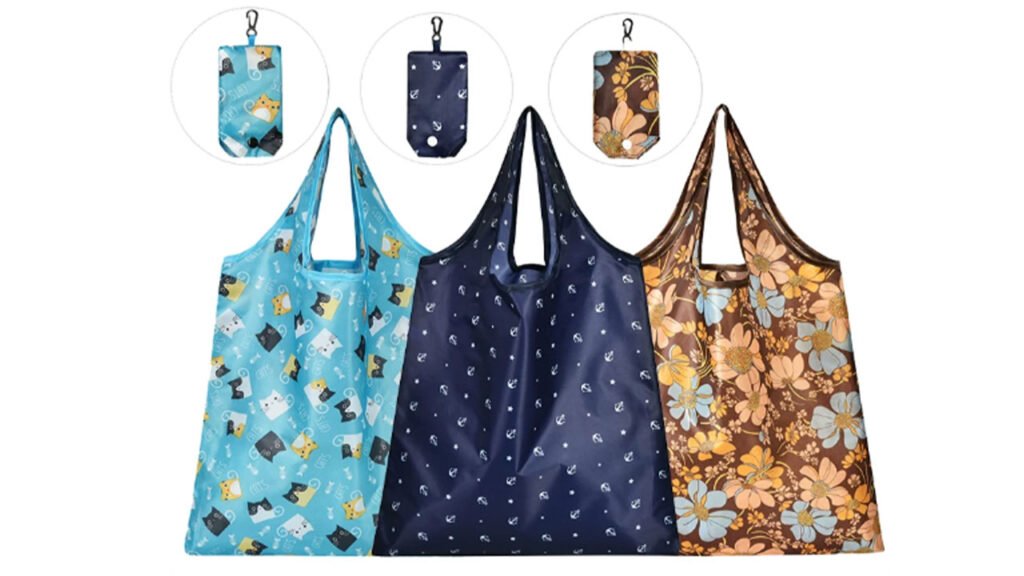
Polyester shopping bags offer high water resistance and tear resistance. Taking a thin version weighing 60–80 g as an example: the fabric has a tear strength of ≥120 N, a static splash resistance rating of up to IPX4, and can effectively support a load of 4–6 kg. Furthermore, the smooth and soft texture of the surface is ideal for printing high-definition images to showcase a brand’s style.
Suitable for:
- Custom gift bags for brand promotions, trade shows, and corporate events
- Reusable shopping bags for supermarkets and packaging solutions for cross-border retail
- Packaging for merchandise in apparel, beauty, and cultural and creative stores
- Storage bags for short trips and portable storage for outdoor activities
However, due to its soft texture, a polyester shopping bag cannot achieve the same stiff, structured feel as kraft paper, non-woven fabric, or canvas.
Note: When your brand promotion campaign involves outdoor use and promotion, a polyester shopping bag—which is lightweight, durable, water-resistant, quick-drying, supports high-definition printing, and is made from an affordable material—will be the wisest choice.
nylon shopping bag
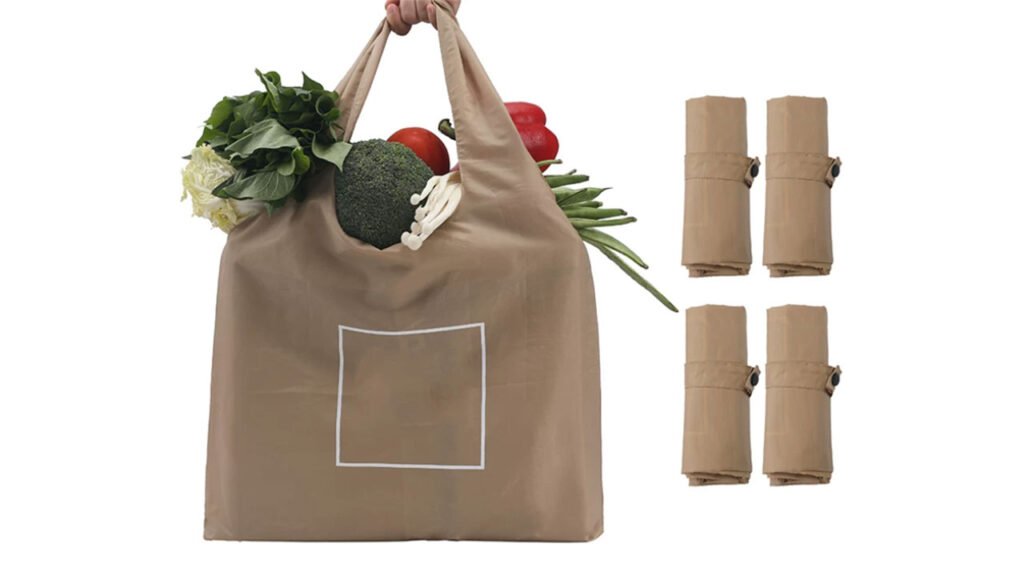
As the project procurement manager, I’m sure you’re no stranger to nylon. With its outstanding tear and tensile strength, nylon is virtually the go-to material for high-intensity applications in virtually any project scenario. When faced with:
- Custom gift bags for hardware brand trade shows and promotional events
- Reusable shopping bags for supermarkets (collected and reused)
In this case, a nylon shopping bag is the best choice for its durability; however, it’s important to note that prolonged exposure to UV rays can cause nylon shopping bags to age prematurely.
Note: If your project involves providing reusable shopping bags for long-term use in a shopping mall or selling them to customers for everyday shopping (420D nylon can support 7–12 kg, which is sufficient for daily use), then the nylon’s abrasion resistance will certainly highlight your brand’s premium quality.
cotton shopping bag
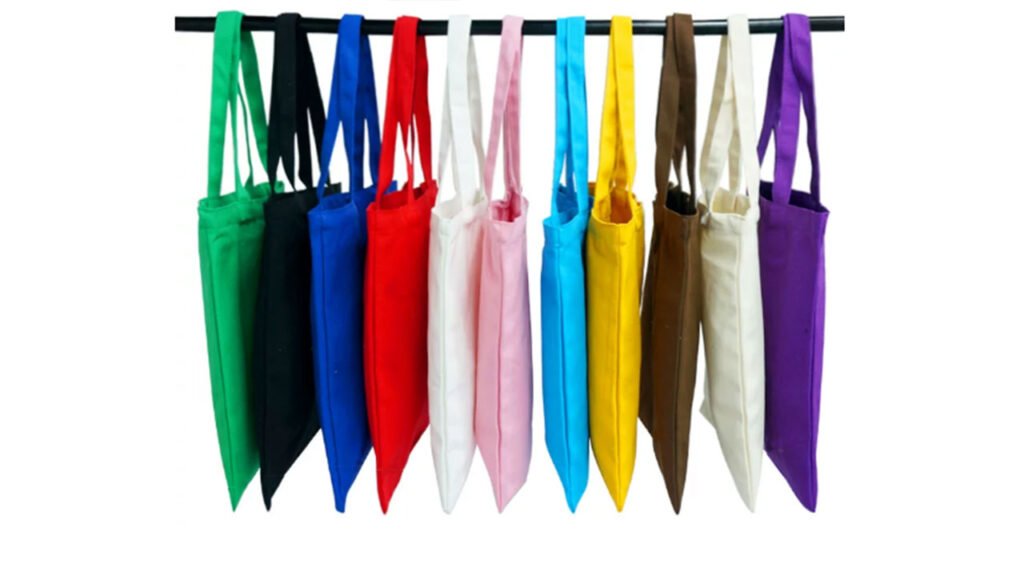
If your project requires a reusable shopping bag that is breathable, soft to the touch, and gentle on the skin, consider a cotton shopping bag. Although it isn’t as water-resistant as polyester or as tear-resistant as nylon, its unique, natural, skin-friendly softness is unmatched by other materials. Plus, just like clothing, it can be washed directly in the washing machine if it gets dirty. Common uses include:
- Product packaging for brand stores
- High-end custom bags for trade shows and events
- Reusable shopping bags for organic supermarkets
- Eco-friendly themed events
- Library book storage and organization
Are you concerned that cotton shopping bags may not be durable enough or able to carry heavy loads? Taking the standard 160–220g variety as an example, they can hold 7–12 kg, and have a Martindale abrasion resistance of ≥8,000 cycles—which is more than sufficient for everyday use as shopping bags. However, it’s important to note that cotton shopping bags are prone to snagging and wear when exposed to sharp objects, and the fabric’s strength decreases when wet.
Note: If you are sourcing shopping bags for eco-friendly or organic brands, cotton shopping bags can fully meet your clients’ needs for eco-friendly and healthy products.
canvas shopping bag
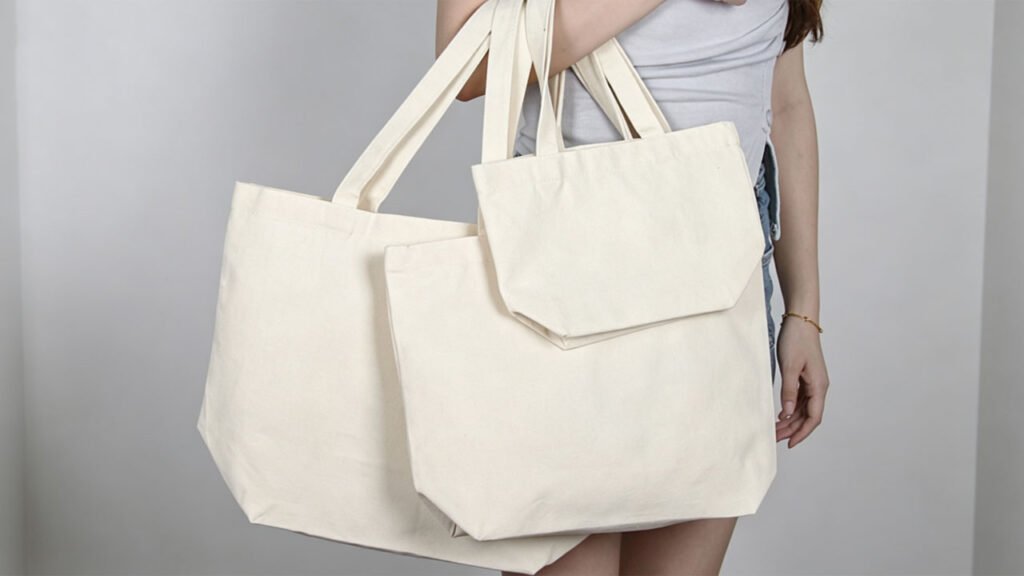
As the most common type of bag found in supermarkets, shopping malls, and on your commute, you’re surely familiar with canvas shopping bags. These bags, tightly woven from coarse yarn, are known for their durability, tear resistance, structured shape, and the ability to be printed with any design. Taking the standard 360–440g canvas as an example, it has a Martindale abrasion resistance of ≥12,000 cycles and a load-bearing capacity of 14–20 kg, making it ideal for the following scenarios:
- Premium Retail Product Packaging
- High-End Corporate Gifts and Customized Exhibition Items
- Everyday Grocery Shopping
- Packaging for Bookstores and Art-Related Merchandise
However, because canvas is made from cotton yarn, it has poor water resistance and absorbs water, becoming heavier when wet.
Note: As an alternative to disposable shopping bags, canvas shopping bags are not only durable but also offer natural, eco-friendly benefits. Although they have a higher initial purchase cost, they can be effectively used for 8 to 10 years when reused regularly as supermarket shopping bags. Therefore, over the long term, canvas shopping bags actually offer excellent value for money due to their durability.
mesh shopping bag
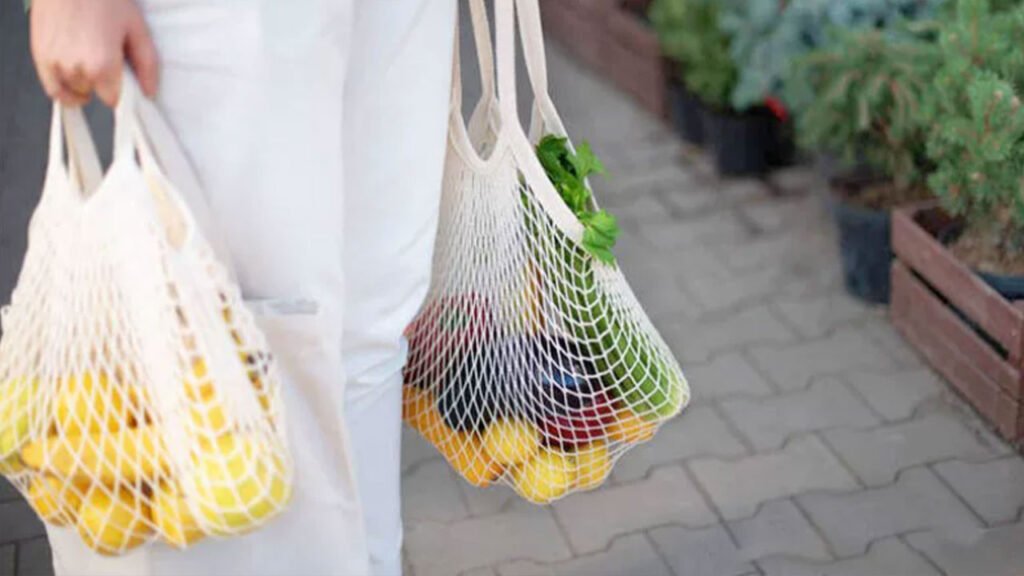
Have you ever seen mesh bags used to store various types of balls? They’re actually the same type of product, just scaled down in size with smaller mesh openings. The fully mesh, open-weave design provides excellent breathability for shopping and storage, preventing fresh produce from spoiling due to moisture buildup. It resists the accumulation of odors over time (if you’ve carried strongly scented items, simply rinse it in water), and when not in use, it can be easily scrunched up or folded to take up very little space—plus, you can see the contents at a glance when reaching inside. Especially suitable for:
- Reusable shopping bags for fruits and vegetables at farmers’ markets
- Storage bags for the beach, swimming, and bathing
- Packaging for organic fresh produce brands
- Customized gifts for eco-friendly themed events
- Breathable storage bags for home organization and travel
Note: If your project is intended for eco-friendly applications, choose cotton as the material during production. For use at the beach or near water, we recommend polyester for its quick-drying properties. For high-frequency daily use in supermarkets and farmers’ markets, nylon is the best choice as the weaving material.
drawstring shopping bag
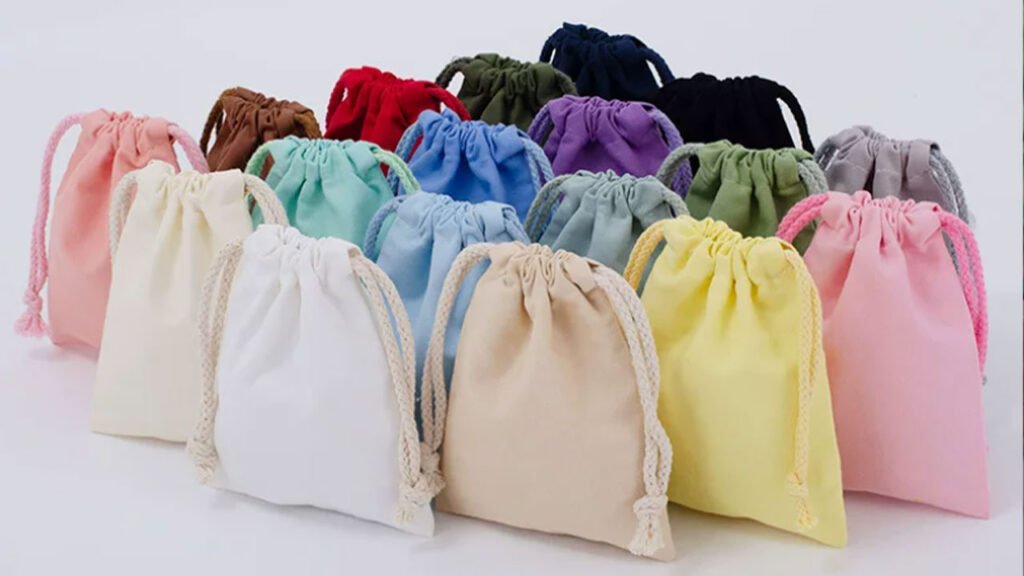
In the market, we often see bags that use backpack-style drawstrings to cinch the top—some are designed to be carried on both shoulders, while others are worn crossbody over one shoulder. These drawstring shopping bags allow you to quickly tighten the opening while shopping and can be carried on your body during a trip to the supermarket, freeing up your hands. If your supermarket has recently ordered a batch of these drawstring shopping bags but is currently struggling with limited warehouse space and wondering how to store them, there’s really no need to worry—these bags can be easily folded for storage and don’t take up much space. In addition to serving as supermarket shopping bags, they can also be used as:
- Storage solutions for gyms and sports equipment
- Custom gift bags for trade shows, sporting events, and brand promotions
- Simple storage for short trips
- Packaging for corporate promotions and member giveaways
Taking the standard 420D polyester model as an example, the rope loops are reinforced with rivets, resulting in a tear strength of ≥110 N and an effective load capacity of 5–9 kg. However, it is important to note that when frequently loaded with heavy objects, there is a risk of tearing at points of weakness.
Note: With their lightweight design and drawstring closure—which allows them to be carried like a backpack—your supermarket customers will be happy to purchase these bags, featuring your brand logo and slogan, at checkout, as they’re just as practical for their daily commutes.
Eco-Friendly Shopping Bags
Eco cotton shopping bag
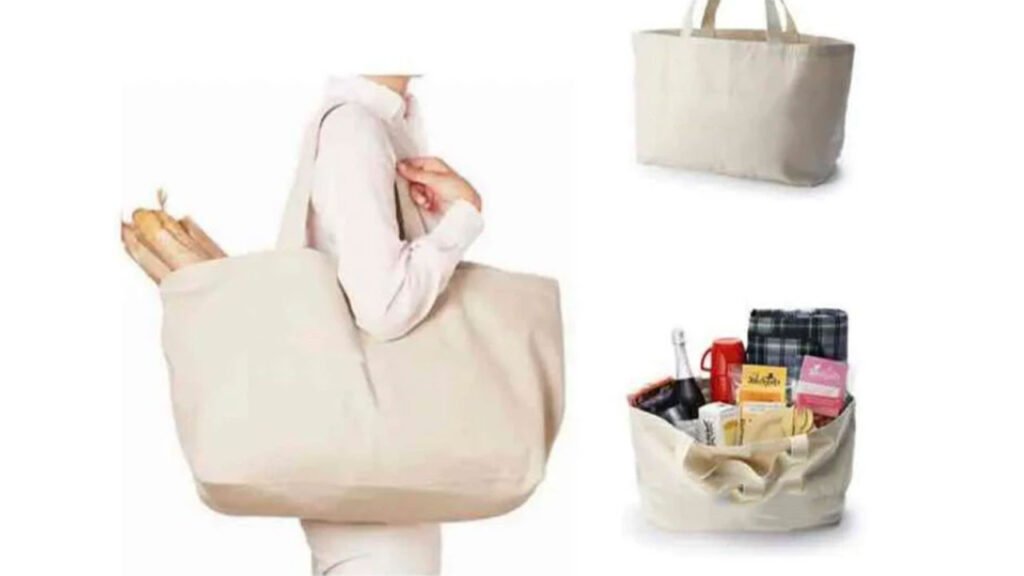
Made from organically grown cotton, these shopping bags are fully biodegradable, free of chemical toxins, and feel soft to the touch, causing virtually no allergic reactions during use.
Suitable for:
- Natural Cosmetics Brands
- Organic Food Supermarkets
- Infant and Toddler Textiles
- High-End Eco-Friendly Retail
Note: No chemical fertilizers are used in the cultivation of organic cotton, and the land on which it is grown must undergo a soil purification period (typically three years or more) before it can obtain organic cotton certification.
Eco canvas shopping bag
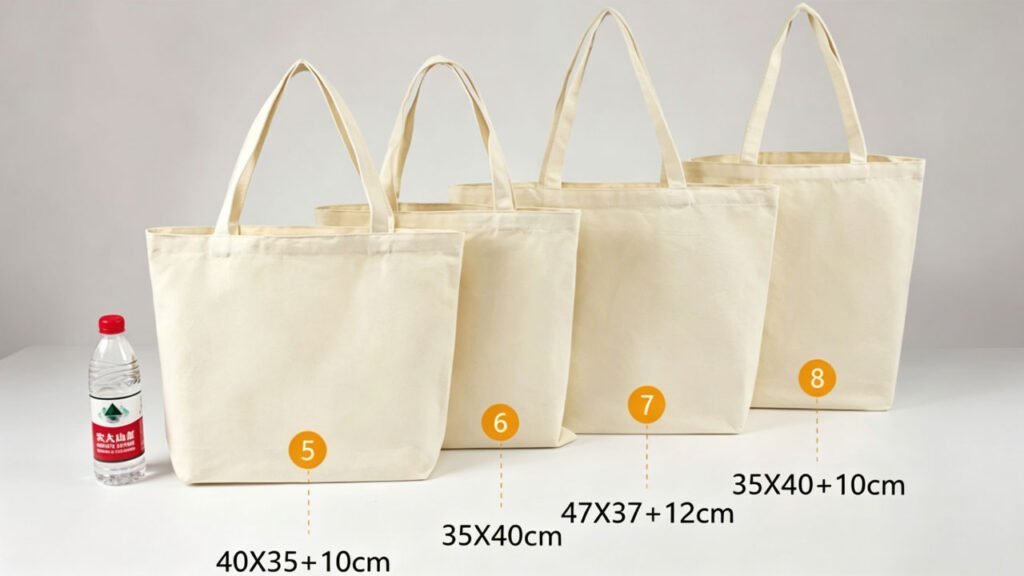
A canvas bag woven from organic cotton, made without the use of any chemical agents such as bleach during the manufacturing process. Commonly used for:
- Souvenir Sales at Art Galleries
- High-End Lifestyle Brand Stores
Note: Compared to standard cotton canvas shopping bags, eco-canvas shopping bags are more expensive and are better suited for high-end, eco-friendly, and artistic brands. (When promoting eco-canvas shopping bags, you must provide GOTS certification and the corresponding batch transaction certificate.)
Jute shopping bag
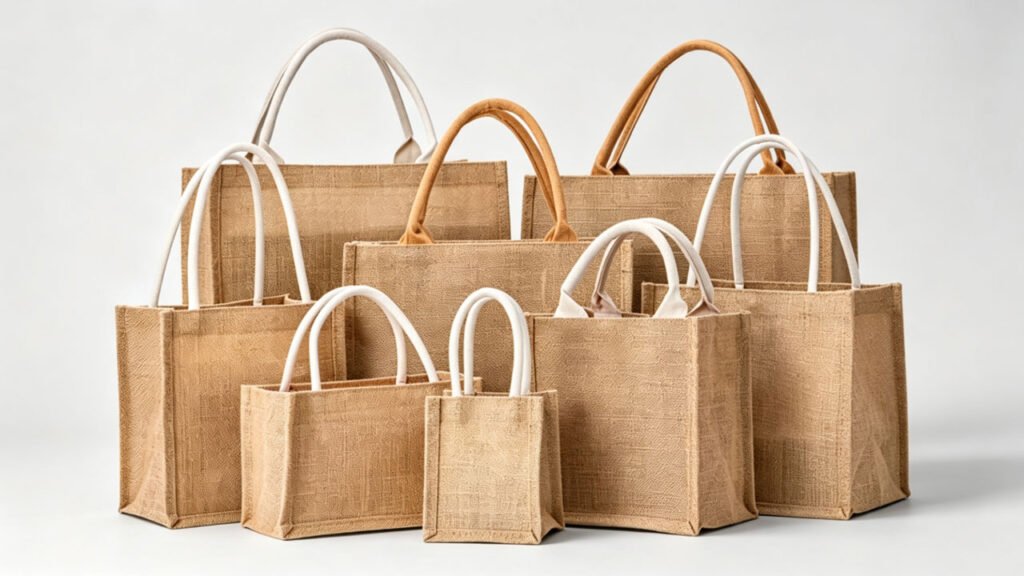
Jute shopping bags, woven from natural jute rope and featuring a rustic look, are a type of eco-friendly shopping bag that is often seriously overlooked. In fact, they are made from 100% natural materials, are 100% naturally biodegradable, and are inexpensive. Compared to urban department stores and supermarkets, jute shopping bags are more commonly used for:
- Farmers’ Market
- Wine Packaging
Tip: If your project requires a long-lasting, reusable, eco-friendly alternative to single-use, non-eco-friendly options at a lower cost, then a jute shopping bag is the best solution.
Compostable eco shopping bag
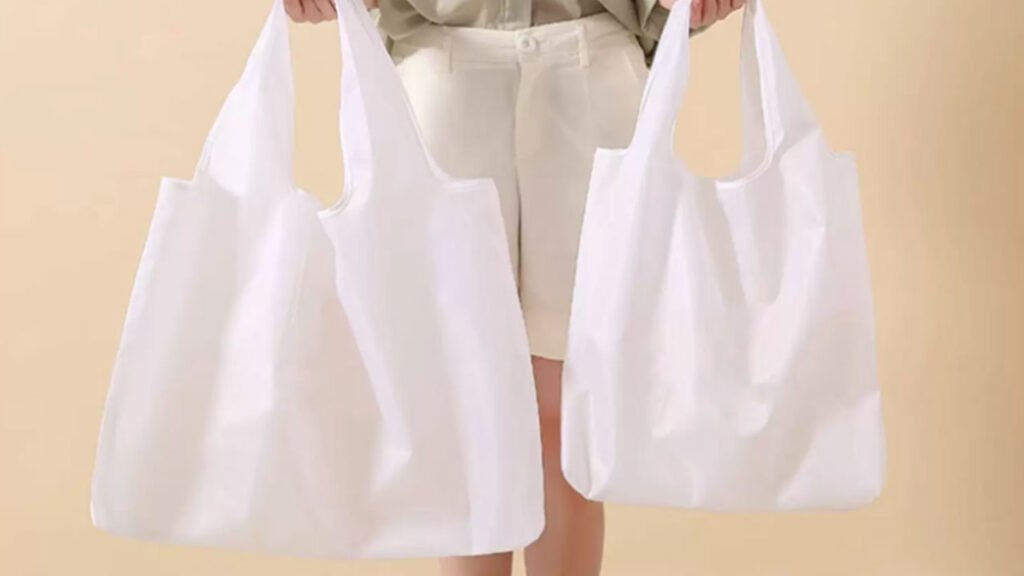
Although they look and feel very similar to ordinary plastic bags, they are primarily made from a PLA+PBAT cornstarch-based plant-derived blend and can fully degrade within 180 days under industrial composting conditions, leaving no microplastic residue. Their uses are essentially the same as those of ordinary plastic bags:
- Eco-friendly, compliant alternatives to plastic shopping bags
- Packaging solutions for organic produce and bakery stores
- Eco-friendly themed events and brand sustainability initiatives
- Storage solutions for kitchen waste composting; can be disposed of along with compostable waste
Tip: For shopping bag procurement projects that require environmental compliance but do not involve long-term, repeated use, compostable eco-friendly shopping bags are an excellent alternative.
Recycled PET shopping bag
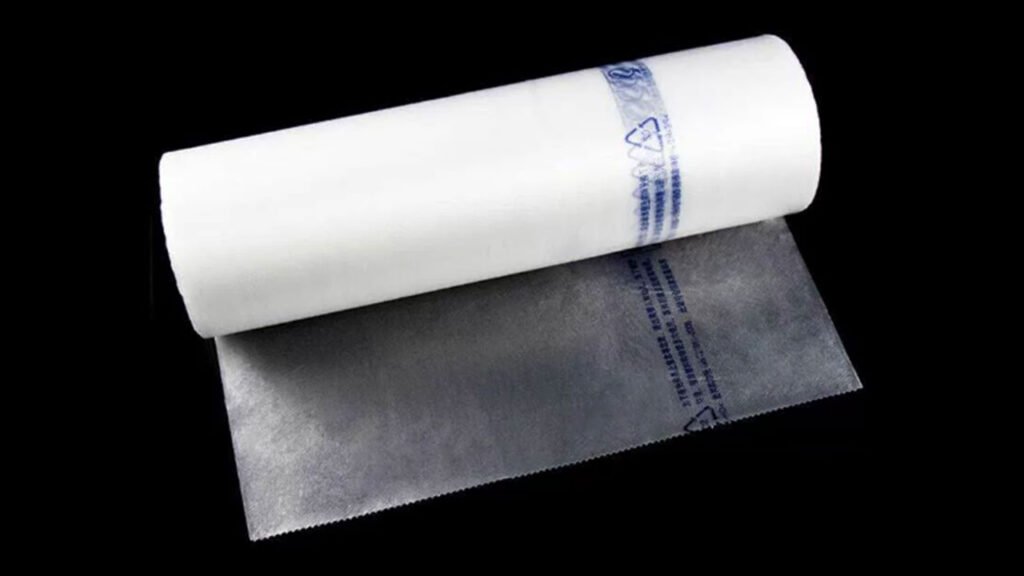
Unlike other eco-friendly shopping bags made from natural materials, the Recycled PET shopping bag is woven from rPET fibers derived from recycled plastic bottles. It is abrasion-resistant, tear-resistant, foldable, and reusable. It is primarily used for:
- ESG Sustainable Brands
- Retail Product Packaging in Regions with Environmental Regulations
- Corporate Environmental Exhibitions
- Reusable Shopping Bags for Supermarkets and Retail Stores
Note: This recycled PET shopping bag is no different from a regular plastic shopping bag when in use; it is primarily made from recycled plastic.
Using recycled PET shopping bags helps divert plastic waste from the oceans and landfills, contributing to efforts to clean up plastic pollution.
Recycled cotton shopping bag
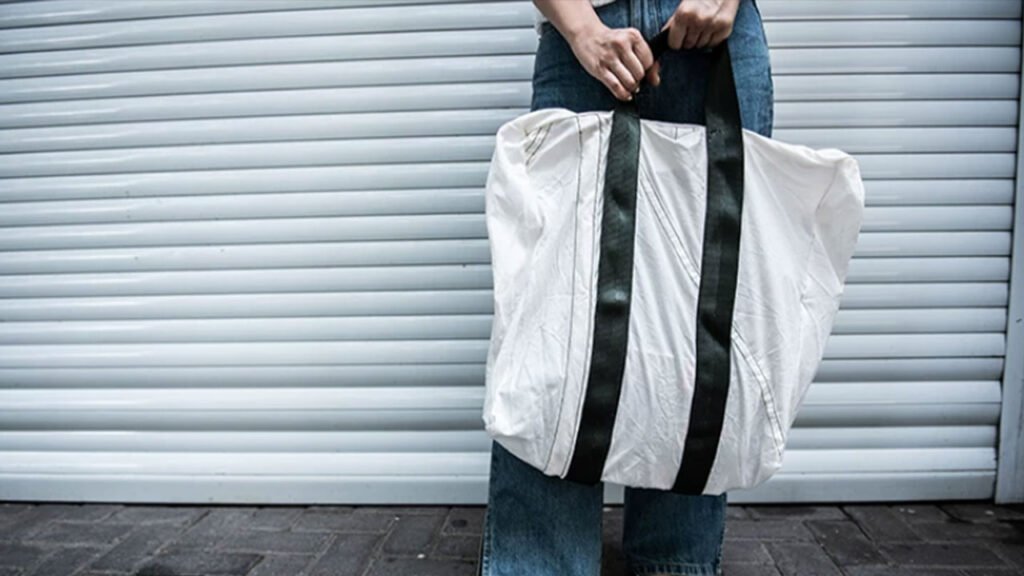
Similar to recycled PET shopping bags, which are made from recycled materials, recycled cotton shopping bags are made from recycled cotton textiles. They feel just like regular cotton shopping bags: soft against the skin, machine-washable, and reusable many times. They can also be used in the same situations as cotton shopping bags:
- Brands with a focus on sustainability
- Packaging for organic retail products
- Custom gift bags for ESG-focused companies and environmental charity initiatives
- Reusable shopping bags for supermarkets
- Packaging solutions for cultural and creative brands and maternal and infant brands
Note: Compared to pure cotton, the cotton used in recycled cotton shopping bags conserves a significant amount of water and agricultural land, promoting ecological, environmentally friendly, and sustainable development.
Even though cotton is a biodegradable, eco-friendly material, the biodegradation process still takes some time. Using recycled cotton shopping bags made from discarded cotton textiles allows for direct industrial processing, thereby reducing waste and wastefulness.
Summary of Differences Among Eco-Friendly Shopping Bags
Eco-friendly shopping bags are, in fact, also categorized into single-use and reusable types; the term “eco-friendly” does not necessarily imply that they must be reused repeatedly over the long term.
| Category | Shopping Bag Type | Eco Implementation Logic | Eco Certifications | Application Scenarios |
| Disposable Eco Shopping Bags | Compostable eco shopping bag | Fully degradable under industrial composting conditions, no plastic micro-residue | EN13432、ASTM D6400、OK Compost | Fresh food supermarkets, bakery stores, one-off packaging for short-term events |
| Long-term Reusable – Natural Fiber Eco Bags | Eco cotton shopping bag、Eco canvas shopping bag、Jute shopping bag | Made of natural plant raw materials, biodegradable; control chemical fertilizers & pesticides in planting phase to reduce environmental burden | GOTS / OCS organic traceability certification | Organic brands, high-end gifts, sustainable themed retail |
| Long-term Reusable – Recycled Material Eco Bags | Recycled PET shopping bag、Recycled cotton shopping bag | Reprocess recycled waste materials to reduce consumption of virgin raw materials | GRS Global Recycled Standard Transaction Certificate | ESG enterprises, cross-border brands, customized eco promotional merchandise |
When purchasing shopping bags for your project, please note the following: Eco-friendly shopping bags made from natural materials can degrade in the natural environment, but compostable shopping bags can only degrade in industrial composting facilities.
Summary of the Differences Among Three Types of Shopping Bags
When purchasing shopping bags for your project, consider whether you need disposable bags, reusable bags, or bags with eco-friendly features. Here, I’ve summarized the differences between these three types of shopping bags to help you better understand their distinctions:
| Category Classification | Main Shopping Bag Types | Usage Positioning | Service Life | Procurement Scenarios |
| Disposable Shopping Bags | Non-woven shopping bag (regular disposable style), Plastic shopping bag, Compostable eco shopping bag | Short-term single use / limited usage times | Limited use for 1–10 times | Fresh retail, takeout packaging, short-term promotional giveaways |
| Standard Reusable Shopping Bags | Non woven、polyester、nylon、cotton、canvas、mesh、drawstring shopping bag | Repeated daily cyclic use | Dozens to hundreds of repeated uses | Supermarket recurring shopping, in-store packaging, exhibition gifts, daily commuter storage |
| Eco Sustainable Reusable Shopping Bags | Eco cotton、Eco canvas、Recycled PET shopping bag、Recycled cotton shopping bag | Combine repeated use + brand ESG environmental promotion | Dozens to hundreds of repeated uses | Organic brands, ESG enterprises, eco-themed events, high-end cross-border customization |
Purchasing Tip: Although compostable disposable shopping bags offer good durability, they cannot be used as long-term reusable shopping bags. When promoting shopping bags made from organic or recycled materials, simply having a certificate is not enough; you must verify the batch-specific transaction certificates to ensure compliance.
Material Coefficients and Suitability for Shopping Bags
When purchasing shopping bags, they can be broadly categorized into three types: disposable, reusable, and eco-friendly. Within each category, you can select from the available materials. To help you understand the characteristics of each material during the procurement process, I’ve compiled a table for easy reference and comparison:
| Main Category | Material | Material Characteristics | Load Bearing Reference (with safety factor) | Service Life Reference |
| Disposable Shopping Bag | PE Plastic | Thin & lightweight, waterproof; average tear resistance; non-biodegradable; ordinary printing effect | Regular 20μm: 3-6kg | 1-5 times, disposable use |
| HDPE (High Density Polyethylene) | Stiff hand feel, waterproof, chemical resistant; poor puncture resistance; non-biodegradable | Regular 25μm: 4-7kg | 1-6 times, short-term disposable use | |
| Kraft Paper | Natural paper, recyclable; good stiffness; fully non-waterproof, easy to break when soaked | 120-170g: 3-6kg | 1-8 times, short-term reuse in dry environment | |
| Degradable Plastic (PE with degradation additives) | Waterproof; additives accelerate aging & fragmentation, produce microplastics, not equivalent to compostable | Regular 20μm: 3-5kg | 1-4 times, limited short-term use only | |
| PLA+PBAT Blend | Splash-proof; fully degradable under industrial composting conditions; cannot degrade rapidly in household natural environment | Regular 40μm: 5-8kg | 3-10 times, limited reuse, not fit for long-term cyclic use | |
| Standard Reusable Shopping Bag | PP Polypropylene Non-woven Fabric | Light weight, low cost; weak puncture resistance, strength drops after moisture absorption | 100‑140g:5‑9kg | 10-40 cyclic uses |
| Polyester | Excellent tear resistance, splash-proof, washable; non-biodegradable | 100‑120g:6‑10kg | 50-150 cyclic uses | |
| Nylon | Thin & lightweight, high tensile & tear strength, splash-proof; prone to aging under UV exposure, non-biodegradable | 210D:4‑7kg | 60-160 cyclic uses | |
| Regular Cotton Fiber | Natural fiber, breathable, washable; non-waterproof, mechanical strength declines after dampness | 160‑220g:7‑12kg | 80-200 cyclic uses | |
| Regular Canvas | Dense yarn weaving, wear & tear resistant, self-weight heavy; strength reduces when absorbing water | 360‑440g:14‑20kg | 100-250 cyclic uses | |
| Polyester Mesh Fabric | Hollow mesh structure with excellent air permeability; yarns are prone to snagging & damage by sharp objects | 120-160g: 5-9kg | 40-120 cyclic uses | |
| Polyester (Mainstream Grade) | High tensile strength, wash resistant, compatible with heat transfer printing; non-biodegradable | 420D Polyester: 5-9kg | 40-130 cyclic uses | |
| Eco-friendly Reusable Natural Fiber | Organic Cotton Fiber | Natural organic fiber, fully biodegradable; no pesticide residue, great air permeability | 160‑220g:7‑12kg | 70-180 cyclic uses |
| Organic Cotton Canvas | Woven with organic cotton, dense & wear-resistant; biodegradable; fiber strength drops after water absorption | 360‑440g:13‑19kg | 90-230 cyclic uses | |
| Jute Fiber | Natural plant fiber, biodegradable; high tensile strength under dry condition; rough hand feel, not wash resistant | 300‑380g:9‑14kg | 50-140 cyclic uses | |
| Disposable Eco Material | PLA+PBAT Plant-based Blend | Splash-proof; fully degradable under industrial composting conditions; has shelf life & aging limit | Regular 40μm: 5-8kg | 3-10 times limited reuse |
| Eco-friendly Reusable Recycled Material | rPET Recycled Polyester | Tear-resistant, splash-proof, wash resistant; non-biodegradable; aging risk under UV exposure | 420D:6‑11kg | 50-150 cyclic uses |
| Recycled Cotton Fiber | Biodegradable, breathable & washable; slight color difference risk for recycled raw materials | 160‑220g:7‑12kg | 60-170 cyclic uses |
When customizing and wholesaling shopping bags, simply analyze your project clients’ target market to determine whether eco-friendly features are needed, assess the typical weight requirements based on the items being sold, and then select the appropriate material.
Recommended Shopping Bag Project Case Studies
Thanks to their simplicity and versatility, shopping bags are used in virtually every type of store. However, I must point out that even though they’re just shopping bags, they still need to be categorized and sourced based on the specific application scenario. Now, from the perspective of product bundling and brand promotion gifts, I’ll provide you with professional procurement advice for your project:
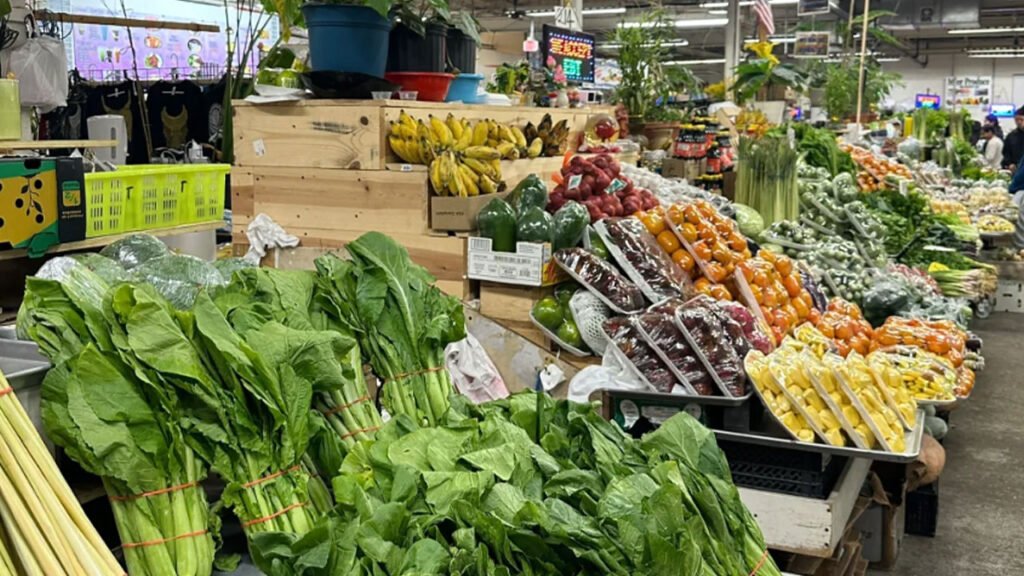
Selling product accessories and services
For which types of stores are you purchasing shopping bags? Large supermarkets? Clothing stores? Bakeries? Farmers’ markets? Each type of store has different needs when it comes to shopping bags:
- Large Supermarkets: These need to meet the demand for lower costs when purchasing in bulk. Compostable bags can serve as compliant single-use alternatives; non-woven fabric and recycled PET bags can be sold as reusable shopping bags, suitable for customers’ daily purchases of heavy items. If your project client has a sufficient budget, we recommend adding canvas shopping bags as well for customers’ convenience while shopping inside the supermarket.
- Clothing Stores: As an industry that requires a keen sense of fashion, the shopping bags provided must have an attractive appearance and feature the brand logo. Cotton and canvas bags, with their premium feel, are ideal for mid- to high-end clothing stores, while polyester drawstring bags are suitable for athletic apparel stores and can be used as promotional giveaways to increase the conversion rate of in-store customers.
- Bakeries: Special attention must be paid to food contact safety and preventing food from becoming damp and spoiling. When supplying shopping bags to these types of businesses, we recommend choosing paper bags with breathable properties, as well as compostable options suitable for fresh baked goods that meet EU environmental compliance requirements.
- Farmers’ Markets: Given the high demands for load-bearing capacity and breathability, when sourcing products, prioritize recommending ventilated mesh bags suitable for fruits and vegetables, jute shopping bags suitable for dried agricultural products, and compostable shopping bags for single-use portioning to your end customers.
Branded Promotional Gifts
When distributing promotional gifts as part of your brand marketing efforts, prioritize non-woven shopping bags and drawstring shopping bags—options that are cost-effective, highly practical, and frequently used. Customers are more likely to reuse these bags during their daily commutes, and the logos and promotional slogans printed on them will provide ongoing exposure for your brand.
For eco-friendly brand campaigns, consider relatively low-cost shopping bags made from materials like jute or cotton for gift-giving and eco-themed promotions.
How to Choose a Shopping Bag
By now, I’m sure you have a thorough understanding of the characteristics of each type of shopping bag material. Perhaps you can already make a general judgment about which material is best suited for your project, but you still have some doubts, right? Now, I’ll show you how to select the right shopping bag for your project based on your usage needs, application scenarios, and product compatibility. You’re just one step away from becoming a professional shopping bag procurement manager!
Assess Usage Needs
First, ask what items your project—or your client—plans to store. The weight capacity required for shopping bags varies depending on whether they’re used for produce, clothing, or electronics. Here, I’ll use the standard specifications for common shopping bags as an example:
| Shopping Bag Category | Application Scenarios | Storable & Carryable Item Types | Reference Regular Capacity |
| Compostable eco shopping bag | Fresh retail, bakery stores, limited repeated use | Fruits & vegetables, bread, baked food, lightweight daily necessities | 15‑22L |
| Non‑woven shopping bag | Supermarket promotions, store giveaways, exhibition gifts | Apparel, stationery, general daily shopping goods | 16‑23L |
| Polyester shopping bag | In-store retail, exhibitions, daily recurring shopping | Apparel, beauty gift boxes, books, daily necessities | 17‑24L |
| Nylon shopping bag | Outdoor trips, supermarket shopping, event gifts | Apparel, personal carry-on items, lightweight purchased goods | 14‑21L |
| Cotton shopping bag | Cultural & creative stores, apparel shops, brand gifts | Books, picture albums, apparel, dry daily goods | 18‑25L |
| Canvas shopping bag | Boutique retail, heavy goods purchase in supermarkets, high-end gifts | Thick books, shoe boxes, complete gift sets, non-wet heavy items | 22‑30L |
| Mesh shopping bag | Farmers’ markets, fresh goods procurement | Fruits & vegetables, dry agricultural by-products; not suitable for sharp items | 13‑20L |
| Drawstring shopping bag | Sporting goods stores, event giveaways, short trips | Sports gear, apparel, small personal carry-on items | 12‑19L |
| Eco cotton shopping bag | Organic brands, ESG gifts, cultural & creative retail | Books, apparel, dry food, non-wet maternal & infant supplies | 17‑24L |
| Eco canvas shopping bag | Premium sustainable brands, organic store gifts | Thick picture albums, gift boxes, dry grains, non-wet heavy items | 21‑29L |
| Jute shopping bag | Organic agricultural product stores, eco-themed gifts | Grains, fruits & vegetables, books, brand companion gifts | 18‑26L |
| Recycled PET shopping bag | ESG brands, supermarket recurring shopping, event gifts | Apparel, daily necessities, gift boxes, general purchased goods | 16‑23L |
| Recycled cotton shopping bag | Sustainable brands, cultural & creative gifts, store packaging | Books, apparel, dry daily necessities | 17‑24L |
Note: For typical neighborhood supermarkets, the 15–22L capacity range is sufficient to meet the shopping needs of virtually all customers. If a single shopping bag cannot hold all of a customer’s items, they can be divided between two shopping bags. This helps prevent damage to a single bag due to excessive weight and avoids an uneven weight distribution when the customer is carrying it.
Recommended Operating Environment
Protective Environment for Carried Items
When using shopping bags for shopping, the three most common protective requirements are actually just water resistance, oil resistance, and tear resistance. So, I’ve listed below the shopping bags that perform well in these areas.
- Waterproof: Plastic, HDPE, polyester, nylon, recycled PET, and compostable shopping bags
- Oil-resistant: Film-based bags generally perform well against oil stains
- Tear Resistance: Nylon (210D, tear strength ≥ 130 N), polyester (100–120 g, tear strength ≥ 115 N), recycled PET (420D, tear strength ≥ 130 N), canvas (360–440 g, tear strength ≥ 125 N), Eco canvas (360–440 g, tear strength ≥ 110 N), jute (300–380 g, tear strength ≥ 130 N)
Regulatory Environment by Region
Some regions have requirements regarding the micrometer (μm) specifications and environmental characteristics of shopping bags. Therefore, if the market your project targets has enacted restrictive regulations, please be sure to comply with them to avoid bringing your shopping bag project to a standstill. For your reference, I have listed the regulations of some well-known countries, such as the United States, the United Kingdom, and France:
- France: Distribution and sale of single-use plastic shopping bags thinner than 50 μm are prohibited; compostable bags must be EN 13432 certified.
- United Kingdom: Retailers are required to charge for single-use plastic shopping bags with a thickness of 70 μm or less; fabric shopping bags are exempt from this requirement.
- Germany: Distribution of thin single-use plastic bags is restricted; compostable products must be EN 13432 certified and are subject to the PPWR packaging regulations.
- Italy: Restrictions on the use of thin single-use plastic bags; products claiming to be compostable must have EN 13432 certification
- Spain: Taxation and regulation of thin single-use plastic bags; packaging must comply with PPWR and REACH-SVHC requirements
- Canada: CCPSA regulates hazardous substances; provincial regulations govern the thickness of plastic shopping bags and local bans on plastic use
- United States: No uniform federal thickness standard; Compostable products must meet ASTM D6400/BPI standards; California enforces Prop 65 regulations
- Australia: Plastic ban regulations vary by state; single-use thin plastic bags are prohibited, and compostable products must meet the AS 4736 standard
- Japan: Promotes plastic reduction; no mandatory minimum thickness limit in micrometers (μm), with a focus on packaging recycling and hazardous chemical substances
- South Korea: Implements fees to reduce single-use plastic bags; regulates hazardous substances in packaging materials, and compostable products require corresponding certification
Reminder: Please note that if the store supplying your shopping bags claims they are “organic,” “recycled,” or “compostable,” the certificate cover alone is not sufficient; you must provide the batch transaction certificate.
If you’ve read this far and absorbed all the key points mentioned earlier, your current knowledge base is more than sufficient to enable you to become a professional procurement manager for shopping bag projects or to select the right shopping bag categories and materials for your procurement projects. Simply put, for businesses such as bakeries, paper bags not only maintain breathability for the food inside—preventing moisture buildup that leads to spoilage—but also provide an attractive appearance when given as gifts. For brand promotion and large supermarket chains, it’s even more important to consider cost factors and the quality of logo printing to help the brand stand out. If you’ve already finalized the details for your shopping bag project and are now looking for an experienced shopping bag manufacturer to provide OEM and ODM services, please feel free to contact us. Since 2004, 367 Bags Factory has been dedicated to the production and R&D of shopping bags. You can receive free physical samples before beginning your procurement process to experience the details firsthand.