Gift Bag Materials Ultimate Guide: Performance & Project Selection
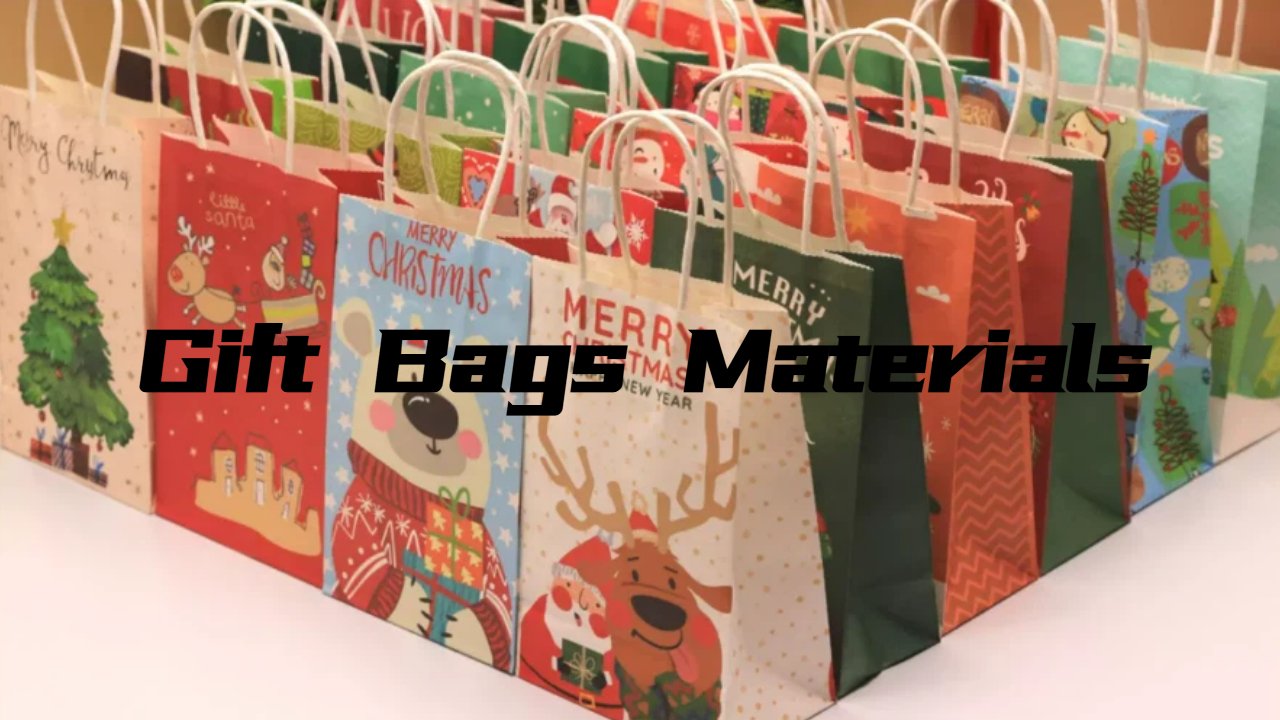
When choosing the right gift bag for your project, do you find yourself confused by the wide variety of materials—such as kraft paper, leather paper, and polyester? Are you worried that choosing the wrong material might affect the progress of your entire gift bag project? In fact, selecting the wrong material can indeed lead to some serious problems—or even render the gift bags completely unusable! But don’t worry. I’ve been dedicated to the research, development, and production of gift bags since 2004, and now I’d like to share my extensive experience with you. Using simple, easy-to-understand language, I’ll help you understand the differences between these gift bag materials and how to make the right choice for your brand’s custom wholesale orders!
(This article will help you avoid all the wrong choices and wasted money, and at the end of the article, you’ll receive a free gift bag with physical samples.)
Quick Takeaway: Choose the right materials based on the intended use of the gift bag
I understand that you’ve been searching for the answer for a long time but haven’t found what you’re looking for. So I won’t go into the definition, purpose, or history of gift bags here… You just want to know which type of material gift bag is best suited for your brand’s project. I’ve put together a reference table based on usage scenarios, gift bag categories, and materials that you can use right away:
| Usage Scenario | Gift Bag Type | Recommended Materials |
| Holiday & party party favors | Holiday gift bags, mini party gift bags | Kraft paper, holographic mirror paper, PP non‑woven fabric, cotton canvas |
| Wedding event party favors | Wedding gift bags, bridal shower favor bags | Satin fabric, leatherette paper, pearlescent paper |
| Corporate gifts | Business gift bags, premium luxury gift bags | Leatherette paper, PU synthetic leather, coated art paper |
| Retail store packaging | Retail matching gift bags | Coated art paper, kraft paper |
| Eco‑conscious & sustainable‑focused brands | Reusable gift bags | Cotton canvas, linen, polyester |
| Cosmetics & jewelry gift packaging | Cosmetic gift bags, jewelry gift bags | Pearlescent paper, satin fabric, holographic mirror paper |
| Bulk promotional giveaways for trade shows | Promotional gift bags | PP non‑woven fabric, 210D polyester |
| Clear display packaging | Transparent gift bags | BOPP film, biodegradable film |
You’ve got the answer right away, haven’t you? If you have a little more time, I suggest you keep reading. I’ll break down the characteristics of various gift bag materials and explain how they differ in terms of load-bearing capacity, protection, and portability. That way, when your client or supervisor questions your choice of gift bag materials, you’ll be able to provide them with a range of explanations about which materials are best suited for the project—and demonstrate your expertise!
Differences in Materials and Properties of Gift Bags
Although you already have a general idea of what kind of gift bags to use for the project you’re in charge of, you’re not entirely sure why, right? Here, I’ve listed an explanation of the most common gift bag materials (covering suitable scenarios, common specifications, lifespan, printing characteristics, and price ranges).
If you’re in a hurry, you can use the navigation links in the article to jump directly to the section on gift bag materials, or you can read through the article in order to learn more.After all, no one knows if your client will ask next, “How is XXX material? Is it suitable? Why is it suitable/unsuitable?”
Paper
Thanks to their low cost and ease of use, they are often the material of choice for making gift bags as a single-use option:
Kraft Paper
Kraft paper is a type of paper you’ll find in almost any setting. When you touch it, you’ll immediately notice its sturdy texture and its simple, vintage style (natural warm brown color).
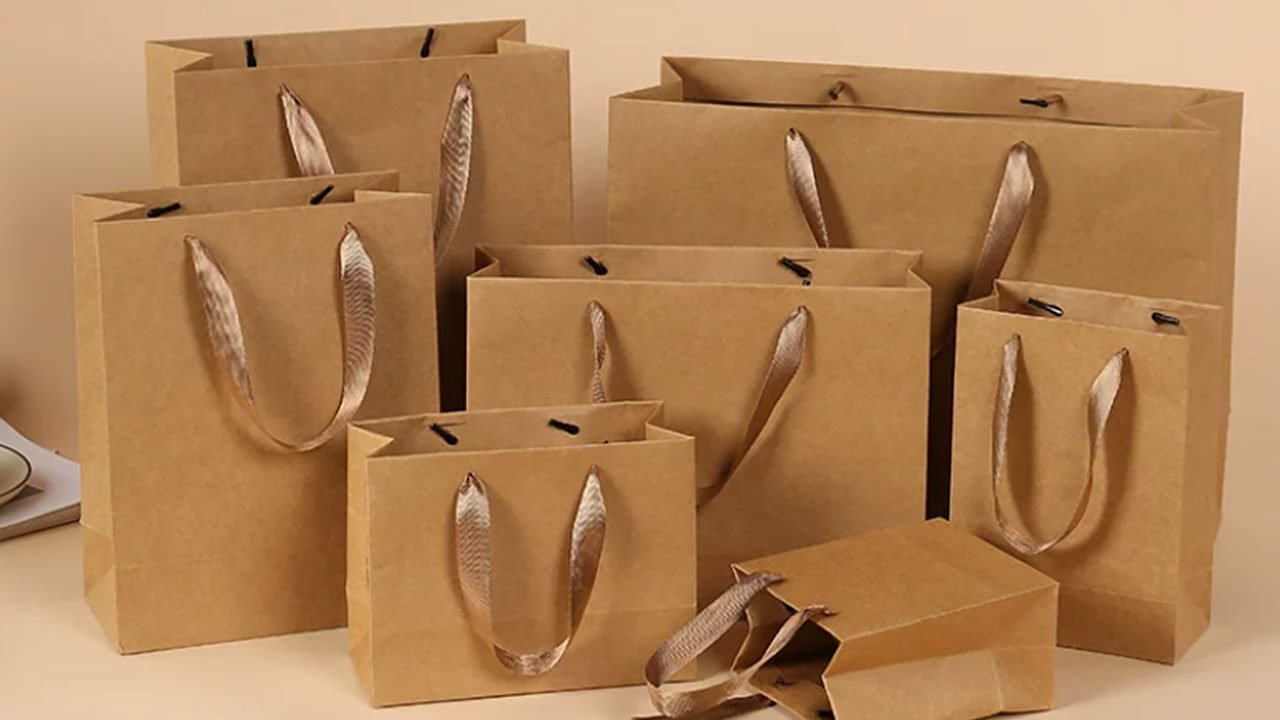
- Suitable Applications: Baked goods as gifts, cultural and creative merchandise, brand events, organic products, and minimalist retail packaging
- Common Specifications: 120g–250g; the most popular gift bags typically use 160–220g. For larger-sized Kraft paper, choose the 200–250g range to enhance stiffness
- Lifespan: Primarily single-use; when exposed to water, strength rapidly drops to 18–25% of its original value, making it highly prone to tearing. Therefore, it should be stored in a dry environment, where it typically lasts about 1 year.
- MIT Fold Resistance Test: Using 220g natural-colored kraft paper as an example, it can withstand approximately 320–450 folds before breaking
- Printing Characteristics: Due to its naturally dull yellowish base color, natural yellow kraft paper may exhibit color shifts and appear grayish during CMYK four-color printing; however, it produces excellent results with gold and silver foil stamping as well as single-color ink printing. White kraft paper performs better than natural yellow kraft paper in full-color printing.
- Price Range: Low to mid-range; at the same grammage, natural yellow kraft paper is less expensive than white kraft paper.
Note: If Kraft paper has not been coated, it is naturally biodegradable.
Coated Art Paper
Finished coated art paper gift bags usually have a glossy or matte laminate on the surface; these are the most common types of paper bags found in beauty stores.
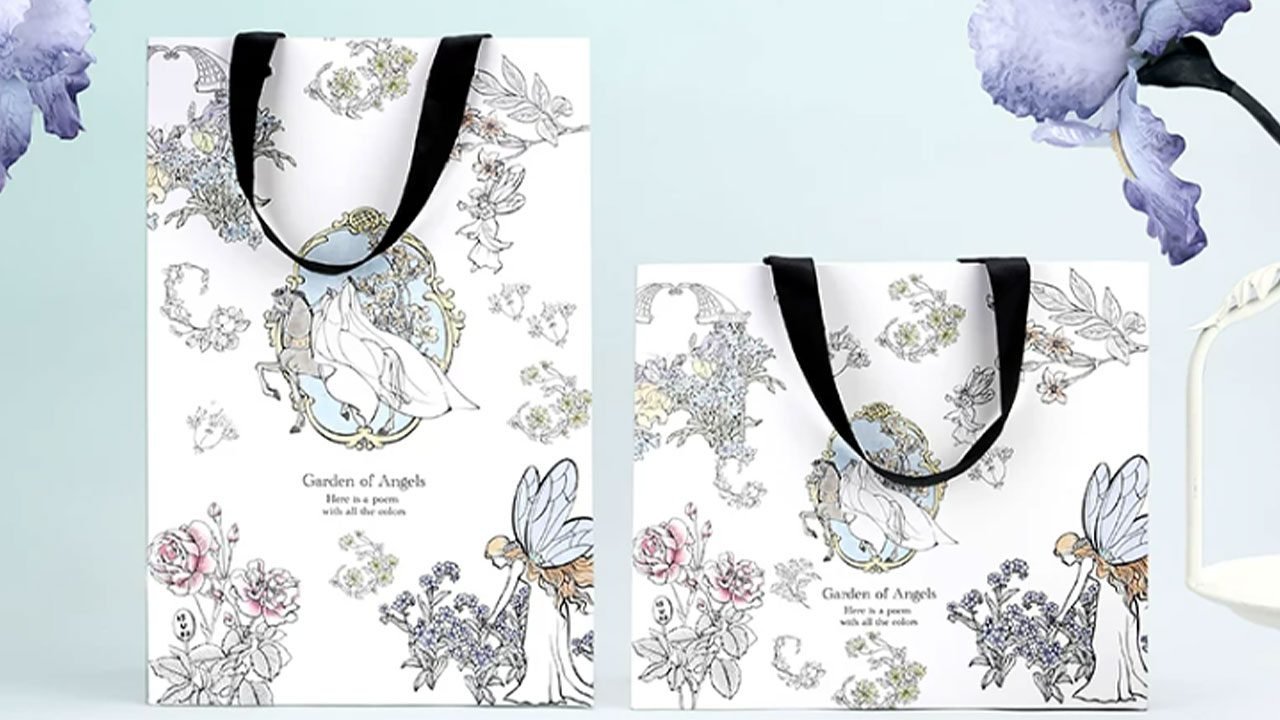
- Suitable Applications: Holiday gift boxes, beauty gift sets, and high-end gift packaging for retail stores
- Common Specifications: 157g–300g; mainstream gift bags typically use 200–250g
- Lifespan: Single-use; laminated Coated Art Paper offers a slight improvement in water resistance and tear resistance, but the paper is highly susceptible to moisture damage once the laminate is compromised.
- MIT Fold Resistance Test: 250g coated paper breaks after 180–260 folds; lamination improves fold resistance by 40–60%; however, the paper substrate retains only 12–20% of its strength when wet.
- Printing Characteristics: It is one of the best-performing materials for four-color high-definition printing and supports post-press processes such as foil stamping and embossing.
- Price Range: Mid-range; plastic lamination and reinforced cardstock will increase the production cost of making gift bags.
Note: Although coated art paper has a richer texture than kraft paper after lamination, it is not biodegradable.
Pearl Paper
The most obvious characteristic is that they sparkle like diamonds under the lights. If you think back carefully, you’ve surely seen them at weddings and in jewelry stores.

- Ideal for: Wedding favors, jewelry, and luxury beauty gift bags
- Common weights: 128g–250g; the most common range for gift bags is 180–230g
- Lifespan: Single-use; the pearlescent coating is prone to scratching and cannot withstand heavy loads, so it is generally suitable only for small items such as rings, small pendant necklaces, candy, and commemorative cards.
- MIT Fold Resistance Test: 230g pearlescent paper breaks after 120–200 folds; the surface pearlescent coating is abrasion-resistant (Sutherland abrasion test: only 80–150 cycles), but the pearlescent effect disappears after friction; strength retention after exposure to water is 15–22%.
- Printing Characteristics: Due to the physical coating on the surface, ink absorption is poor and the paper dries very slowly. When printing large areas of solid dark colors or using standard four-color process printing, ink smudging is common and the pearlescent texture may be obscured; however, the paper delivers excellent visual results when used for gold or silver foil stamping.
- Price Range: Mid-to-high range
Note: Pearl Paper gift bags have a more eye-catching appearance than Kraft Paper or Coated Art Paper, but they are very prone to scratching during use, which can diminish their shimmering effect.
Leather Paper
A type of paper that mimics leather is often used not only for making gift bags in business settings but also for crafting notebook covers. Perhaps there’s a notebook with a “Leather Paper” cover sitting right there in your study right now.
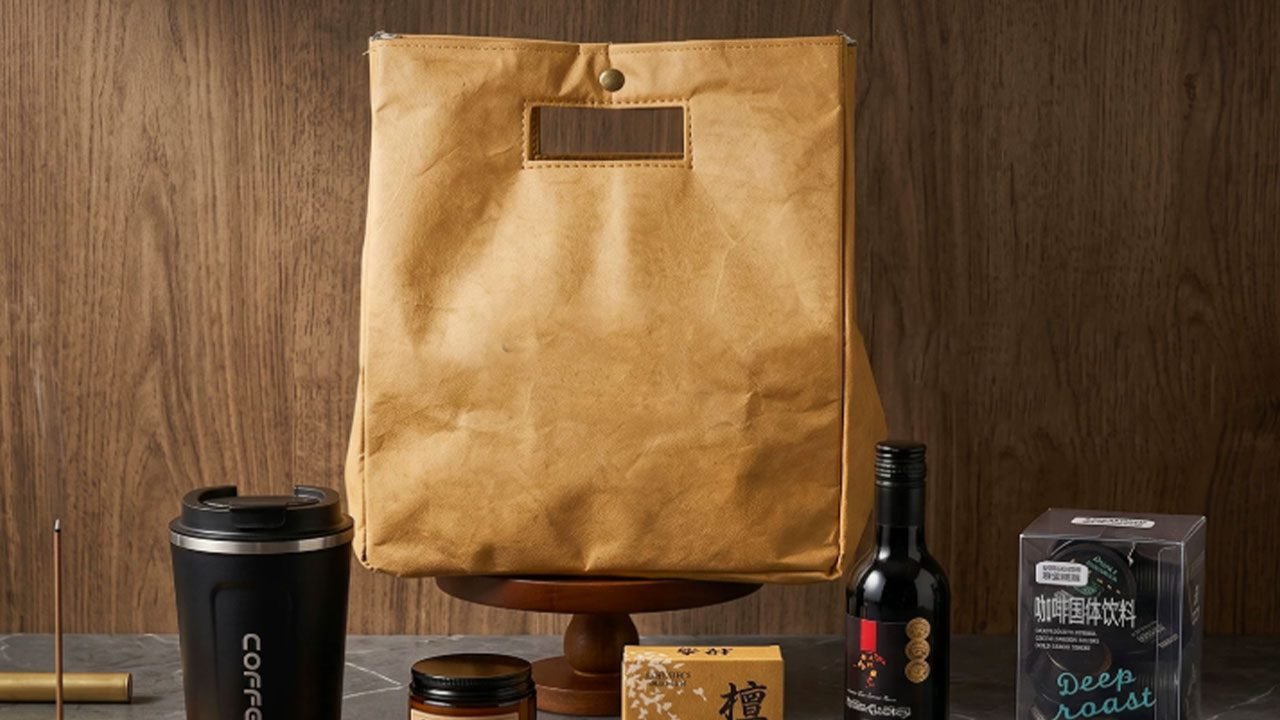
- Suitable Applications: High-end business gifts, gift bags for luxury goods
- Common Specifications: 120–220 g; when making gift bags, 160–200 g is typically used, requiring reinforcement with cardboard at the inner opening and bottom
- Service Life: Single-use paper; although it has better tear resistance than ordinary paper, it is still susceptible to water—its wet strength retention rate is only 21–28% after immersion.
- MIT Fold Resistance Test: 200g faux leather paper can withstand 350–520 folds before breaking, outperforming standard art paper.
- Printing Characteristics: The dark surface and leather-like texture prevent CMYK four-color inks from rendering evenly; therefore, it is better suited for processes such as foil stamping (gold or silver), embossing, spot colors (glossy black or matte black), and UV varnish, which maximize its leather-like texture.
- Price Range: On the higher end
Tip: When customizing Leather Paper gift bags for your project, pairing them with genuine leather or PU handles can enhance their premium look and feel.
Fabric
If your brand would prefer customers to reuse the bags later to increase brand exposure, fabric gift bags would be a better choice.
Cotton Canvas
Thanks to its natural, eco-friendly, durable, and stylish qualities, canvas is so versatile that you can find canvas bags virtually anywhere—from shopping malls and street corners to offices. If you’re looking to make gift bags, this fabric’s excellent properties are sure to meet your expectations.
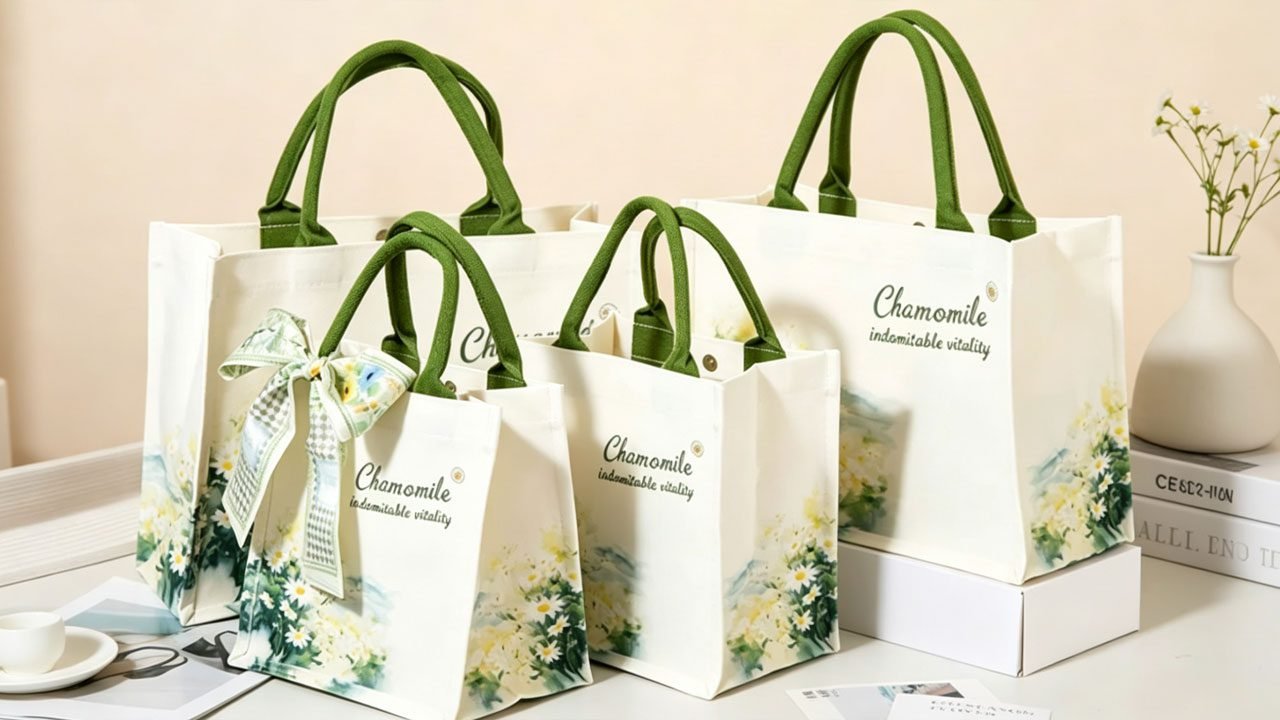
- Ideal for: Sustainable brand gift bags, cultural and creative gifts, long-term promotional giveaways at trade shows, and everyday reusable storage bags
- Common specifications: Standard canvas gift bags 8 oz–12 oz (approx. 230 g–340 g/m²), heavyweight durable styles 14 oz–16 oz (approx. 400 g–450 g/m²)
- Lifespan: Designed for long-term, repeated use; resistant to bending and tearing; can be reused for 1–3 years under normal conditions.
- Abrasion Resistance / Strength Testing: Taking 12oz canvas as an example, it passes the Wyzenbeek abrasion test with ≥12,000 cycles without pilling or tearing; warp tear strength is 38–45N, and weft tear strength is 32–40N; it is machine-washable when soiled, and retains over 85% of its overall strength after 20 washes.
- Printing Characteristics: Suitable for screen printing, heat transfer, and digital direct-to-fabric printing. Due to cotton canvas’s stable ink absorption properties, the printed colors appear natural and durable, making it ideal for large-scale brand logo printing.
- Price Range: Low-to-mid to mid-range; the higher the grammage, the higher the unit price.
Note: Cotton canvas is a natural material that is 100% biodegradable and leaves no chemical residue.
Polyester
A material that resists wrinkles and mold, is affordable, and is naturally water-repellent—you’ll find it almost everywhere: in clothing, curtains, bed sheets, backpacks… Polyester, a favorite across many industries, is sure to impress when used for your brand’s gift bags.
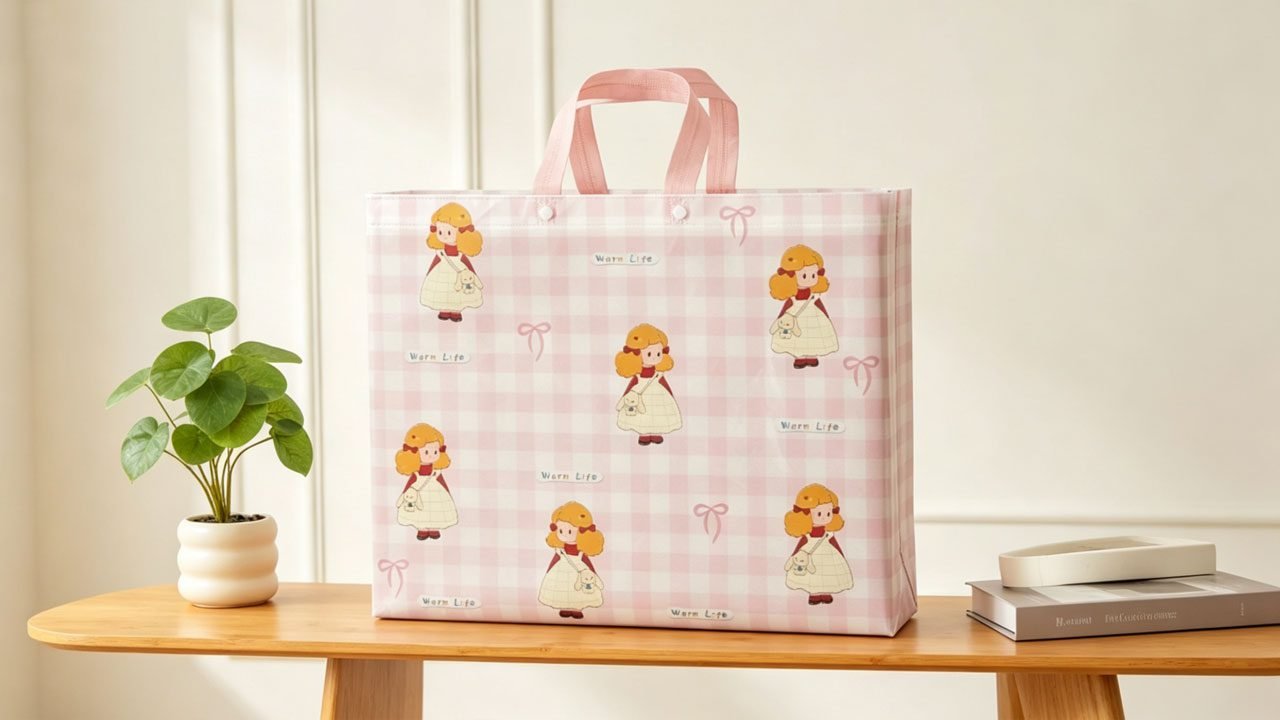
- Suitable Applications: Brand promotional gifts, trade show giveaways, event freebies, foldable gift bags
- Common Specifications: 210D, 420D, 600D; 210D is typically used for mainstream gift bags
- Lifespan: Reusable; lasts 1–2 years under normal use.
- Abrasion Resistance / Strength Testing: Taking 420D polyester as an example, the Martindale abrasion test yields ≥18,000 cycles, with tensile strength at break of 620 N in the warp direction and 580 N in the weft direction; even in humid environments, strength retention remains above 95%.
- Printing Characteristics: Color saturation exceeds that of cotton fabric, and high-definition, photo-quality pattern printing is achievable, making it ideal for full-coverage, full-color sublimation printing.
- Price Range: A cost-effective material offering excellent value for money, highly suitable for high-volume orders.
Note: Polyester is more water-resistant than cotton and linen; it does not easily absorb water or become damp, making it suitable for export to humid regions.
Satin Fabric
Have you ever seen models walk the runway wearing clothes with a mirror-like sheen? This material can achieve the exact same effect when used for gift bags. If your project is for a wedding, this is another, even more eye-catching option besides Pearl Paper.
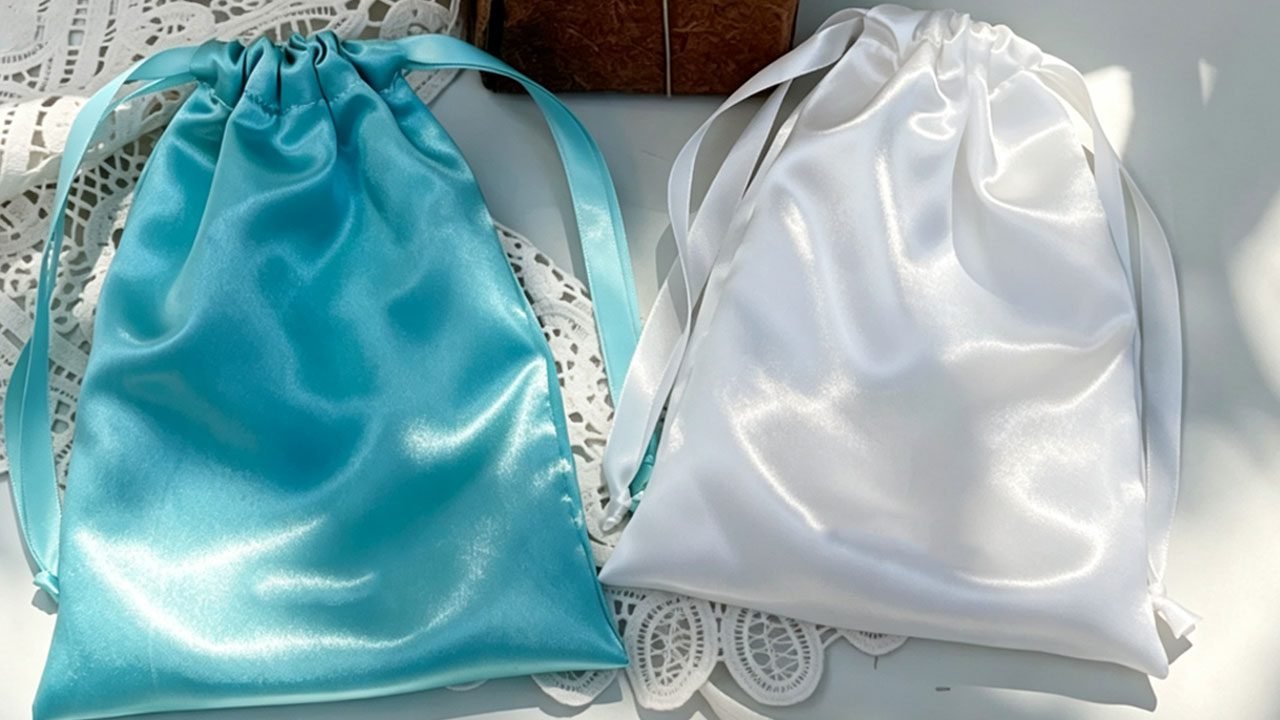
- Suitable for: Wedding favors, jewelry pouches, high-end sample gift bags, and elegant gift bags for banquets
- Common specifications: 75D, 100D high-density satin
- Lifespan: Reusable, but the surface is delicate and not resistant to friction; suitable for gentle storage. Prolonged friction may cause snagging and pilling.
- Abrasion Resistance / Strength Testing: Martindale abrasion test results range from approximately 2,500 to 4,000 cycles; the surface is highly prone to snagging and a dull, worn appearance; tensile strength is adequate, but surface abrasion resistance is relatively low.
- Printing Characteristics: Not suitable for thick inks; best suited for gold or silver foil stamping and fine, small logos; full-coverage printing will obscure the fabric’s luxurious satin sheen.
- Price Range: Mid-to-high range
Tip: Satin fabric gift bags are ideal for carrying small items to catch the eye and provide you with effective exposure.
Linen
Linen gift bags feature a naturally textured surface and are highly regarded in the eco-friendly market. If your product’s key selling points focus on natural and eco-friendly attributes, you can try using linen gift bags to reinforce your brand identity.
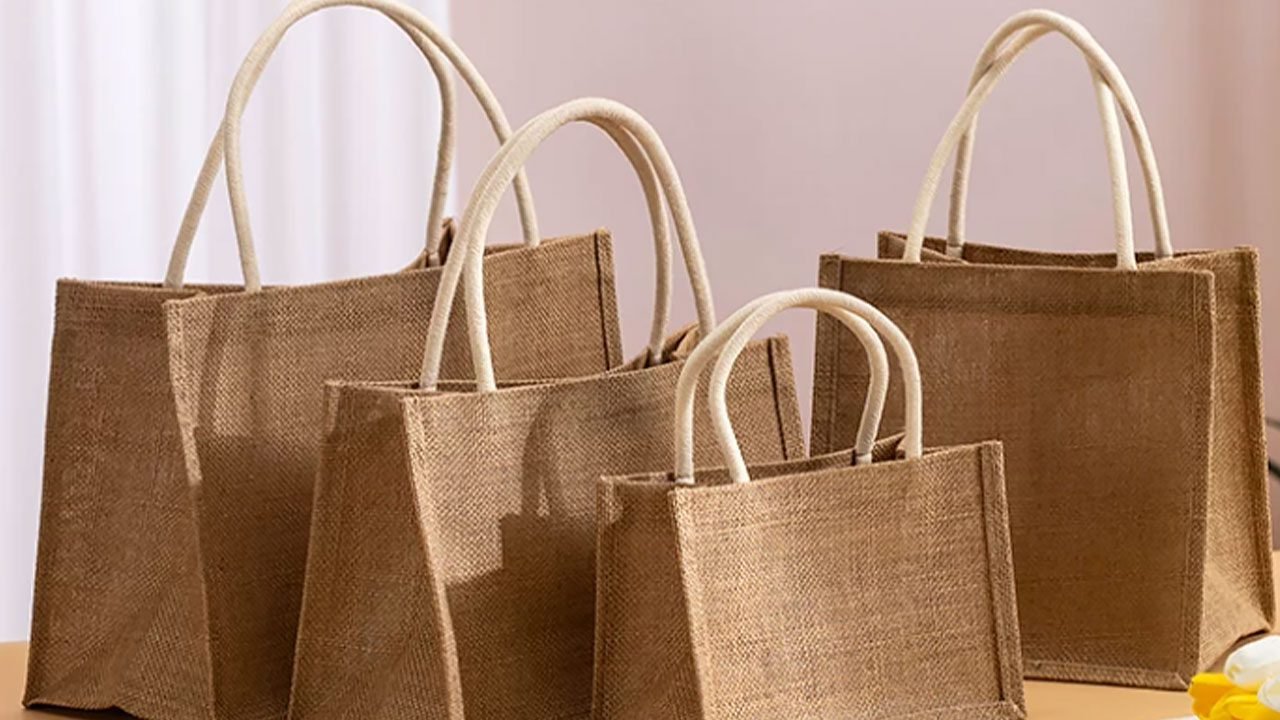
- Ideal for: Organic brands, natural-style luxury gifts, and high-end, minimalist souvenirs
- Common Specifications: When making linen gift bags, we primarily use 8–12-count linen blends and pure linen fabrics
- Lifespan: Linen’s excellent toughness and resistance to deformation make it suitable for long-term, repeated use. It’s also ideal for pairing with outfits (we recommend equipping your linen gift bags with a long shoulder strap to make it easier for customers to coordinate with their outfits; which also increases your brand exposure)
- Abrasion Resistance / Strength Testing: Wyzenbeek abrasion resistance of 9,000–11,000 cycles; the fabric also features “wet strength,” meaning its tensile strength increases by 20%–30% when wet
- Printing Characteristics: Due to the fabric’s pronounced textured surface, it is not suitable for high-definition, intricate designs (the natural color of linen is already very attractive). It is best suited for single-color screen printing, minimalist logos, and vintage-style text.
- Price Range: Mid-to-high range
Note: The wrinkles in linen gift bags are a natural part of the fabric’s texture and are not a manufacturing defect.
Plastic
Intended primarily for single-use, plastic gift bags offer superior water resistance compared to those made of other materials.
BOPP Film
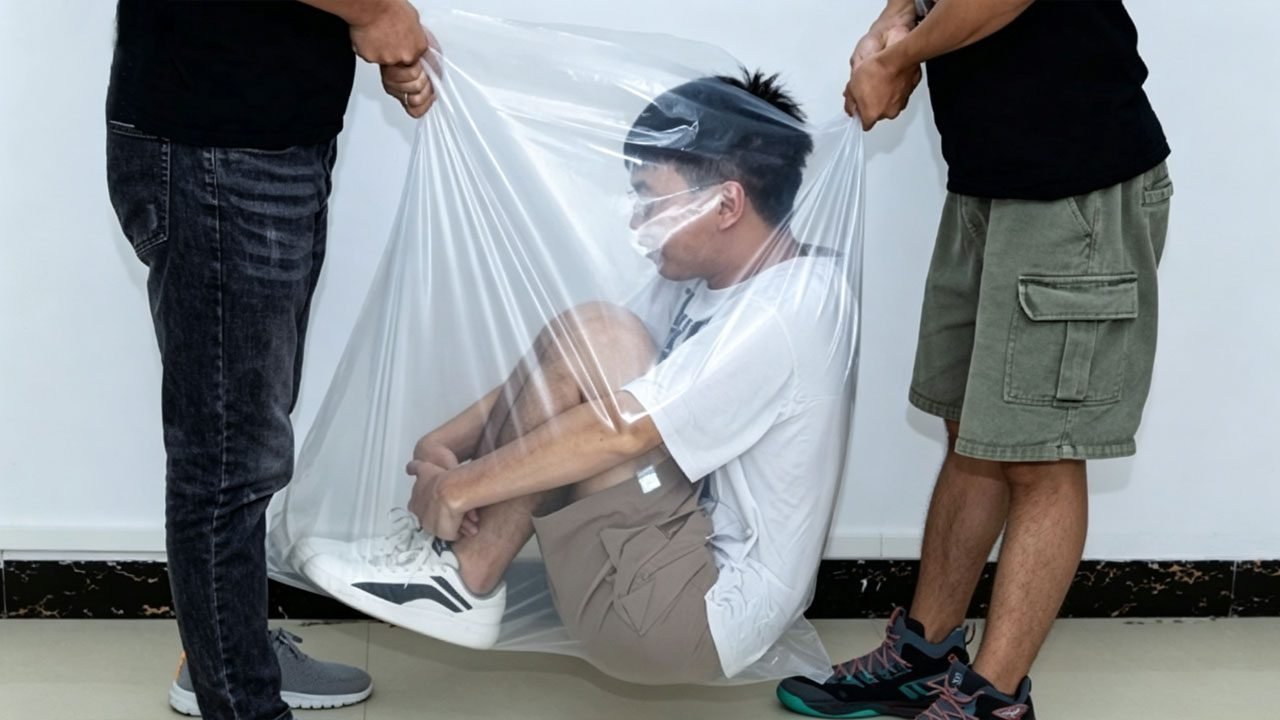
High transparency—if your branded gifts are particularly attractive, using BOPP film gift bags will draw people’s attention directly to the gifts themselves rather than the bags.
- Suitable Applications: Transparent gift bags, outer packaging for premium gift boxes, and gift packaging for visible display; surface light transmittance can reach 92% or higher.
- Common Specifications: Gift bags typically use 30 μm–50 μm (3–5 si), as thinner materials are prone to tearing.
- Service Life: Single-use; relatively durable at room temperature; not recommended for projects where temperatures drop below 0°C.
- Strength Testing: Tensile strength in the machine direction (MD) is 135–160 MPa, and in the transverse direction (TD) is 240–300 MPa; elongation at break in the machine direction is 150–220%, and in the transverse direction is 50–80%; however, impact strength decreases by 40% at low temperatures (below 0°C), making it highly prone to cracking
- Printing Characteristics: Due to its smooth, dense, and non-polar surface, corona treatment (dynes ≥ 38) is required prior to printing. When used with inks specifically designed for gravure-printed films, it enables the printing of high-definition patterns with extremely high gloss.
- Price Range: Low-cost transparent packaging material
Note: BOPP is not biodegradable. If your project is located in an area with strict environmental regulations, you may want to consider using PLA biodegradable film or high-transparency cellophane as an alternative.
Biodegradable Film
This biodegradable PLA film complies with environmental policies and is fully suitable for use in eco-friendly markets where BOPP film cannot be used.
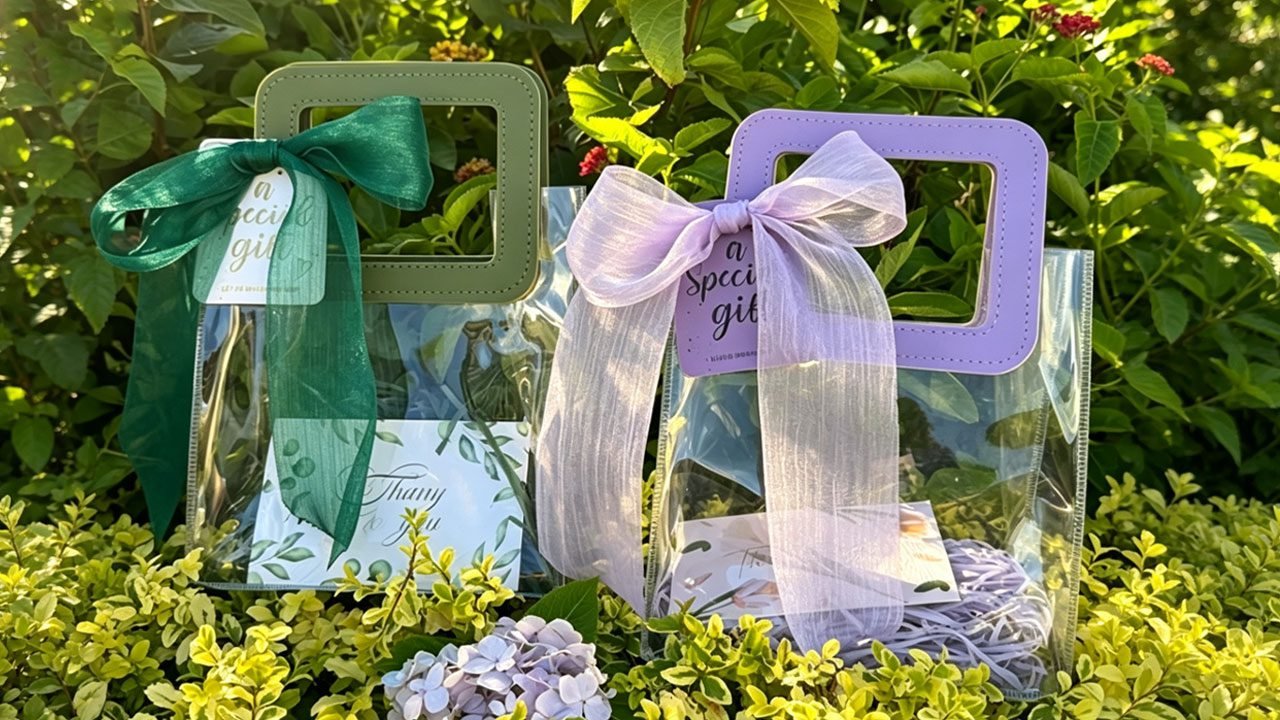
- Suitable Applications: EU and US-compliant eco-friendly gift bags; biodegradable transparent packaging for souvenirs
- Common Specifications: Gift bags typically range from 30 μm to 50 μm (3–5 si)
- Shelf Life: Single-use eco-friendly packaging; can be stored stably for 12 months in a dry, sealed environment at room temperature; fully biodegrades into water and CO₂ within 180 days in an industrial composting environment
- Strength Testing: Good toughness at room temperature; however, heat resistance is lower than that of ordinary plastics, and the material softens easily when exposed to high temperatures (55°C–60°C).
- Printing Characteristics: Compatible with eco-friendly water-based inks; produces clear prints with no solvent residue; meets food-grade and child-safe contact standards
- Price Range: Mid-to-high range
Note: Biodegradable film gift bags must have OK Compost or BPI certification for use in the EU market. We will provide this certification for you during the production process.
Summary of Differences in Gift Bag Materials
By now, I think you should have a general understanding of the properties of the materials used in making gift bags, but when comparing their differences, it’s easy to confuse the properties of several similar materials (I used to do this all the time when I first started out…). So, I’ve put together a summary table of the differences between the materials mentioned above to help you compare them directly:
| Material Name | Core Characteristics | Re‑use Type | Advantages | Disadvantages | Test Metrics | Price Range |
| Kraft Paper | Vintage natural brown‑toned paper | Single‑use | Cost‑effective, naturally biodegradable | Strength drops sharply when wet; easily damaged in moist conditions | 220g MIT fold resistance: 320‑450 cycles; residual wet‑strength 18‑25% | Low‑Mid |
| Coated Art Paper | Film‑coated high‑gloss / matte finish | Single‑use | Excellent 4‑color printing performance | Film‑coated versions are non‑biodegradable; absorbs moisture quickly once film is broken | 250g MIT fold resistance:180‑260 cycles; lamination boosts fold resistance by 40‑60%; residual wet‑strength 12‑20% | Medium |
| Pearl Paper | Shimmering pearlescent visual effect | Single‑use | Luxurious appearance, suitable for hot‑stamping gold foil | Surface scratches easily; vulnerable under heavy load | 230g MIT fold resistance:120‑200 cycles; Sutherland abrasion:80‑150 cycles; residual wet‑strength 15‑22% | Mid‑High |
| Leather Paper | Artificial‑leather textured art paper | Single‑use | Better tear‑resistance than standard paper; premium business‑grade feel | Not ideal for 4‑color printing; water‑sensitive | 200g MIT fold resistance:350‑520 cycles; residual wet‑strength 21‑28% | Upper‑Mid |
| Cotton Canvas | Natural woven cotton, thick texture | Long‑term reusable | Wear‑resistant, washable, biodegradable | Prone to mildew if not fully dried in humid environments | 12oz Martindale ≥12000 cycles; warp tear strength 38‑45N; retains ≥85% strength after 20 washes | Low‑Mid ~ Medium |
| Polyester | Synthetic fabric, wrinkle‑& mildew‑resistant | Long‑term reusable | Moisture‑resistant, low cost for bulk orders, great for full‑color heat‑transfer prints | Petroleum‑based material; non‑biodegradable | 420D Martindale ≥18000 cycles; retains ≥95% dry & wet strength | Low |
| Satin Fabric | Mirror‑like satin sheen | Light‑use reusable | Elegant premium look, works well for small hot‑stamped logos | Snags very easily; poor surface abrasion resistance | Martindale: 2500‑4000 cycles | Mid‑High |
| Linen | Natural coarse texture | Long‑term reusable | Highly recognized in eco‑friendly markets; improved wet‑strength | Inherent fabric wrinkling; not suitable for fine high‑definition printing | Martindale:9000‑11000 cycles; tensile strength increases 20‑30% after water absorption | Mid‑High |
| BOPP Film | Biaxially oriented polypropylene, high clarity | Single‑use | Light transmittance ≥92%; outstanding water & moisture resistance | Brittle at low temperatures; petroleum‑based, hard to biodegrade | ASTM D882: MD135‑160MPa, TD240‑300MPa; impact strength drops 40‑50% below 0°C | Low |
| Biodegradable Film | Industrial‑compostable clear film | Single‑use | Meets EU & US plastic‑restriction compliance; industrially compostable | Softens easily under high temperature; requires valid certification | Softens at 55‑60°C; full biodegradation within 180 days under industrial composting conditions | Mid‑High |
If I haven’t mentioned the material you plan to use for making gift bags in the text above, feel free to contact me directly to ask whether it’s suitable for your project. I’ll provide you with a free consultation and an analysis of its suitability for your project.——Draw on practical experience from my own material gift bag projects rather than online theories.
Compatibility of Gift Bag Materials with Actual Use
I completely understand the frustration you feel when you’ve selected the gift bag materials that best match your project’s look and style, only to discover that they can’t handle the required weight and you have to switch materials (especially if you’re a gift bag designer…). That’s why I’ve put together this list of gift bag materials, organized by weight capacity and item capacity. When you’re ready to start designing after selecting your materials, be sure to refer to this table:
| Material | Recommended Safe Load | Suitable Items | Unsuitable Items | Load‑Boost Rule |
| Kraft Paper (120‑250g) | 2‑5 kg | Party favors, cultural‑creative goods, candies, light retail products | Heavy items, damp / water‑containing goods | For every +20g grammage increase, load capacity rises 0.4‑0.6 kg |
| Coated Art Paper (157‑300g) | 2‑4 kg | Cosmetic gift boxes, holiday gift boxes, light‑weight gift sets | Sharp heavy objects, moist articles | For every +30g grammage increase, load capacity rises 0.3‑0.5 kg |
| Pearl Paper (128‑250g) | 0.5‑2 kg | Jewelry & ornaments, candies, greeting cards, small party favors | Bulky products, sharp‑edged items | For every +25g grammage increase, load capacity rises 0.2‑0.35 kg |
| Leather Paper (120‑220g) | 2‑4 kg | Corporate gift boxes, premium gift sets, document gift boxes | Overweight, water‑laden damp products | For every +20g grammage increase, load capacity rises 0.3‑0.5 kg |
| Cotton Canvas (8oz‑16oz) | 8‑15 kg | Books, apparel, daily supplies, heavy trade‑show gifts | No hard‑item restrictions; line‑up protection required for sharp objects | For every +2oz weight increase, load capacity rises 2.0‑2.8 kg |
| Polyester (210D‑600D) | 7‑14 kg | Promotional giveaways, storage accessories, apparel gift boxes | Unprotected sharp cutting objects | For every +100D denier increase, load capacity rises 1.5‑2.2 kg |
| Satin Fabric (75D‑100D) | 1‑3 kg | Jewelry, sachet samples, small wedding favors | Heavy goods, rough sharp‑edged articles | For every +25D denier increase, load capacity rises 0.4‑0.7 kg |
| Linen (8‑12s blended / pure linen) | 6‑12 kg | Organic skincare products, clothing, nature‑themed party favors | Unprotected sharp‑edged products | Yarn count down 2 counts (e.g. 12s →10s), or grammage +30g/㎡, load capacity rises 1.2‑1.8 kg |
| BOPP Film (30‑60μm) | 1‑3 kg | Outer gift‑box protection, stationery, lightweight clear display packaging | Heavy objects, sharp‑edged goods, environments below 0°C | For every +10μm thickness increase, load capacity rises 0.5‑0.8 kg |
| PLA Biodegradable Film (30‑50μm) | 1‑2.5 kg | Eco‑friendly clear party‑favor packaging, light‑weight exhibits | High‑temperature surroundings, heavy goods, sharp items | For every +10μm thickness increase, load capacity rises 0.4‑0.7 kg |
When selecting materials for gift bags, you can refer to the differences in materials I listed above in conjunction with this weight compatibility chart to avoid subsequent errors that could result in unusable products and financial losses for the project.
Gift Bags Project Case Studies: Recommended Materials
Don’t rush into making your gift bags just yet—I’ve listed a few project examples for you. Perhaps you’ll find some features in these examples that you can incorporate into your own project to enhance your brand’s appeal.
Holiday Gift Bag
When hosting holiday-themed events, many stores customize gift bags to offer as free gifts with purchases of a certain amount, or to capitalize on the holiday atmosphere by selling them separately in-store. Due to the time-sensitive nature of holidays, many people opt for thin paper and skip reinforcement to save money, resulting in flimsy, misshapen bags that simply cannot be displayed on shelves for sale (which is clearly the wrong approach). Therefore, you may refer to our real-world holiday case studies for guidance:
Christmas:
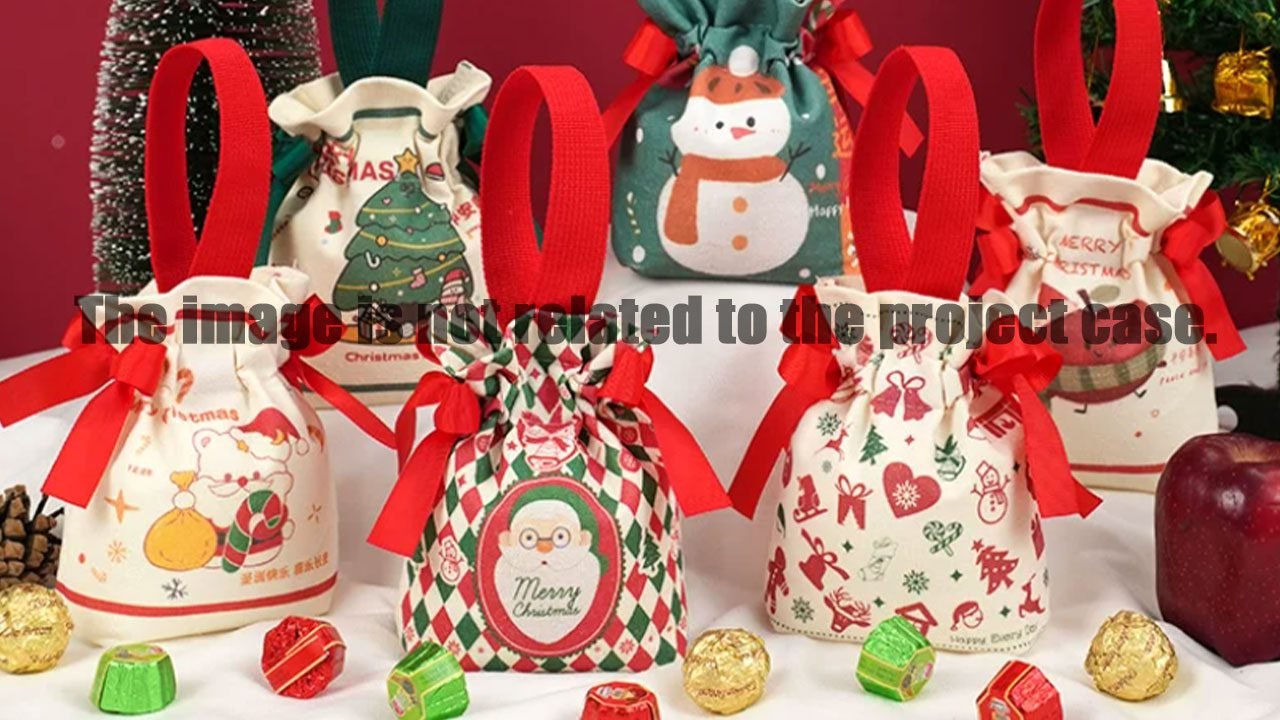
Take Gift Bag, a fragrance and home goods brand we’ve worked with, as an example (for confidentiality reasons, we can’t disclose the brand name, but if you live in North America, you’ll surely be able to guess it): Since these bags are intended both as free gifts for customers who meet a minimum order amount and for standalone retail sale in supermarkets, they cannot be produced to the same quality standards as ordinary free gifts. Therefore, when selecting materials, we needed to avoid any damage to the appearance caused by high-volume, long-distance shipping. We recommended using 220g FSC-certified matte-laminated coated paper for the gift bags, with reinforced cardstock added to the top and bottom of each bag, paired with cotton rope handles. The exterior is printed with classic Christmas illustrations such as Christmas trees, sleighs, and holly. The bag opening features a rounded die-cut border, and an additional small external pocket is added to the side specifically for holding greeting cards. Burgundy flocked ribbon is wrapped around the handles to enhance the festive atmosphere, and the bag bears only a small brand logo.
Note:If you want your project to include giveaways or retail sales—all in one bag—never skimp on quality by choosing thin paper. The bags will be flimsy; they’ll lose their shape after just one round of compression during ocean shipping and collapse into a heap on the shelf, making them virtually unsellable. That small side pocket for greeting cards adds almost nothing to the cost, but overseas consumers really appreciate this kind of small detail—it’s a clever touch that offers great value for money. Don’t skimp on the matte lamination either; it prevents the printed design from getting scratched during long-distance shipping.
Halloween:
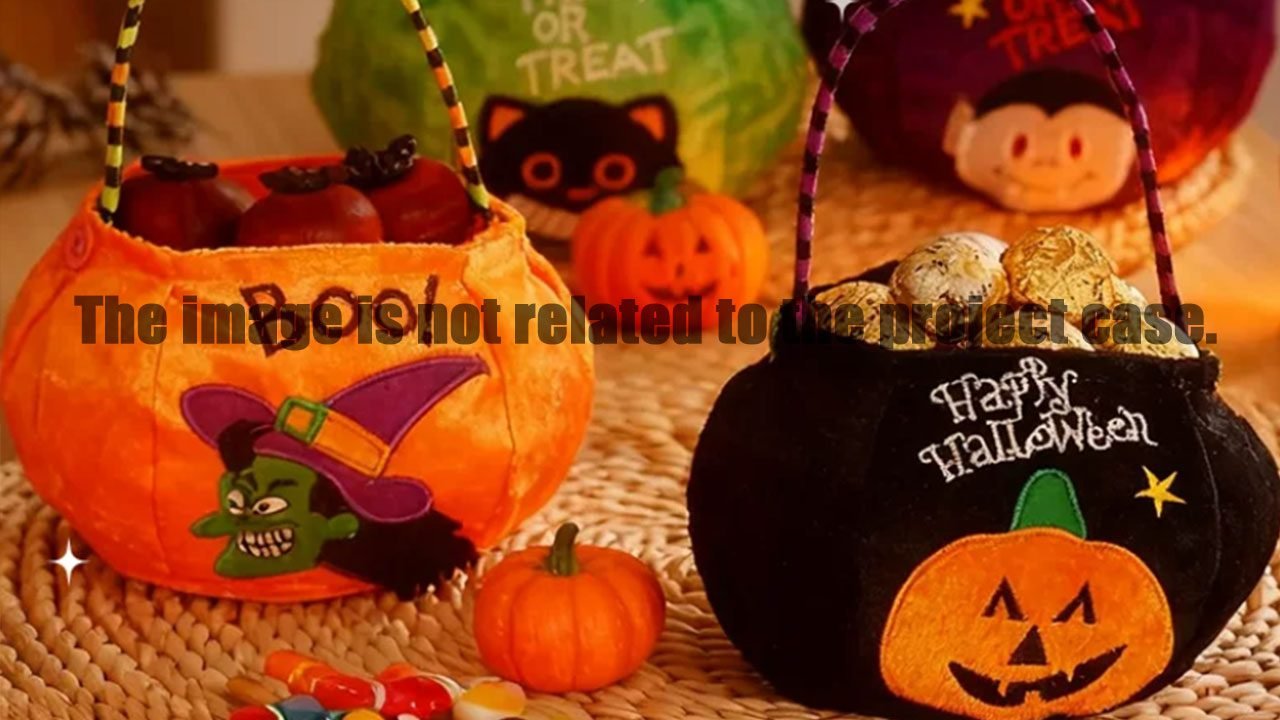
Although candy is a Halloween staple, from a commercial perspective, beauty products actually attract more attention than candy. Take the European online beauty brand we partner with as an example: they primarily use these bags as free gifts with purchases during holiday sales and for distribution at in-store pop-up events. However, it’s important to note that the EU’s EPR packaging regulations are no mere formality, and no customer wants disposable paper or plastic bags that are thrown away after a single use—they prefer bags that can be reused (The brand also hopes customers will carry their gift bags while out and about during Halloween). So we ultimately settled on 210D recycled polyester fabric with woven handles. The bag is fully printed with Halloween-themed graphics like pumpkins and ghosts using dye-sublimation, features a small hidden pocket sewn inside for candy, and includes a folding closure so it can be compressed into a compact size when not in use.
Tip: Although the festive season is short-lived, an attractive design will encourage customers to continue using these gift bags in their daily lives, providing your brand with ongoing exposure. Plus, the compact, foldable design makes people more likely to keep the bags, and the sublimation printing is highly durable—the design is infused into the fabric, so it won’t fade easily even after repeated handling.
Thanksgiving:
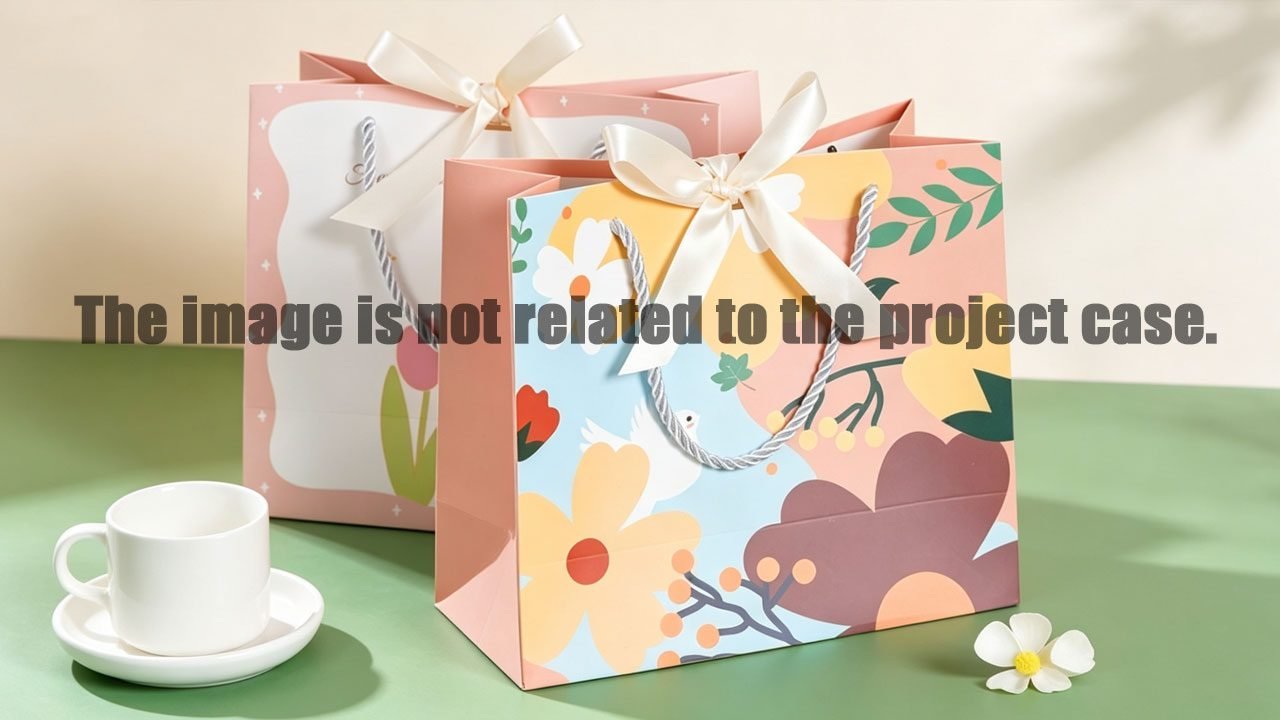
This brand’s products are intended both as giveaways for member events and for direct retail sale, to be used for packaging jams, nuts, and baked goods as gifts. What sets this brand apart, however, is its focus on sustainable ESG principles: it rejects lamination and requires materials that are naturally biodegradable. Ultimately, we selected 200g FSC-certified, uncoated natural-colored kraft paper paired with flat cotton rope handles. Instead of using extensive full-color printing, we used a custom ochre color to print images of wheat ears and autumn leaves, with selective bronze-gold foil stamping. This design preserves the natural, rustic tone of the kraft paper, with only a small fabric label sewn onto the end of the handle.
Tip: Many people fall into the trap of thinking that holiday gift bags must be flashy to look good, but this example breaks that stereotype. Not every project requires a costly full-color print; natural kraft paper combined with spot colors and spot foil stamping can still capture the holiday spirit while keeping the budget under control. The woven label is another clever touch—it doesn’t require any changes to the die-cut template or incur high additional costs, yet it enhances the overall quality. If your brand has a niche, boutique style, this is definitely worth considering.
Wedding Gift Bag
Both brands and wedding planning studios often create custom gift bags as favors for the couple’s wedding guests. However, it’s important to note that while the couple may want their wedding gift bags to look elegant, they must not overlook the practical need for durability. If the material is too thin, the bags may tear as soon as they’re filled with wedding candies and small scented items. Such an incident occurring during the joyous wedding celebration would be extremely embarrassing for both the couple and the brand.
General Wedding Templates:
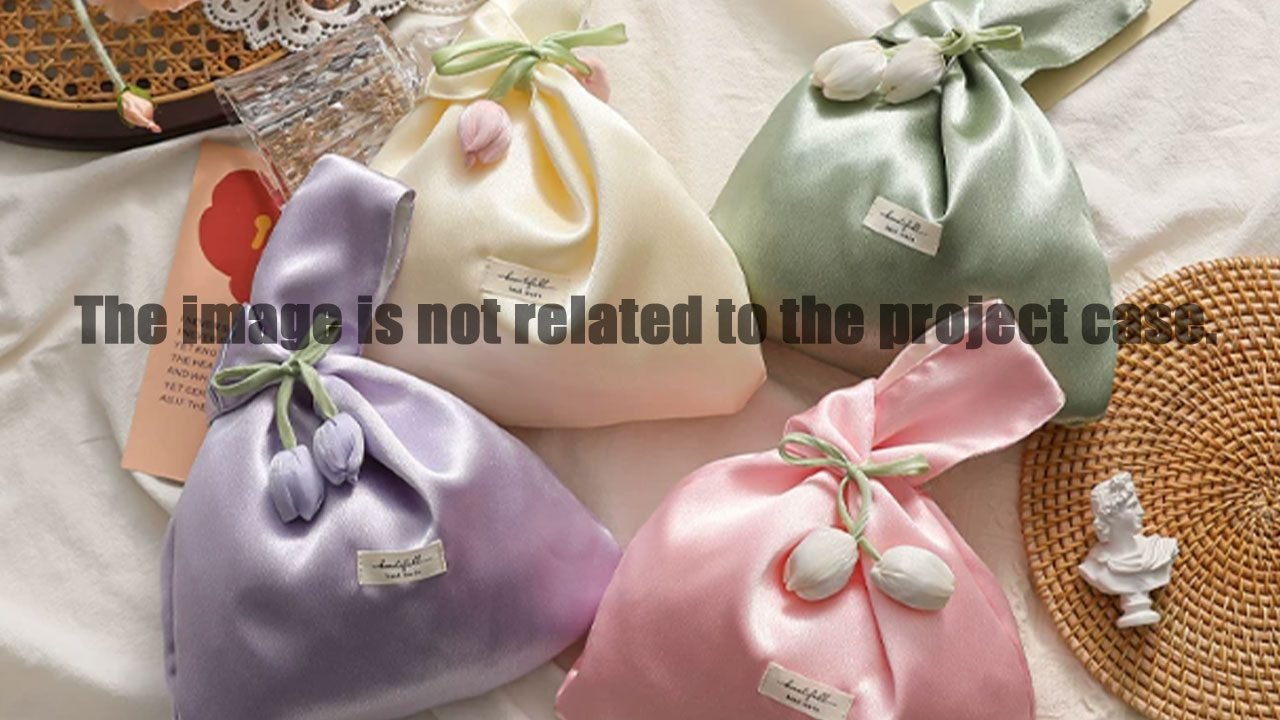
When the wedding planning brand consulted with us about customizing gift bags, they explained that these bags would primarily be distributed to guests at the wedding venue to hold lightweight favors such as wedding candies, scented samples, and commemorative cards. Based on this, we determined that the client’s core requirement was to create a sophisticated and soft ambiance, rather than a bag designed to carry heavy items. Ultimately, we selected a 75D satin fabric paired with a satin handle in a matching color. Visually, the bag features a minimalist design without large-scale patterns, featuring only a small silver-foil embossed wedding initials logo. A discreet inner pocket is sewn into the lining specifically for holding wedding program cards. The bag’s opening is finished with fine, tightly stitched edging, and it comes with a detachable pearl charm that clients can attach as desired to complement different wedding color schemes.
Tip: Satin creates a truly stunning visual effect, but it is inherently less durable. Never use it for rigid gift boxes with sharp edges, as it can easily snag or tear. Additionally, for wedding brands, removable decorative accessories are a highly practical feature. Without having to modify the bag’s mold, you can freely mix and match them to suit the wedding style of each client, allowing a single set of bags to accommodate multiple weddings with different themes and reducing customization costs.
Forest-Themed Outdoor Wedding Styles:
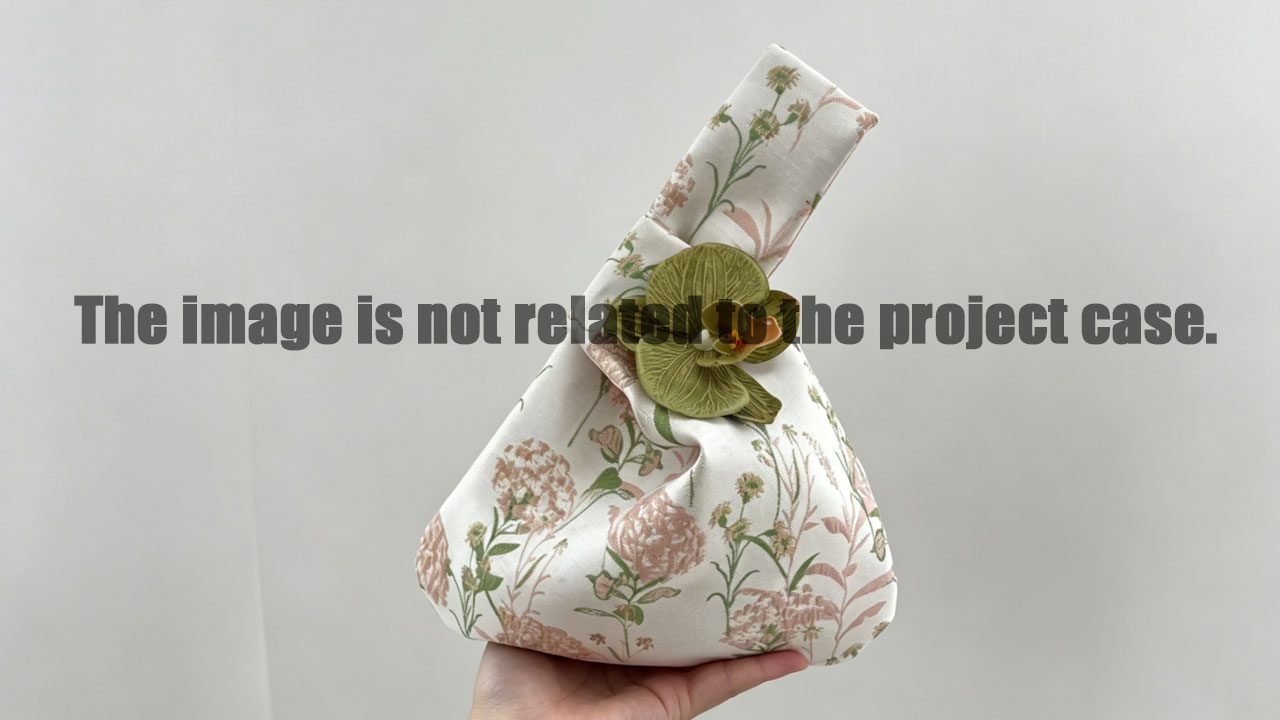
Although “forest-style” weddings are still a niche trend, their popularity continues to rise (if you work in this industry, you’ve likely noticed this). Some of these gift bags are used as favors for outdoor lawn weddings, while others are sold separately through the brand’s online store. The brand emphasizes a natural, relaxed wedding style and avoids overly ornate pearlescent finishes. So we ultimately chose a 10-count blended linen fabric paired with a cotton rope handle. The bag features only a simple leaf pattern printed in a custom charcoal gray color, without any unnecessary or complicated processes; the bottom is reinforced with stitching, and small side pockets have been added to hold seed cards and small dried flowers.
Tip: Linen fabric has a naturally rustic texture that perfectly complements the rustic, nature-inspired aesthetic of outdoor weddings. However, be sure to inform your clients (whether you’re a brand or a supplier) in advance that slight wrinkles in linen are a natural characteristic of the fabric and do not constitute a product defect, to avoid customer complaints later on.
Luxury-Chic Church Weddings:
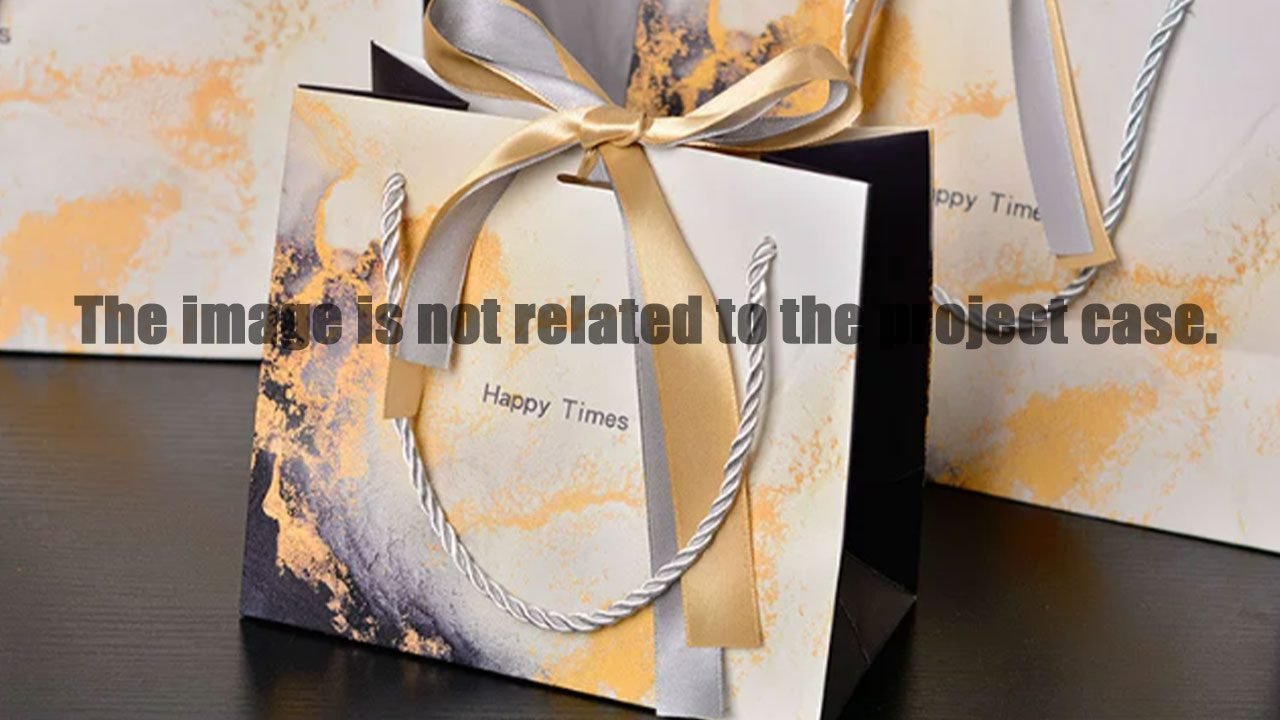
Take, for example, a project from an overseas high-end wedding gift supplier: the gift bags are used for church weddings to hold jewelry gift boxes and exquisite fragrance gift sets. The client wanted the paper gift bags to have a crisp, structured look while also featuring a luxurious, vintage texture. Therefore, 190–210g faux leather paper was ultimately selected for the gift bags, and satin-weave handles were added. The body of the bag features embossed patterns and spot foil stamping, rather than large-area color printing, and reinforced cardboard is embedded in the top and bottom to ensure the bag can support its weight.
Tip: The luxurious feel of leather-textured paper comes from its texture and post-printing finishes; large-area four-color printing can obscure its natural texture. Whenever possible, prioritize finishes such as embossing, foil stamping, and UV coating. Additionally, since wedding gift bags are often used to hold gift boxes, it’s essential to reinforce the bottom and top of paper bags; otherwise, the handles are highly prone to tearing, which can ruin the experience at the wedding.
Business Gift Bag
In business settings, many buyers focus solely on a sleek, professional appearance while neglecting actual loading conditions. Business gift bags are often used to hold heavy items such as hardcover notebooks and gift sets. If the material is too thin or lacks reinforcement, the bag may tear when carried on-site—an embarrassing situation that reflects poorly on both the corporate client and the gift supplier.
General-Purpose Business Gift Bag:
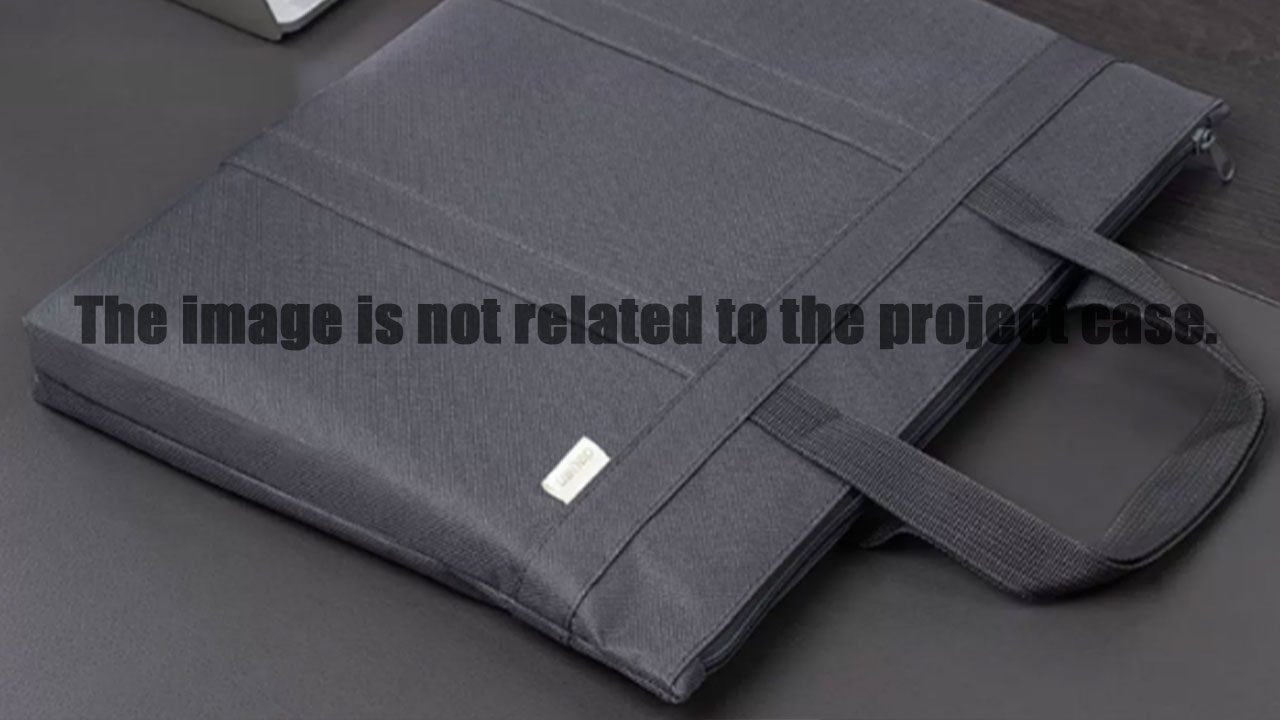
The corporate gift service provider we partnered with for this batch of gift bags is primarily using them to thank long-standing clients. The bags will be filled with notebooks and art book sets; most will be given as gifts during in-person visits, while a small portion will be distributed to attendees at internal company meetings. The client’s key requirements are a sophisticated, understated business aesthetic, and the bags must also be able to carry a substantial weight. We ultimately selected 10–12 oz cotton canvas fabric paired with reinforced cotton webbing handles. The bag features only a small, single-color corporate logo print—no flashy or complex patterns—and includes internal compartments to separate documents from small gifts. The bag bottom is reinforced with double-stitching, and a simple side pocket is sewn onto the exterior for conveniently storing business cards, sticky notes, and small booklets.
Tip: Canvas fabric is durable and hard-wearing, making it ideal for repeated use in business settings. Customers won’t simply throw it away once they receive it, which means it provides long-term brand exposure for both your brand and your clients’ brands.
Business Conference Gift Bag:
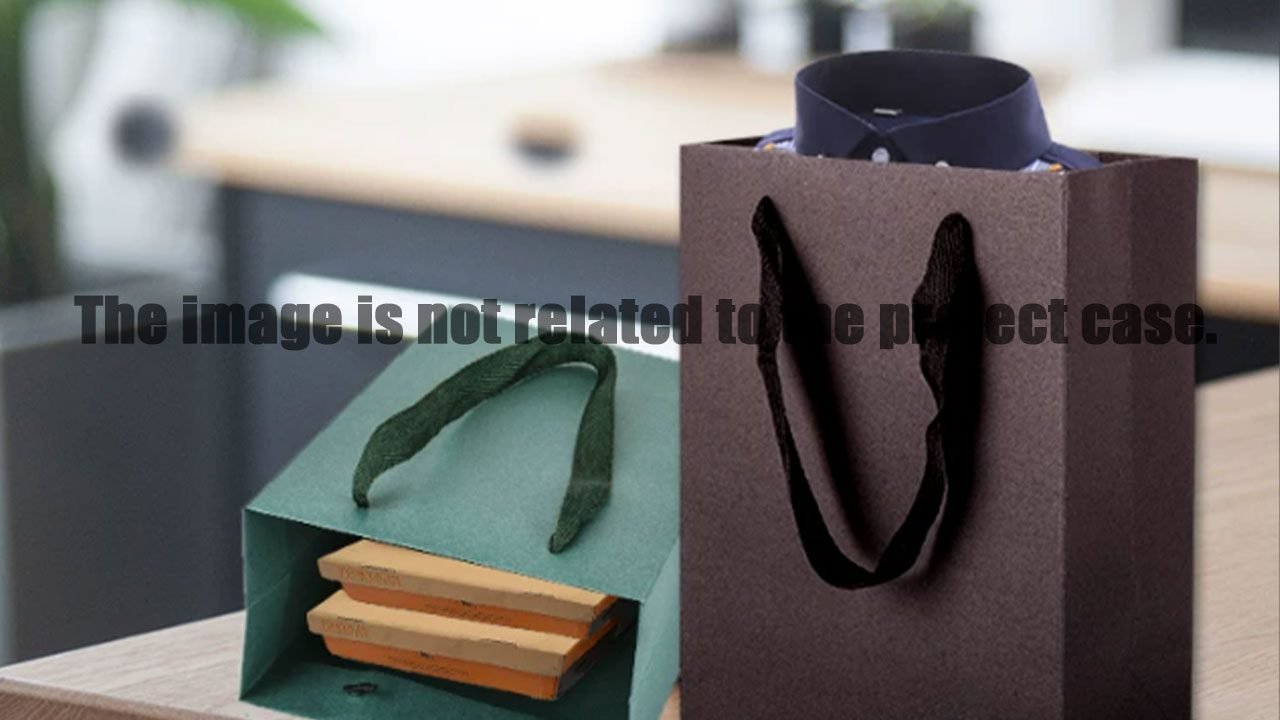
Take a large-scale business conference as an example: it requires mass production, primarily for distribution to attendees on-site, with a limited budget; the bags are mainly used to hold notepads, promotional brochures, and small promotional gifts. Therefore, we ultimately selected 210g white kraft paper paired with flat cotton rope handles. The bag body features spot-color printing of the company’s VI logo with no unnecessary embellishments; reinforced cardboard is added to the top and bottom of the bag to enhance its rigidity, making it suitable for stacking at the event venue.
Note: Kraft paper business gift bags offer excellent value for the price and are ideal for large conference orders. However, since they are primarily designed for single-use, they are not suitable for carrying heavy metal items. If your event venue requires these bags to be stacked in large quantities, be sure to reinforce the bottoms; otherwise, the bottoms may tear under the pressure of stacking.
High-End VIP Business Gifts:
The gift bags for this project are intended for exchange among executives and as tokens of appreciation for key clients, and are designed to hold deluxe leather gift boxes and high-end fragrance sets. The client wanted the natural stiffness inherent in paper materials, sought understated luxury, and rejected large areas of flashy printing. Therefore, 180–200g faux leather paper was ultimately selected, paired with a woven PU handle. The bag body features embossed patterns and spot matte gold foil stamping, with no full-page color printing; the top and bottom of the bag are reinforced with thick, reinforced cardboard.
Tip: The luxurious feel of leather-textured paper comes from its natural texture; large-area four-color printing can obscure its unique texture, so prioritize post-press processes such as embossing, foil stamping, and UV coating. Business gifts are often placed in fairly heavy gift boxes, so when using paper bags, never skip the reinforcement process for the bag’s top and bottom seams just to save money. If the handle breaks, it will immediately ruin the overall impression in high-end business settings.
How to Choose Gift Bag Materials Suitable for Your Project
Based on the material selection and design techniques from our actual gift bag project case studies, you should now have a good idea of how to optimize your brand’s procurement project. Of course, the projects I’ve mentioned may not be exactly the same as yours, so I’ll now show you how to select gift bag materials based on your project’s specific needs.
Assess Usage Needs
Before rushing to finalize the gift bag materials and printing process, first clarify the project’s most basic usage requirements: Is it for a trade show? A one-time giveaway at an event? Or will it be sold separately in stores? Or perhaps a gift bag that can handle a certain weight and is reusable?
For gift bags sold in retail stores, bag stiffness and scratch resistance should be top priorities, and reinforcing structures must not be omitted; we recommend 220–250g matte-laminated coated paper or 200–220g heavyweight kraft paper, along with matching reinforcing cardboard for the bag’s top and bottom to ensure the bag retains its shape on display and resists scratches during transport and stacking. For short-term events involving one-time distribution, however, you can balance your budget while remaining compliant with regulations; we recommend 160–190 g standard kraft paper or thin laminated coated paper, which are sufficient for short-term use without the need to excessively upgrade material specifications. If you want the bags to be reused to provide long-term exposure for your brand, you should opt for fabric materials such as canvas or polyester; we recommend 8–12 oz cotton canvas or 210D–600D polyester fabric, which are abrasion-resistant and durable, supporting multiple cycles of use.
Based on the brand positioning
Once the practical requirements have been addressed, the next step is to narrow down the range of gift bag materials based on the project’s brand positioning.
For brands targeting the luxury and high-end market, there’s no need to rely solely on complex, full-page color printing; materials such as imitation leather paper and matte-laminated coated paper, combined with hot stamping and embossing techniques, can create a premium feel. Brands emphasizing sustainability and ESG principles should prioritize biodegradable or recyclable materials such as FSC-certified kraft paper, cotton canvas, and linen; for projects targeting a younger audience or focused on major sales promotions, 210D polyester offers excellent value for money; and for projects centered on weddings or festive atmospheres, consider mood-enhancing materials like pearlescent paper or satin.
Tip: Don’t let attractive reference images online sway your judgment. Many buyers see renderings and immediately specify a certain “trendy” material, but such materials may not align with their brand’s aesthetic—or even meet load-bearing requirements. They often only realize it’s unsuitable after producing a prototype, resulting in a waste of time and resources.
Project Market Supervision
Depending on the region where the goods are sold, you must verify the local regulations regarding packaging in advance. For the EU market, special attention should be paid to EPR packaging compliance and recyclability requirements; single-use packaging is subject to numerous restrictions, while reusable fabric materials are more favorable. In some European countries, such as France, there are mandatory standards regarding the thickness and biodegradability of paper and plastic bags.
- Germany / Netherlands: Strict inspections are conducted on PFAS-containing water- and oil-repellent coatings; if gift bags require waterproof treatment, a PFAS-free test report must be provided. Non-biodegradable, thin, single-use plastic gift bags are prohibited and are generally not allowed on store shelves in supermarkets and retail chains.
- United Kingdom: The PEPR (Packaging Extended Producer Responsibility) system is in effect; imported gift bags must be registered in advance, their volume declared, and recycling fees paid.
- United States / Canada: Supermarkets mandate FSC forest certification; paper bags without certification cannot be sold in major supermarket chains. Canada requires packaging to bear bilingual English and French labeling; gift bags are subject to these regulations, and items with non-compliant labeling will be rejected outright.
Note: Even if your materials meet all requirements in terms of load-bearing capacity, appearance, and budget, failure to comply with local market regulations can result in customs delays or project postponements, leading directly to significant financial losses.
Summary of Choices
Once you’ve reviewed the key points I mentioned above and organized them in relation to your project, you should then finalize the specific material weight, denier, and yarn count before moving on to the sample production phase. This will help you avoid the vast majority of errors related to gift bag materials.
Summary
Choosing the wrong material for your gift bag project can directly impact the progress of the entire project—as well as your brand image. If you’re currently looking for an experienced, affordable supplier who can provide free gift bag samples, please contact us. We can tailor our OEM, ODM, and wholesale services to meet your project’s specific needs, helping your brand stand out in the competitive market!