Thermal Insulation Fabric for Cooler Bags – Selection Guide
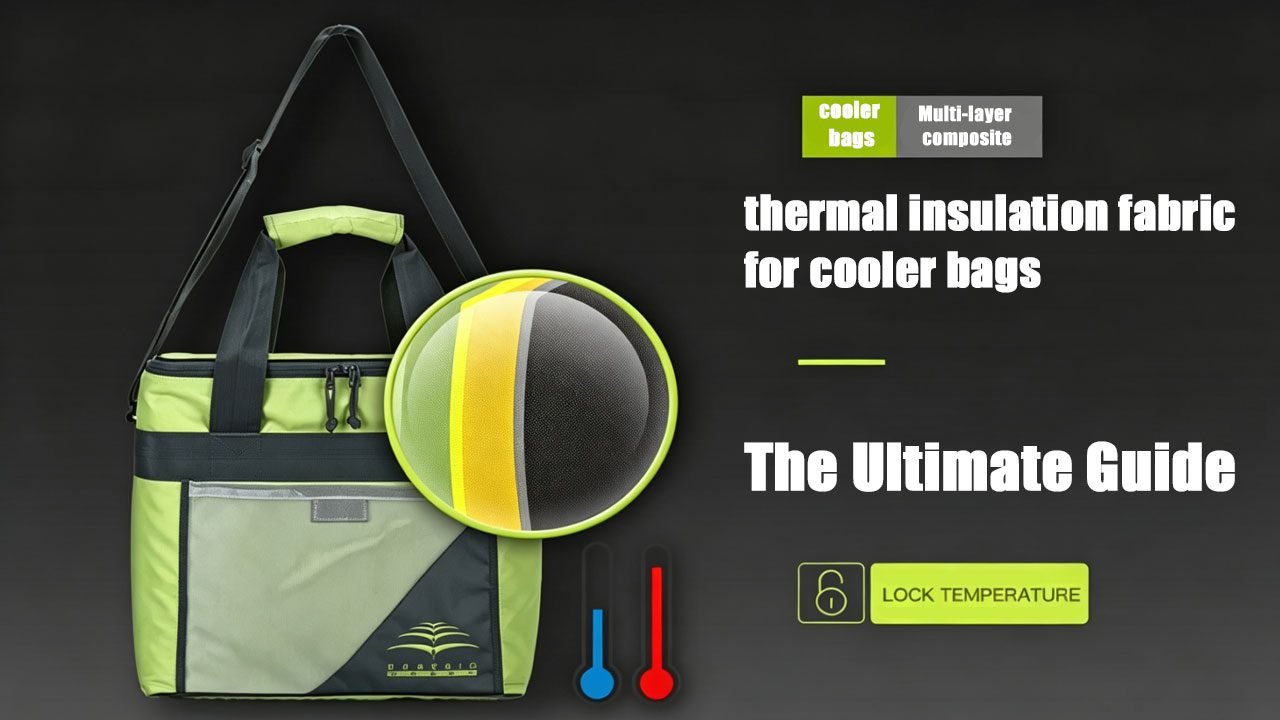
When purchasing custom cooler bags in bulk for your business project, are you overwhelmed by the wide variety of cooler bag insulation materials and unsure which insulated fabric best meets your cold-chain retention requirements? Choosing the wrong cooler bag insulation material can directly result in cooler bags that fail to maintain effective cold retention, causing your customers to lose confidence in you and damaging your brand’s reputation. In this article, I’ll provide you with a clear guide to these thermal insulation fabrics for cooler bags—including their cooling durations and recommended applications—to help you make the right purchasing decisions for your project.
(I understand that complex, technical content can often be dry and boring. So, in this article, I’ll cut to the chase and share the results of various cooler bag insulation materials, making the technical details easier to understand—just like the way you explain things to your clients. At the end of the article, you can also request a free physical sample.)
Quick Takeaway: Choose the cooler bag insulation material based on the project scenario
First, you must understand that cooler bags themselves do not generate cold (with the exception of electric cooler bags); rather, they use insulating material and a tight seal to slow down heat conduction, convection, and radiation, thereby maintaining the temperature. Once you understand this basic principle, if you’re in a hurry, you can refer directly to the table below:
| Use‑Case | Material Type | Thickness | R‑Value | Cold Retention Time |
| Low‑cost Promotional Giveaways | EPE / Expanded PE Foam | 3 – 5 mm | 1.2‑1.8 | 3‑6h |
| Daily‑Use Cooler Bags | Polyethylene (PE) Foam | 5 – 8 mm | 1.8‑2.3 | 5‑8h |
| Picnics, Breast Milk Transport | XPE / Cross‑linked PE Foam | 8 – 10 mm | 2.4‑3.2 | 8‑14h |
| Anti‑Deformation Required | EVA Foam | 8 – 12 mm | 2.6‑3.4 | 10‑16h |
| Heavy‑Duty Applications | EPP Foam | 10 – 15 mm | 3.2‑4.0 | 14‑20h |
| Long‑Duration Cold Holding | Polyurethane (PU) Foam | 12 – 20 mm | 3.5‑4.3 | 16‑22h |
Note: The parameters in the table are based on a 25°C environment, a 1:1 ice-to-material ratio, and actual test results using standard ice packs.
You found the answer you were looking for right here in this quick summary table, didn’t you? But when you’re explaining the solution to your clients, they might ask, “Why are you recommending this material? How is it different from other, cheaper materials?” So in the following sections, I’ll explain the actual functions of these thermal insulation fabrics for cooler bags and the differences between them. When your project client asks questions or tries to negotiate a lower price, you’ll be able to answer their queries on the spot and use your professional knowledge to explain that “there are no more cost-effective alternatives.”
The Actual Function of Cooler Bag Insulation Material
As you already know, cooler bags don’t actually generate cold; instead, they use insulating material and a tight seal to slow down heat loss. Now I’ll explain how they actually work.
Insulated fabric slows heat transfer
Conduction: By relying on the layer of still air trapped inside the insulating foam, the rate of molecular heat conduction between solids is reduced, preventing external heat from directly penetrating the fabric layers and entering the bag. Just as you wear a thick cotton-padded jacket in winter to block out the cold air and keep your body heat from escaping, cooler bags use foam to trap air, preventing external heat from seeping in.
Convection: The foam’s sealed microporous structure blocks the free flow of air, reducing the transfer of heat into the bag’s interior through internal air circulation; it prevents hot and cold air from circulating back and forth, thereby preventing hot air from outside from entering the bag and altering the internal temperature.
Radiation: Through mirror-like reflection, external infrared thermal radiation is bounced back, reducing the amount of radiant heat energy that penetrates the insulation layer; similar to a car’s sunshade, it reflects away heat radiated from the outside, preventing it from being absorbed by the interior.
Components of cooler insulation material
A cooler bag with excellent insulation performance never relies on a single insulated fabric to do the job; instead, it uses a composite structure to extend the cooling duration and slow heat transfer.
| Component | Function |
| Outer Fabric | Protect the inner thermal‑insulation foam layer from external physical damage |
| Thermal‑Insulation Foam Layer | Slow down heat conduction and air convection; it is the primary factor determining cold retention duration |
| Aluminum‑Coated Reflective Layer | Block external infrared thermal radiation via mirror reflection and reduce heat absorption by the bag |
| Inner Liner | Prevent internal moisture from seeping into the thermal‑insulation foam layer |
When selecting cooler bag insulation material for your project, first check the R-value per millimeter (the higher the value, the better the insulation) and ensure that the foam material’s water absorption rate is less than 1% and the foil reflectivity is ≥95% to maximize the blocking of heat radiation. Confused by these numbers and technical details? In my article “How Do Cooler Bags Work,” I explain the principles behind cooler insulation in detail. You might want to bookmark it for future reference (it’s written in a conversational style, so it won’t be too dry).
thermal insulation fabric for cooler bags Category
All project clients want longer refrigerated shelf life, right? I’ve listed the most commonly used cooler bag insulation materials and explained their features (this is the most professional and practical answer to give when your clients ask you questions).
Polyethylene (PE) Foam
It relies on the numerous tiny, sealed air pockets within the foam to trap still air, thereby reducing heat conduction and convection. This is similar to how the double-pane glass in your home uses an air gap to insulate against heat.
R-value per inch: 2.0–2.4
Density per cubic meter: 18–22 kg/m³
Cooling Duration: 5–8 hours
Folding Fatigue: According to the ASTM D3575 bending test, after approximately 3,000–5,000 repeated folds, fine cracks appear, allowing moisture to gradually penetrate into the foam.
Market Price: $0.85–$1.25 per square meter
Note: Polyethylene (PE) foam has average moisture resistance and is suitable for everyday use in lunch cooler bags, but should not be used in environments with prolonged high humidity.
Kroger is running a summer membership promotion, offering a lunch cooler bag made of polyethylene (PE) foam as a free gift with purchase. By leveraging its value for money, the campaign targets customers who bring their own meals on their daily commutes, significantly boosting repeat purchase rates and brand awareness.
EPE / Expanded PE Foam
Thermal insulation is achieved by encapsulating still air within independent spherical air-filled particles; tiny gaps exist between the particles, allowing heat to transfer slowly through these gaps. This is similar to the foam-filled cushioning boxes you typically use when shipping packages to customers, which rely on air cavities to insulate against temperature changes.
R-value per inch: 1.4–1.8
Density per cubic meter: 12–16 kg/m³
Cooling Duration: 3–6 hours
Fold Fatigue: According to the ASTM D3575 bending test, after 800–1,200 repeated folds, the particles crack and fall off, causing rapid deterioration of thermal insulation performance and making the material highly susceptible to moisture absorption.
Market Price: Approximately $0.42–$0.68 per square meter
Note: EPE (Expanded PE Foam) has limited thermal insulation capabilities and poor moisture resistance. It is suitable only for short-term, single-use, or infrequent use in promotional cooler bags and is not recommended for sale as cooler bags intended for long-term use.
HelloFresh, a global leader in fresh meal kits, extensively uses EPE (Expanded Polyethylene Foam) in combination with ice packs to create single-use insulated packaging for same-city cold-chain delivery of everyday groceries. While ensuring a 3- to 6-hour cold-chain delivery window, the company has successfully minimized the cost of single-use materials.
EVA Foam
It traps still air within a highly sealed, independent cell structure, blocking both thermal convection and thermal conduction. Its firm texture is somewhat similar to the midsole of a athletic shoe and provides support.
R-value per inch: 2.6–3.4
Density per cubic meter: 38–45 kg/m³
Cold curing time: 10–16 hours
Fold Fatigue: ASTM D3575 bending test; localized whitening and micro-cracks appear only after 6,000–8,000 repeated folds. It offers excellent resistance to water vapor permeation and does not easily absorb water.
Market Price: Approximately $1.45–$1.95 per square meter
Note: Due to its relatively high hardness, EVA foam is primarily used in semi-rigid cooler bags.
The Coors Light beer brand is launching a summer music festival promotional tour, using semi-rigid beer cooler bags made of EVA foam to keep the beer cold and prevent them from being crushed or deformed in crowded areas.
Polyurethane (PU) Foam
High-density, closed-cell foam structure with fine pores and exceptional airtightness, offering top-tier thermal insulation performance similar to the foam lining found in high-end refrigerators.
R-value per inch: 3.5–4.3
Density per cubic meter: 30–50 kg/m³
Cooling Duration: 16–22 hours
Folding Fatigue: According to the ASTM D3575 bending test, slight deformation occurs only after more than 10,000 repeated folds; however, the foam itself absorbs a small amount of water, so it must be used in combination with a fully waterproof liner.
Market Price: Approximately $2.15–$2.85 per square meter
Note: PU foam outperforms conventional materials in terms of cold retention, making it ideal for camping cooler bags, travel cooler bags, and other items that require long-lasting cooling.
When REI Co-op launched its flagship Coolweave crossover long-distance camping cooler series, it used polyurethane (PU) foam as the core insulation layer across the entire line to meet refrigeration needs for multi-day outdoor expeditions and off-road adventures.
Note:
All of the above cooler bag insulation materials were tested for cold retention using a thickness of 1–1.5 inches, in combination with ice packs, at an ambient temperature of 25°C; prices are based on standard sheet thickness of 10 mm, with the last price update on August 31, 2026.
Metallized PET/Aluminum Films
The mirror-like surface created by vacuum-deposited aluminum reflects infrared heat radiation—much like the heat-reflective fabric used in cars—directly reflecting external solar heat away and helping to extend the overall cooling duration.
R-value per inch: Used as a composite auxiliary insulation layer; not intended for standalone use
Reflective layer: Reduces radiant heat by 90% to 95%
Vapor barrier: WVTR 0.5–1.2 g/m²/24h, effectively prevents moisture penetration into the foam layer
Cooling retention: Extends cooling duration by an additional 10%–20% compared to the original material
Market Price: Approximately $0.38–$0.55 per square meter (standard 12 μm thickness; price updated as of August 31, 2026)
Note: Metallized PET/Aluminum Films must be laminated onto XPE/PU/EVA foam surfaces to enhance cold chain duration when used in conjunction with existing insulated fabric.
Summary of Differences in Cooler Insulation Materials
Technical knowledge can seem a bit dry, right? That’s why, when introducing each type of cooler bag insulation material, I’ll use examples of common items you’ll find in your daily life so you can visualize them as you read. When comparing insulated fabrics, we found that at an ambient temperature of 25°C, the insulation performance of fabrics with added PE/aluminum foil composite material is 20% to 30% better than that of standard PE foam (the time it takes for ice placed inside in a 1:1 ratio to melt can be extended from 6 hours to 8 hours). I’ve recorded all the experimental data for the insulated fabrics and have compiled a table to share with you:
| Material Type | R‑Value per Inch | Cold Retention Time | ASTM D3575 | USD/㎡ |
| EPE / Expanded PE Foam | 1.4‑1.8 | 3‑6h | 800‑1200 cycles | 0.42‑0.68 |
| Polyethylene (PE) Foam | 2.0‑2.4 | 5‑8h | 3000‑5000 cycles | 0.85‑1.25 |
| EVA Foam | 2.6‑3.4 | 10‑16h | 6000‑8000 cycles | 1.45‑1.95 |
| Polyurethane (PU) Foam | 3.5‑4.3 | 16‑22h | >10000 cycles | 2.15‑2.85 |
The test values in the table were all measured under the following conditions: 1–1.5 inches in thickness, at an ambient temperature of 25°C (experimental data updated as of August 31, 2026).
When your project clients ask you for a cooler bag insulation material alternative that achieves the same cooling duration at a lower price, the experimental data I’ve provided here can serve as key support when addressing their questions.
Common Materials Used for Cooler Bag Shells
The primary function of the outer shell material of cooler bags is to protect the internal insulation layer from damage caused by external forces; it is not the main factor determining how long the contents stay cold.
| Fabric | Martindale / ASTM D3884 | ASTM D1424 Tear Strength |
| 210D Polyester | 3,000 – 5,000 rubs | 12 – 18 N |
| 420D Nylon | 8,000 – 12,000 rubs | 20 – 30 N |
| 600D Oxford | 15,000 – 22,000 rubs | 35 – 50 N |
| 840D TPU Laminated Fabric | 60,000 – 80,000+ rubs | 100 – 140 N |
By now, I imagine you’ve figured out which types of insulation are best suited for your project’s cooler bags, but don’t rush into making a decision just yet (and I’m not trying to rain on your parade). Once you’ve clearly defined the requirements for your cooler bags, it’s not as simple as just choosing the right insulated fabric that meets the required cooling duration. Even the slightest oversight during production or the certification process can directly result in your brand’s cooler bags being unable to be delivered to project clients—or even making it onto store shelves for sale.
Details on the Use of Cooler Bag Insulation Material
Now I’ll explain the precautions you should take when using the selected cooler bag insulation material to make cooler bags, as well as the certification standards that must be met once production is complete. You might be thinking, “Aren’t these details handled directly by the cooler bag factory?” In fact, many bag factories aren’t familiar with these requirements and lack the necessary qualifications to submit the relevant certifications (as a professional procurement manager, you’ve surely encountered the hassle of factories failing to meet these standards…).
Precautions When Using Insulated Fabric
Laminating: When laminating foam to the outer fabric, metallized PET film, and inner lining fabric, the thickness must be uniform. If there is a local shortage of adhesive, bulges will form immediately, and delamination will spread during use; if there is an adhesive overflow, the excess adhesive will directly corrode the insulating foam, causing premature powdering and directly affecting refrigeration performance. Specialized adhesives and laminating presses are typically used during production, but not all manufacturing facilities have this type of equipment.
Cutting Protection: After cutting, the insulating foam must be completely wrapped and sealed with fabric. If exposed, the cut edges of the insulating foam will absorb moisture and gradually lose their thermal insulation properties.
Pinholes: Even the tiniest pinholes left exposed during the sewing process allow hot air and condensation from inside the cooler bags to seep into the insulation layer. Therefore, after sewing is complete, TPU sealing strips must be applied to prevent moisture from entering through the pinholes—this is especially critical for food-contact products such as food cooler bags and breast milk cooler bags.
PET Processing: When using metallized PET/aluminum films, the aluminum-coated side should face the foam. If used with the aluminum side facing outward, friction will cause flaking and oxidation, rendering the film ineffective.
Certification Standards for Cooler Bags After Production (Europe)
Food Contact: Primarily used for products that come into direct contact with food, such as food cooler bags and breast milk cooler bags. The lining fabric must comply with EU Regulation 10/2011 on plastics intended to come into contact with food.
REACH SVHC: For the fabric, foam, and adhesives used in cooler bags, the individual concentration of SVHCs (Substances of Very High Concern) must be ≤0.1%.
EPR Packaging Regulations: When cooler bags are classified as promotional packaging or gift packaging, they must undergo EPR registration in the relevant country. However, if they are sold on the market solely as luggage or bags, EPR registration is not required.
So, when using cooler bag insulation material for a project, it’s not as simple as just choosing the right insulated fabric, is it? Furthermore, during the actual production process, material waste costs and the time costs associated with rework must be taken into account. Therefore, selecting a professional and properly certified cooler bag manufacturer is particularly important—at the very least, it can help avoid a significant amount of trial-and-error costs.
Choose the Best Cooler Bag Insulation Material for Your Project
When selecting the best cooler bag insulation material for a project, the decision can be simplified by considering the required cooling duration and the intended use. For food delivery, a long cooling duration is typically not necessary, but a lighter weight is preferred; whereas for outdoor trips, the ability to maintain cooling for a full day or even two days becomes crucial.
Select Based on Cold Storage Duration
3–6 hours of refrigeration: EPE (Expanded Polyethylene) foam—a low-cost, lightweight material—is ideal for short-term use (however, due to its poor resistance to moisture and folding, it is not suitable for repeated use).
5–8 hours of refrigeration: Polyethylene (PE) foam is suitable for keeping lunches cold for 5–8 hours during the workday.
10–16 hours of cooling: EVA foam, which offers excellent moisture resistance and inherent structural rigidity, meets these duration requirements
16–22 hours of cooling: Polyurethane (PU) foam, which has the highest R-value, is ideal for 16–22 hours of cooling in outdoor environments
Selecting Based on Use Cases
Commercial Promotional Giveaways: Low-cost EPE (Expanded PE Foam) is better suited for controlling costs when used as promotional giveaways (be sure not to choose products with an R-value that is too high, as they will be more expensive), and remember to print your brand logo on them.
Everyday Use: Prioritize PE foam, but ensure the inner lining passes EU Regulation 10/2011 and FDA 21 CFR food contact testing (avoid EPE, as it ages very easily after repeated use and absorption of moisture from food and beverages).
Transporting Refrigerated Goods: EVA foam’s rigidity and crush resistance, combined with a metallized PET reflective layer, ensure that food and beverages remain protected from crushing and deformation during transport, while maintaining long-lasting refrigeration performance.
Outdoor Travel: A PU foam + metallized PET composite structure provides all-weather refrigeration protection. When paired with a nylon outer shell, you need not worry about scratches from rocks or branches during outdoor activities.
Tip: When selecting insulation material for cooler bags, while a higher R-value is generally better, it also comes with a higher cost. Therefore, you should make a comprehensive decision based on the required cooling duration, the intended usage environment, and your project budget. Furthermore, even if the material fully meets the standards, improper use can significantly reduce the cooling duration of cooler bags, leading to numerous complaints unrelated to product quality. After selecting the cooler bag insulation material and completing production, be sure to inform your project clients of “How to Use Cooler Bags” upon delivery, or print these instructions on a label and attach it to the handle.
Check out our case studies showcasing complex cooler bag solutions using our innovative insulated fabric.
If your project involves complex client requirements or strict performance standards for cooler bags, you may want to review these two case studies where we successfully addressed complex cooler bag projects using innovative insulated fabric—they might be applicable to your project:
Phase-Change Materials (PCMs)
Take, for example, a custom breast milk cooler bag project we worked on for a maternity and baby brand. The client initially opted for standard XPE foam to manufacture the insulated bag, requiring it to maintain a cooling duration of 8–10 hours under ambient conditions of 25°C. However, during actual use, the temperature must not drop too low to the point of freezing the breast milk. The client wanted the product to consistently maintain an internal temperature of 0–4°C and ensure that the temperature does not exceed the specified limit for over 12 hours during outdoor use. Standard foam can only slow the rate of temperature rise; it is prone to significant internal temperature fluctuations and cannot achieve precise temperature control. Therefore, our solution involved using a paraffin-based PCM (phase-change material) coated composite fabric with a phase-change point set at 4°C, combined with medium-R-value PE foam and a metallized PET reflective layer. The PCM phase-change coating is laminated to the back of the PEVA lining. When the internal temperature exceeds 4°C, the material absorbs heat to suppress the rise in temperature; when the temperature drops, it releases heat to prevent breast milk from freezing solid. This comprehensive solution eliminates the need for thick layers of foam, allowing the bag to remain lightweight and portable. However, during the production process, we discovered that the PCM coating must never come into direct contact with food; it must be separated by an intact PEVA lining, and the phase-change coating must not be exposed. Furthermore, compared to ordinary foam, the overall weight increases, and the material cost is significantly higher than that of conventional foam, making it difficult to achieve cost balance when dealing with large-volume gift orders. Although the final product can reliably maintain breast milk at 0–4°C for up to 12–14 hours in a 25°C environment—with temperature fluctuations far lower than those of traditional foam insulated bags—and meets the needs of working mothers who must transport breast milk throughout the day, this solution is not suitable for standard picnic coolers. Instead, it is better suited for specialized applications such as maternal and infant care or short-distance medical transport, where precise temperature control is a mandatory requirement.
VIP / Flexible Vacuum Insulation Fabric
When customizing a travel cooler bag for an outdoor gear brand, the client sought to develop a foldable insulated travel bag capable of maintaining cold temperatures for over 18 hours, while strictly limiting the bag’s thickness and weight. If traditional PU foam were used, the bag would need to be at least 2 inches thick, making it bulky and heavy—which would contradict the product’s design as a foldable, portable item. We selected a flexible vacuum-metallized composite insulation fabric as the core insulation material. Multiple layers of metallized film are stacked to form a vacuum-sealed sandwich structure, effectively blocking all three heat transfer pathways: conduction, convection, and radiation. While achieving the same R-value insulation performance, this solution reduces thickness by over 40% compared to PU foam, ensuring excellent insulation performance even with a thin fabric. However, this fabric has a significant drawback: it is highly susceptible to punctures from sharp objects. Once the vacuum layer is punctured, thermal insulation performance drops dramatically. Therefore, the outer shell must be reinforced with high-denier, abrasion-resistant Oxford fabric for robust protection. Furthermore, the cut and sewn seams must be tightly sealed, and the entire production process must utilize heat-sealing technology. After multiple rounds of prototyping and testing, the final thin, foldable travel cooler bag achieved cooling performance comparable to 1.8 inches of PU foam at just 1 inch thick. It maintains cold temperatures for 18–20 hours in a 25°C environment, meeting the positioning of the brand’s high-end outdoor product line. However, due to its limited puncture resistance, this solution is not recommended for rough-and-tumble use cases such as fishing or children’s activities.
Tip: These two of our solutions, which utilize innovative insulated fabric to create complex cooler bags, perfectly meet our customers’ needs—but only if they are willing to opt for high-end, high-value customization. Traditional cooler bag insulation materials, on the other hand, can only meet these requirements by layering multiple layers of material, which has the drawback of increasing thickness and making the bag bulky.
FAQ
is aluminum foil a good insulator?
In fact, aluminum foil does not possess the same thermal insulation properties as foam; rather, it works by reflecting thermal radiation. Therefore, it is primarily used as a composite material in combination with foam, extending the cold retention time by an additional 10%–20% compared to the original material. If aluminum foil is used on its own without a foam core, its cold retention performance will be very poor.
is cotton a good insulator?
Because cotton has a high moisture absorption capacity, it is rarely used as an insulating layer in cooler bags; it is only suitable for general insulation in dry environments. Therefore, it is typically used outdoors to wrap around the cooler bag to shield it from direct sunlight.
Summary
By now, I think you have a good understanding of Polyethylene (PE) Foam, EPE / Expanded PE Foam, EVA Foam, and Polyurethane (PU) Foam—as well as how to choose the right material based on your project’s needs. If you’re looking to run a low-cost promotional giveaway, EPE / Expanded PE Foam is the better choice. For parties, music festivals, and road trips, EVA Foam not only maintains long-lasting cooling but also resists deformation from external pressure. So, are you ready to launch your cooler bag project? If you want to receive perfectly crafted cooler bags that successfully pass all certifications, please contact us. As a cooler bag supplier dedicated to bag production since 2004, we can easily meet your project needs and will prioritize providing free physical samples for performance testing and inspection.