Types of Tool Bags: Purposes, Features, Selection & Maintenance Guide
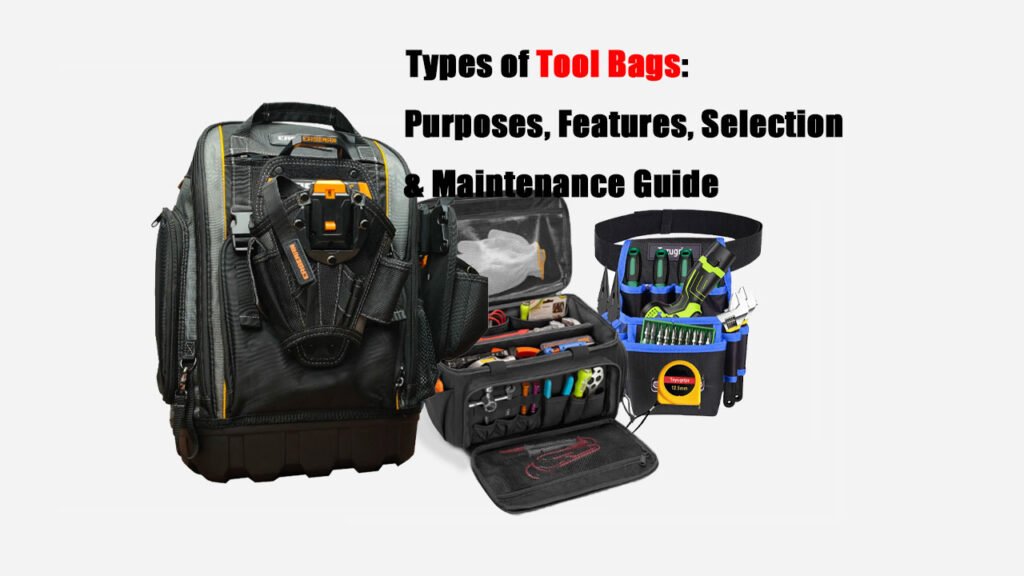
Are you struggling to select the right tool bags for your retail outlet or project site? Although tool bags in various categories may look very similar and be used in similar ways, they are often not interchangeable in practical work situations. Using tool bags that are unsuitable for the type of project work can make retrieving tools cumbersome, increase the frequency of trips to fetch them, and lead to tool damage that slows down project progress. From a retail perspective, if shoppers struggle to find tool bags suited to their profession, they are likely to abandon their purchase, making it difficult to boost sales in this category. This article will cover tool bag categories, materials, recommended procurement examples, common pitfalls to avoid, and considerations based on usage scenarios, professional roles and tool types. Drawing on practical experience, it provides a comprehensive guide to the procurement and use of various types of tool bags.
Quick Takeaway: Select suitable tool bags based on your project type.
Before you begin reading this article in earnest, I have compiled a summary of the different scenarios in which tool bags are used and the materials best suited to each, to provide you with quick answers and save you time. (If you are not in a hurry, I recommend reading on to gain more specialist knowledge and learn how to choose the right tool bag for different scenarios, along with a purchasing guide.)
| Usage Scenario | Tool Bag Type | Common Materials |
| Daily portable maintenance, low voltage door to door service | small tool bag、tool waist pouch | 600D Oxford cloth, thin PU leather |
| Construction sites, carpenters/electricians carrying a large number of tools | tool tote、contractor open-top tool bag | 1680D thickened Oxford cloth, wear-resistant canvas |
| Auto repair, heavy hardware, storage for multiple large tools | Duffle tool bag、mechanic tool bag | Thickened Cordura nylon, waterproof coated fabric |
| Long-distance field work, moving and transporting heavy goods on site | rolling tool bag | 1680D Oxford cloth, hard plastic base |
| Precision instruments, drill bits, storage of small spare parts | Zipper tool bag、tool roll bag、tool pencil pouch | Light polyester, canvas, PVC lining |
| Outdoor high-altitude work, long term field assignments, hands free carrying | tool backpack、insulated electrician tool bag | Thick wear-resistant nylon, insulating composite fabric |
| Precision meters, multimeters, fragile measuring tools | hard shell tool bag | EVA hard shell + nylon fabric, sponge cushion layer |
| Short distance urban maintenance, lightweight office repair work | shoulder tool messenger bag | Canvas, PU leather, plain woven polyester |
Whether your project involves bulk procurement for engineering teams or wholesale supply for retail malls, matching tool bags can boost work efficiency, protect your tools, improve customer satisfaction, and drive positive word of mouth plus repeat orders.
Types and Differences of Tool Bags
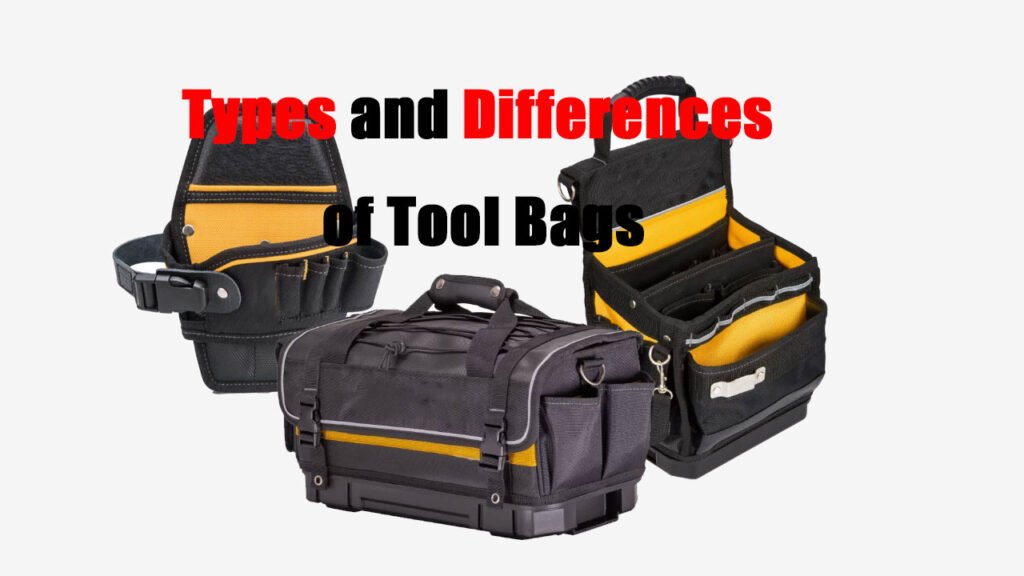
Are you feeling overwhelmed by the wide variety of tool bags available on the market when selecting supplies for your project? Some designs prioritise load-bearing capacity, others focus on ease of access, whilst some feature moulded foam compartments tailored to the shape of specific tools, providing excellent shock-absorbing protection. Here, I’ll guide you through the main categories and features of tool bags, helping you assess suitability before making a purchase and avoid making the wrong choice.
Small tool bag
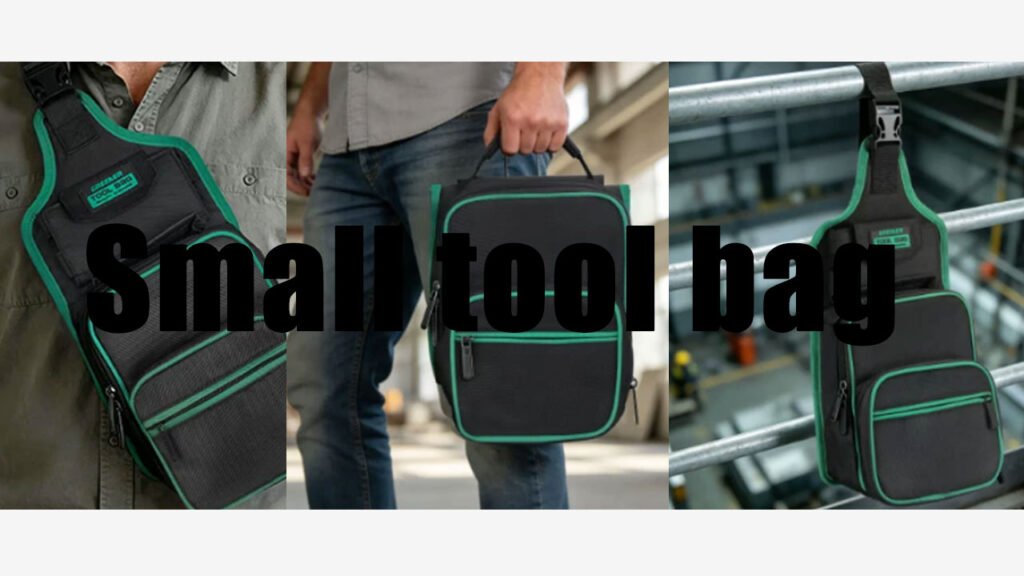
Small tool bag is a compact bag designed to be carried with one hand whilst on the move, for carrying a small number of tools. It is suitable for routine on-site repairs and simple DIY jobs around the home. Although compact, it features multiple compartments for organising loose small items such as screws, drill bits and voltage testers, making it easy to find what you need and keeping everything tidy.
The design of small tool bags prioritizes mobility and portability while eliminating the hassle of rummaging for tools. For instance, maintenance workers performing high-altitude repairs cannot carry large tool bags when climbing. Instead, they secure all necessary tools in a small tool bag before climbing, allowing instant access to tools during maintenance work.
Thanks to its lightweight design, small tool bags have been widely adopted across various industries including carpentry, construction, electrical engineering and machinery. They have evolved into zippered styles, waist pouch styles and crossbody shoulder styles. Tools can be easily stored inside or fastened to exterior pockets, fully freeing users’ hands.
| Usage Scenario | Small Tool Bag Type | Features of Tools to Carry |
| Simple household maintenance, spare portable tools | Zipper Small Tool Pouch | Small basic tools such as screwdrivers, voltage testers and small spanners; thin, flat and lightweight |
| High-altitude construction work, carpentry & electrical site work | Tool Waist Pouch / Tool Belt Bag | Screws, drill bits, utility knives, tape measures; instant access, hands-free operation |
| Electrician door to door repair, short distance field inspection & maintenance | Shoulder Small Tool Bag | Multimeters, wire strippers, small testing instruments; commuter-friendly, lightweight and not bulky |
While small tool bags deliver great convenience, their compact size and low weight-bearing limit prevent them from holding large heavy-duty tools such as wall drills.
Therefore, if your target project customers include electricians for door-to-door service, or personnel handling simple furniture repairs who require lightweight gear, free hands and instant access to regular small tools without carrying bulk heavy equipment, small tool bags will be your optimal option.
Tool tote bag
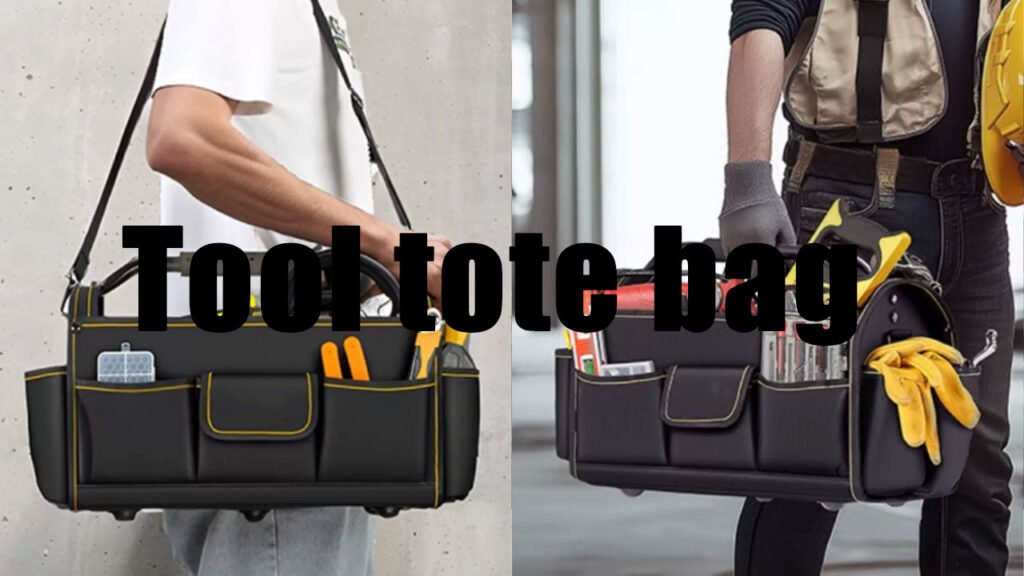
Tool tote bags feature cylindrical large capacity storage and a fully open top design. They can accommodate medium and large tools including electric drills, hammers and spanners. No zippers need to be unzipped for tool retrieval; users simply flip the cover to access items directly. Compared with small tool bags, tool tote bags offer far more storage room, a spacious central compartment, rigid side panels and a reinforced base. Multiple divided internal slots are built to hold pliers, screwdrivers upright, as well as tiny hardware such as screws and nails for classified storage. This design allows users to quickly identify and grab required tools on-site.
Tool tote bags that support carrying large tools are highly popular for scenarios requiring extensive use of various tools, such as construction site work, on site plumbing, electrical and carpentry projects, auto repair workshops, and warehouse equipment maintenance. Therefore, tool tote bags are generally constructed from wear resistant, high load bearing and tear resistant materials including 1000D+ Oxford fabric, ballistic nylon and heavy-duty canvas, to withstand heavy-intensity use in harsh construction environments.
| Usage Scenario | Tool Tote Bag Type | Features of Tools to Carry |
| General construction work, daily maintenance & transport | Open Top Tool Tote Bag | Medium and large tools such as hammers, spanners, electric drills and tape measures; open-top design for instant access |
| Heavy duty hardware tools | Hard Base Tool Tote Bag | Heavy items including heavy spanners and jackhammers; rigid base provides stable support and prevents deformation when placed on the ground |
| On site work for electricians & plumbers | Electrician Tool Tote Bag | Multimeters, wire strippers, insulated screwdrivers; multiple divided pockets for neat classification |
| On site carpentry work | Carpenter Tool Tote Bag | Hammers, chisels, try squares and hand planes; multiple hanging loops on exterior for frequently used tools |
| Garden & courtyard work | Garden Tool Tote Bag | Garden pruning shears, work gloves, small shovels and watering cans; waterproof fabric for easy cleaning |
It should be noted that whilst some Tool Tote bags feature a flip-top or roll-top design, their wide, open mouth and capacity for carrying large tools mean they cannot provide sufficient protection from the elements at the top. Consequently, tools are prone to getting damp when carried in rainy weather (a solution is to use a waterproof cover), and their relatively large size makes them suitable only for carrying by hand. Currently, most maintenance technicians carry a small tool bag in addition to their Tool Tote bag. Upon arrival at the repair site, they secure frequently used tools in the small tool bag to minimise the need for repeated trips to retrieve them.
Therefore, if your project is aimed at large-scale construction sites or targeted at maintenance engineers, the Tool Tote bag which is suitable for carrying large quantities of tools, including bulky maintenance tools, and offers high wear resistance to cope with challenging environments would be the ideal choice. (For retail sales, we recommend bundling it with the Mall Tool Bag, as this is more appealing than selling the Tote bag on its own, and professional maintenance engineers and technicians typically use them together.)
Rolling tool bag
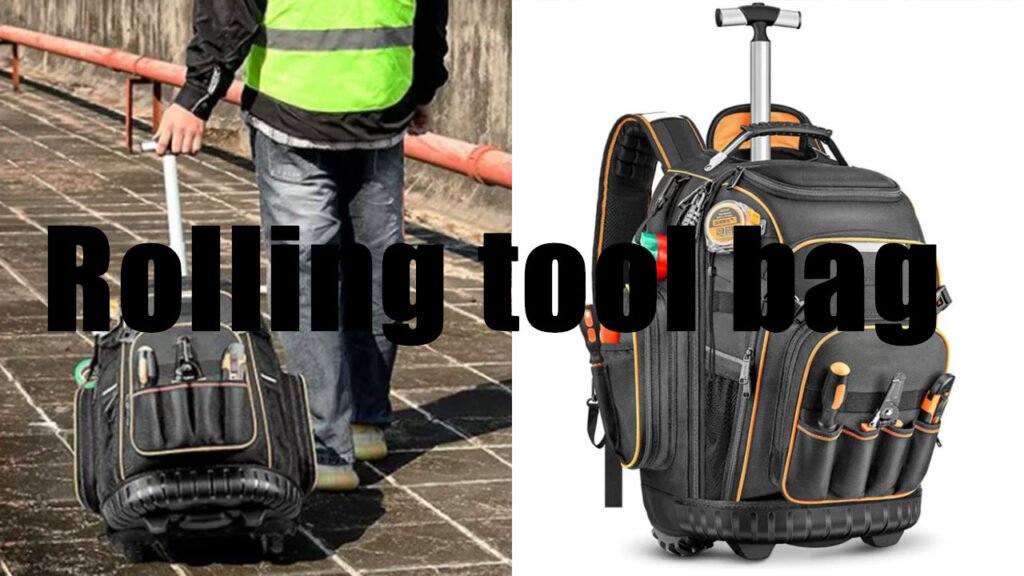
Rolling tool bag allows you to move quickly whilst carrying a large number of tools, thanks to its wheels, thereby reducing the physical strain of manual handling. The key feature of this design, which combines wheels with a telescopic handle, is that it offers the same benefits as a suitcase: ample capacity, multiple compartments, a high load-bearing capacity and efficient mobility.
Are you worried that the Rolling Tool Bag might be difficult to manoeuvre when carrying a large number of tools, particularly on stairs or uneven terrain? In fact, our rolling tool bag is fitted with rubber wheels featuring a ball-bearing system and boasts a six-wheel design that is ideal for navigating stairs and uneven terrain, ensuring smooth and effortless movement even in such conditions. Furthermore, the built-in reinforced base and side panels ensure high stability and superior tear resistance when carrying a heavy load of tools over bumpy surfaces, preventing tools from spilling out due to damage to the bag.
| Usage Scenario | Rolling Tool Bag Type | Features of Tools to Carry |
| General construction maintenance, daily transport of full tool sets | Basic Rolling Tool Bag | Complete basic maintenance tools including wrench sets, electric drills and tape measures; pull and push design saves labor |
| Transport of large hardware tools | Heavy Duty Rolling Tool Bag | Jackhammers, heavy duty spanners and large measuring equipment; high load bearing capacity with rigid base that resists deformation |
| Electrician full set operation work | Electrician Rolling Tool Bag | Insulated tool kits, multimeters and cable testers; multiple divider layers for classified storage |
| Automobile maintenance | Mechanic Rolling Tool Bag | Socket sets, auto repair wrench kits and special maintenance tools; large capacity for neat storage |
| Multi trade collaborative work | Molle Rolling Tool Bag | Tools for different trades stored in stacked layers; clear partition layout for convenient allocation |
Rolling tool bags with built-in wheels enable efficient mobility, yet their size must be matched to specific working scenarios. For instance, carrying an oversized rolling tool bag for simple door to door maintenance will feel cumbersome, and the bag is hard to maneuver through narrow passages.
If your target customers need to carry a large assortment of tools for maintenance work or frequently move between job sites, rolling tool bags with detachable rubber wheels, multiple internal and external divided pockets are the ideal product to recommend for your project. They deliver efficient mobility and drastically reduce physical strain during tool transportation.
Zipper tool bag
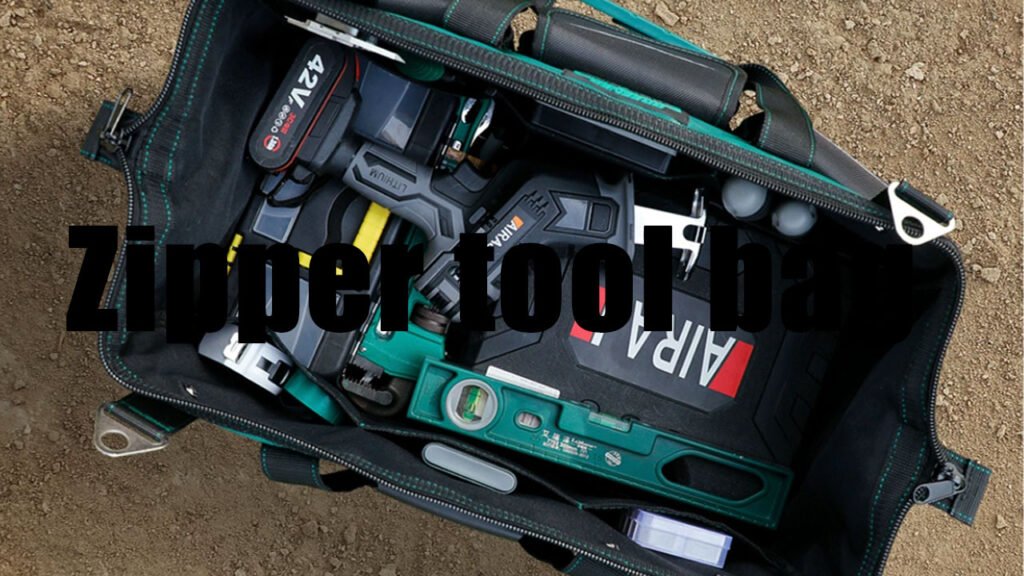
The advantage of a zip fastened tool bag lies in its enhanced seal, which prevents small parts from falling out whilst in transit and provides protection against water, dust and the ingress of wood shavings, sand and gravel at the construction site. A zip-fastened tool bag is essentially a standard carry-over, shoulder bag or belt bag fitted with a zip fastening; it can simply be regarded as an upgraded version of a lightweight tool bag.
As an upgraded version of the zip-sealed tool bag, this model places greater emphasis on preventing the loss of small parts and protecting precision instruments, particularly on construction sites where heavy dust and flying wood shavings can easily enter certain precision instruments, causing damage to their internal circuit boards. Engineers therefore increasingly carry the Zipper tool bag when entering construction sites to protect their equipment.
| Usage Scenario | Zipper Tool Bag Type | Features of Tools to Carry |
| Carry basic daily tools | Flat Zipper Tool bag | Thin flat small tools including screwdrivers, voltage testers and small spanners; ultra light, portable and space saving |
| Storage of complete tool sets | Heavy Duty Zipper Tool Bag | Medium sized tools such as wrench sets, electric drills and tape measures; thickened fabric with strong load bearing capacity |
| Electronic testing tools | Padded Zipper Tool Case | Multimeters, detectors and precision probes; built in shock absorbing padding for anti collision and shock resistance |
| Classified storage of screws, drill bits and small parts | Small Parts Zipper Pouch | Loose tiny hardware including screws, bits and drill bits; fully sealed design to prevent loss and falling out |
| Storage of insulated tools | Insulated Electrician Zipper Bag | Insulated screwdrivers and wire strippers; insulated fabric for safety protection during live-line work |
Please note: Zipper tool bags are commonly used for small tool bags. Although some large tool bags are also fitted with two-way zips, when storing large tools (such as hammer drills or long spanners), the zip often fails to close due to the tools’ excessive size and irregular shape. Consequently, they are more commonly used in tool bags designed for the convenient transport and storage of small tools. Zipper tool bags used for certain precision instruments are custom-made and feature internal foam padding to enhance protection against jolts and knocks.
If your clients’ projects involve on-site electrical repairs, electronic repairs, the storage of precision instruments, or the storage of drill bits and screwdriver bits, then the Zipper tool bag which is waterproof, dustproof and prevents small parts from being lost due to jolts during transport is our top recommendation.
Tool backpack
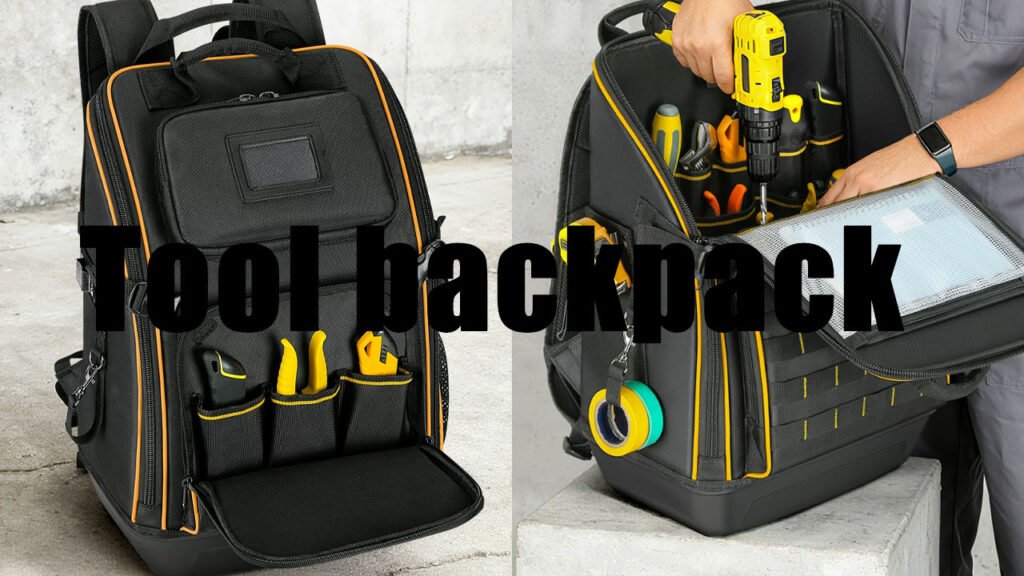
Tool backpack distributes the weight evenly across the shoulders and back when carrying tools, leaving your hands free whilst on the move, and features numerous separate compartments and external pockets. Compared to handheld or cross-body bags, a tool backpack minimises the sensation of carrying a heavy load during outdoor work and allows for greater mobility in challenging terrain, such as when climbing ladders or laying cables.
Some Tool backpacks feature an ergonomic design with a breathable, soft back panel and wide, S-shaped shoulder straps. They also have a height-adjustable chest strap at the front to prevent the bag from swaying from side to side whilst walking, as well as a built-in laptop compartment and multiple separate compartments. This allows you to carry and store repair tools, a laptop and workwear separately, meeting the demands of both repair work and daily commuting whilst ensuring ease of movement.
| Usage Scenario | Tool Backpack Type | Features of Tools to Carry |
| Daily field maintenance | Basic Tool Backpack | Basic repair tools such as screwdrivers, spanners and tape measures; lightweight for commute with no burden |
| Power maintenance work | Electrician Tool Backpack | Insulated tool sets, multimeters and wire strippers; multiple divided pockets for classified storage, fully freeing hands |
| Construction site work | Heavy Duty Jobsite Tool Backpack | Electric drills, heavy-duty wrench sets and hardware fittings; thickened fabric with strong load-bearing and tear-resistant performance |
| Plumbing maintenance work | Plumber Tool Backpack | Pipe wrenches, hot melt tools and pipeline detectors; large capacity to fit long-handled heavy tools |
| Instrument & equipment maintenance | Padded Instrument Tool Backpack | Detectors, calibration equipment and precision probes; thick shock-absorbing padding to prevent collision and vibration damage |
| Multi-scenario operation work | Wheeled Tool Backpack | Complete job tool kits; dual-purpose design for carrying on back or pulling with wheels, labor-saving for long-distance transportation |
Although the Tool backpack allows for flexible movement whilst carrying a variety of tools and keeps your hands free, you need to take it off to access the tools inside, so it is not as convenient as a cross-body tool bag.
If your project clients require on-site electrical repairs, security system maintenance, network cabling, outdoor equipment inspections, work at height, long-distance fieldwork involving multiple tools, or scenarios such as centrally issued equipment by the company, then a Tool Backpack which is versatile, can hold a large quantity of tools and is comfortable to carry all day will fully meet your project requirements.
Hip tool bag
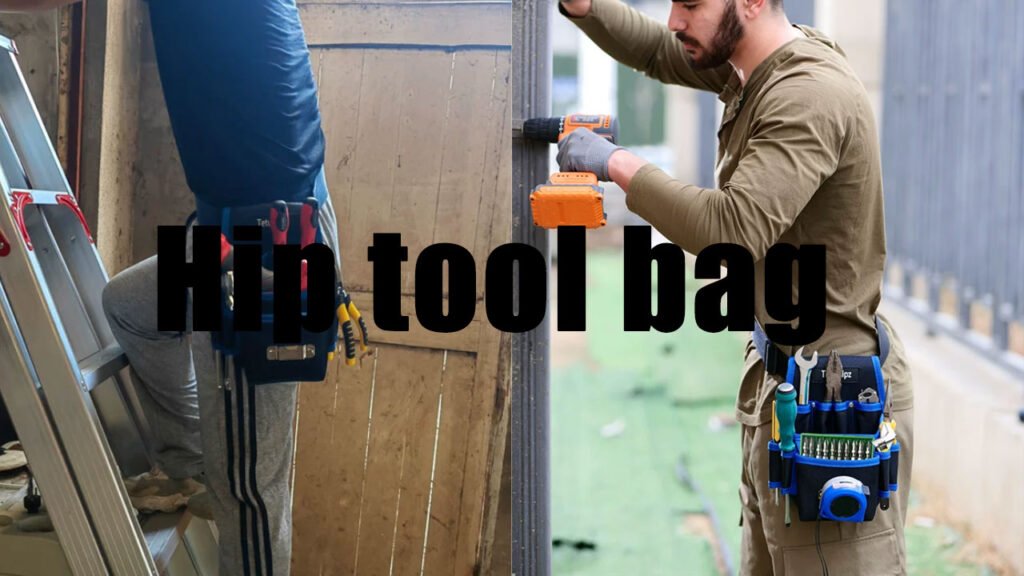
Hip Tool Bag features a flexible design that allows multiple tool pouches to be linked together using a belt and secured around the waist or thighs. When in use, the individual tool pouches can be linked and secured at the front, back and both sides of the body, making it easy to reach for tools directly from the waist.
With its flexible, all-purpose design, the Hip Tool Bag can be used in virtually any industry; simply pair it with the appropriate tool kit to allow for easy access to tools whilst performing complex movements such as climbing ladders, bending over or squatting, whilst maintaining a high level of comfort.
| Usage Scenario | Hip Tool Bag Type | Features of Tools to Carry |
| Carry scattered small tools on person | Basic Single Pouch Hip Tool Bag | High-frequency small items such as screwdrivers, screws and utility knives; lightweight with no burden |
| Electrical wiring work | Electrician Hip Tool bag | Voltage testers, wire strippers and small insulated tools; instant access to free both hands |
| Carpentry ceiling installation | Carpenter Hip Tool Bag | Hammers, tape measures, nails and chisels; exterior hanging loops fit regular hand tools |
| Multi-trade construction work | Multi-pocket Hip Tool Organizer | Various small tools and fittings stored in divided compartments; neat layout for fast lookup |
| Frame construction work | Heavy Duty Framer’s Tool Pouch | Heavy nails, small spanners and fasteners; thickened fabric for high load capacity and wear resistance |
| Expandable storage on demand | Modular Belt-Mount Hip Bag | Can be mounted in combination with tool belts; flexible to increase or decrease storage capacity |
When undertaking a retail and supply project for Hip tool bags, their versatility makes them suitable for virtually any industry. Therefore, if your client requires a tool bag that is flexible, lightweight and fully customisable, the Hip tool bag is the ideal choice.
Molle tool bag
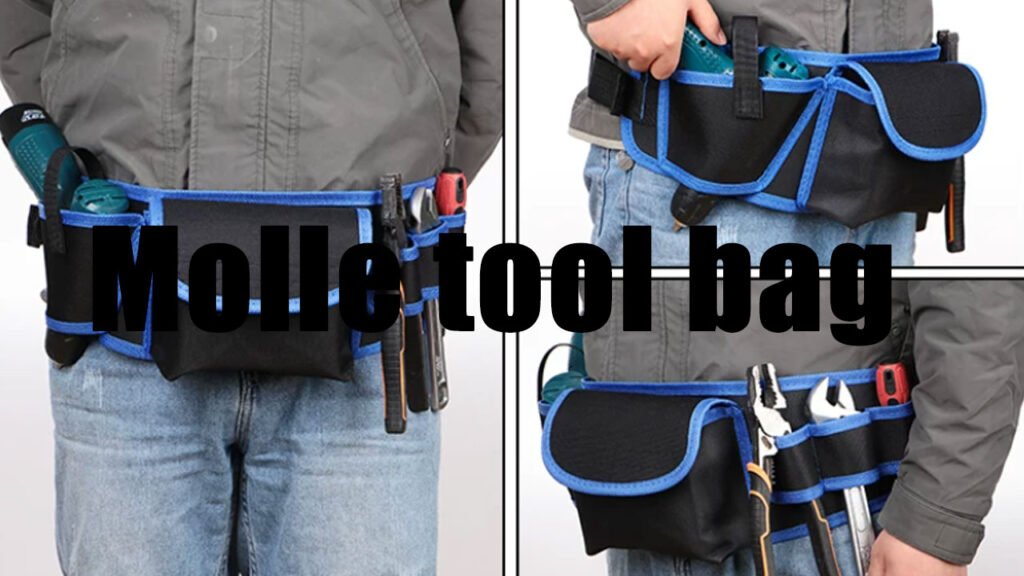
The exterior of the MOLLE tool bag is covered with standardised MOLLE webbing, allowing for the flexible addition or removal of tool pouches and parts pouches according to your needs, offering a highly adaptable design. When using the MOLLE tool bag, you can even adjust its weight as you see fit: simply add only the tool and parts compartments you need when setting out, and during physically demanding tasks such as climbing, detach any tool and parts modules you do not require in advance to reduce the load you carry whilst carrying out maintenance work.
When carrying most repair tools, you need hardly worry about the capacity of the MOLLE tool bag. The external MOLLE webbing allows frequently used tools to be flexibly attached to the outside of the tool bag using hooks, without taking up any internal space, and enabling you to access them without having to open any compartments.
| Usage Scenario | MOLLE Tool Bag Type | Features of Tools to Carry |
| Tool expansion & additional storage | Basic MOLLE Tool bag | Small tools such as screwdrivers, bits and small spanners; compatible for external attachment to backpacks or tool belts |
| Power circuit inspection & patrol work | Electrician MOLLE Tool bag | Voltage testers, wire strippers and small insulated hand tools; instant access to free both hands |
| Outdoor emergency maintenance & repair | MOLLE First Aid Tool bag | First-aid supplies and compact emergency tools; quick-access design suited for sudden emergency scenarios |
| Mounting heavy hardware fittings | Heavy Duty MOLLE Tool bag | Heavy pliers, hammers and spanners; reinforced webbing delivers strong load-bearing capacity to prevent slipping off |
| Combined carrying of multiple tool sets | Tactical MOLLE Utility bag | A wide range of maintenance tools and spare parts; modular combinable design for flexible storage expansion or reduction as needed |
Although the MOLLE tool bag is highly adjustable, the gaps in the external webbing are prone to trapping debris such as wood shavings, cement dust, sand and gravel on construction sites, and cleaning the dirt from these gaps can be rather tedious.
If your project clients require a more flexible solution for carrying tools, or need to work frequently at different repair sites where the exact number of tools to be carried is never certain, then a MOLLE tool bag which can be flexibly adjusted and allows for external attachment even when the internal compartment is full will meet their needs in any situation.
Difference Summary: All Tool Bag Types
By now, you should have a general understanding of the features of each type of tool bag, but you may find it a bit confusing when comparing them all. I have therefore put together a comparison table to help you quickly summarise the pros and cons of each type, as well as the differences in storage, portability and suitable usage environments; this can serve as a reference when purchasing for your projects.
| Tool Bag Type | Core Features | Main Drawbacks | Applicable Scenarios |
| Small Tool Bag | Compact and lightweight; multi-layer divided pockets for storing small tools; various styles (zipper / waist pouch / single shoulder); hands-free design | Low load-bearing limit; cannot hold large heavy tools such as electric drills | Simple home maintenance, light-duty on-site inspection, high-altitude construction work, storage of portable small tools |
| Tool Tote Bag | Cylindrical large capacity; fully open top without zippers for fast access; rigid support base for stable placement; neatly divided internal slots | Open top without cover, prone to moisture on rainy days; bulky size, only portable by hand, inconvenient to carry around | Construction site work, on-site plumbing, electrical and carpentry jobs, auto repair shops, warehouse equipment maintenance, staff uniform distribution for engineering companies |
| Rolling Tool Bag | Built-in wheels + retractable pull rod for labor-saving transport of heavy items; large capacity with multiple compartments; reinforced base for heavy loads; rubber wheels adapt to trenches and stairs | Bulky overall size, hard to steer through narrow passages; wheels easily jammed with sawdust and sand, requiring regular cleaning | Long-distance transport of complete tool sets, frequent job site relocation, storage of full auto repair tool kits, power engineering operations |
| Zipper Tool Bag | Full zipper sealing design to prevent dust, water and small parts from falling out; protects precision instruments; slim lightweight design saving storage space | Zippers are vulnerable wearing parts; hard to close with irregular large tools; repeated zipper opening/closing reduces work efficiency | Precision instrument storage, electronics maintenance, classified storage of screws and drill bits, electrician door-to-door repair, dust-proof tool storage on construction sites |
| Tool Backpack | Double shoulder straps evenly distribute weight for fatigue-free long-time carrying; fully hands-free; flexible for climbing ladders; multi-layer compartments can hold tools, laptops and work uniforms together | Must take off backpack to fetch main compartment tools, inconvenient for quick on-site access; stuffy back in summer; hard to turn around in narrow confined spaces | Electrician door-to-door inspection, security maintenance, network wiring, outdoor equipment patrol, high-altitude work, uniform bulk distribution for enterprises |
| Hip Tool Bag | Waist-hung design for fully free hands; instant tool access without shaking when bending or squatting; modular design for flexible combination matching | Extremely limited capacity, unable to hold large tools; long single-side hanging causes waist soreness; small items easily slip and get lost from open top | High-altitude wiring, carpentry ceiling installation, decoration site construction, property maintenance, high-altitude operations, portable storage of scattered small tools |
| MOLLE Tool Bag | Standard external MOLLE webbing for modular free expansion; combinable for external hanging; flexible capacity adjustment as needed; wear-resistant fabric with tear resistance | Webbing gaps easily trap sawdust, sand and stones, difficult to clean; heavy self-weight with higher bulk procurement cost | Outdoor emergency rush repair, security patrol, weak current communication maintenance, rescue engineering, modular tool management, multi-scenario field service |
Tip: If your client needs a quick overview of the differences between each type of tool bag, you can simply send them this table for a quick reference. This will help speed up your project and enhance your client’s perception of your brand’s expertise in tool bags.
Industrial Materials & Production Standards for Tool Bags
The choice of materials directly determines the appearance, durability, base weight and suitability of tool bags for various scenarios. No user wants to find, whilst carrying out maintenance work, that their tool bag has torn under the weight of the tools, thereby hindering the progress of the repair. Now, I will guide you through the commonly used materials and reinforcing components in tool bags to clarify their load-bearing capacity and service life.
Material Range

Some materials are inherently capable of withstanding heavier loads than others, although this does come at the cost of increased weight; others possess natural water-repellent properties but are less durable than their counterparts. I have compiled a table listing common materials and their characteristics, which will allow you to see how each material performs in practice at a glance.
| Fabric Material | Applicable Tool Bag Types | Core Features | Service Life |
| 600D Oxford Fabric | Small tool bags, hip tool bags, basic tool backpacks | Lightweight, low procurement cost; basic water-repellent surface; soft and portable fabric; average load capacity, only suitable for light small tools | 1~2 years for light daily use; 6~10 months for frequent heavy-duty construction site use |
| 1680D Heavy-Duty Oxford Fabric | Tool tote bags, rolling tool bags, heavy-duty tool backpacks | High-density thick weave, wear-resistant and tear-resistant; strong load capacity, rigid bag shape that resists deformation; built-in waterproof coating, ideal for high-intensity construction site work | 2~3 years for frequent heavy construction site use; 3~4 years for light-to-medium daily field service use |
| Cordura Tactical Nylon | MOLLE tool bags, heavy-duty electrician backpacks, outdoor emergency repair tool bags | Military-grade wear and scratch resistance, anti-aging, excellent waterproof performance; extremely high fabric tensile strength, supports large amounts of modular attachments, suitable for harsh outdoor field environments | 3~5 years for high-intensity outdoor/construction site use; over 5 years for light transportation and storage use |
| Heavy Canvas | Tool tote bags, carpenter crossbody bags, vintage small tool pouches | Thick and tough, strong tear resistance; breathable fabric with rough texture; poor native waterproof performance, prone to mold and damp damage when soaked | 2~3 years for indoor medium-duty maintenance use; around 1 year in humid construction site environments |
| PU Artificial Leather | Zipper small storage pouches, precision instrument mini bags | Smooth fully waterproof surface, neat and attractive appearance; lightweight, stiff silhouette; poor wear resistance, prone to cracking and peeling under long-term heavy extrusion | Around 1 year for light use in clean indoor environments; only 3~6 months for construction sites and outdoor exposure |
| EVA Composite Hard Shell Fabric | Cushioned zipper instrument bags, precision meter storage cases | Rigid integrated shock-absorbing structure, shock and collision resistant, fully waterproof and dustproof; permanently shaped without deformation; no ductility, cannot store irregular oversized tools | 3~5 years for indoor instrument storage; 1.5~2 years for workplaces with frequent collisions |
| PVC Coated Fabric | Garden tool totes, outdoor waterproof tool bags | Fully waterproof and impermeable surface, directly washable for mud and stains; stiff fabric texture, prone to cracking after long-term bending | 1~2 years for light outdoor garden use; 6~12 months under long-term sun exposure |
Note: The higher the Daniel D value of a fabric, the thicker the yarn and the greater the density; for every 500D increase in fabric thickness, the service life of the toolkit under normal operating conditions can be extended by approximately 0.8 to 1 year (canvas, PU, EVA and PVC do not have a Daniel D standard; their service life is determined solely by the properties of the material itself and does not follow the rule of service life increase based on the D coefficient).
Scope of Reinforcement Accessories
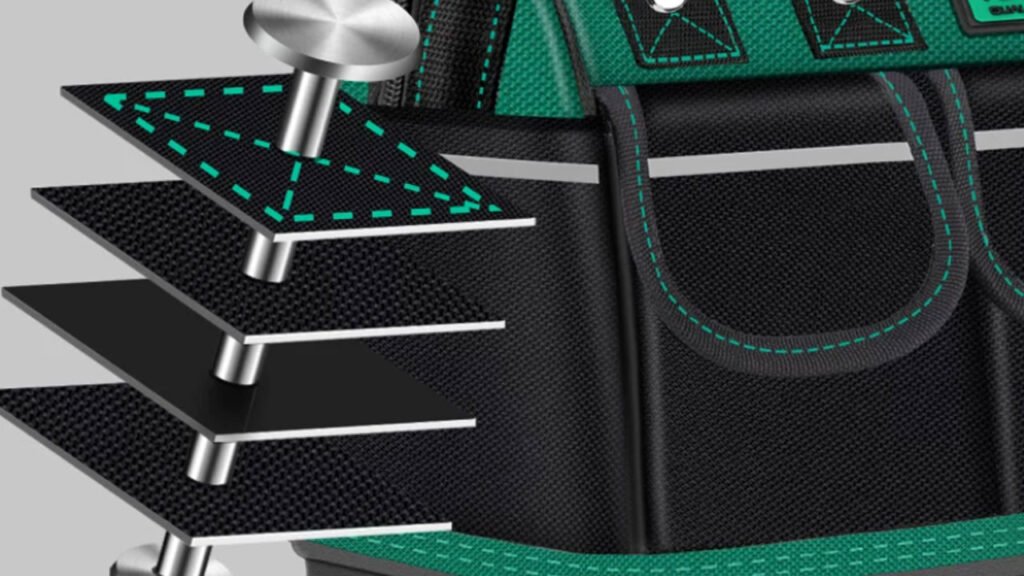
The durability of tool bags is not determined solely by the fabric; often-overlooked elements such as the handles, shoulder straps, base reinforcement and reinforced stress points also play a crucial role in determining their lifespan. However, when projects are delivered, many clients focus primarily on the main fabric and tend to overlook these details, resulting in numerous tool bags where the storage capacity remains intact but the handles and shoulder straps are severely damaged, necessitating replacement.
| Reinforcement Accessory Name | Application Position | Craftsmanship & Core Features |
| Reinforced Webbing Handle (PP / Nylon Webbing) | Top handle position of Tool Tote, Rolling Tool Bag & small zipper tool pouches | 1. Double / triple layers of webbing overlapped and stitched;2. Bar-tack reinforcement at stress points (dense backstitch);3. Nylon webbing features higher tensile strength than PP webbing, stronger load capacity and anti-aging crack resistance;4. Wide webbing disperses hand pressure for comfortable heavy-load carrying. |
| Widened S-shaped Cushioned Shoulder Strap | Tool Backpacks, crossbody Small Tool Bags & single-shoulder maintenance pouches | 1. Outer wear-resistant nylon webbing filled with high-elastic sponge inside;2. Full surrounding bar-tack reinforcement at both ends where straps connect to the bag body;3. Ergonomic S-shaped contour fits shoulders firmly without slipping under load;4. Adjustable length with chest buckle to distribute back load. |
| Tool Belt Webbing (MOLLE Webbing) | Outer mounting positions of Hip Tool Bags & MOLLE tactical tool bags | 1. High-density woven standard MOLLE webbing with unified mold fit for all auxiliary pouches;2. Full-length webbing sewn closely to the bag body with segmented bar-tack fixation;3. Wear & scratch resistant, compatible with external hanging plier sets & small parts pouches without occupying internal bag space. |
| PVC / PE Rigid Base Support Board | Bottom of Tool Tote, Rolling Tool Bag & heavy-duty double-shoulder tool backpacks | 1. High-density rigid sheet with sealed edge stitching wrapped inside fabric interlayers;2. Full perimeter backstitch reinforcement on the bottom to prevent board shifting;3. Supports upright bag shape without sagging, disperses pressure from heavy tools on bottom fabric to reduce wear & bottom cracking. |
| Bar-Tack Reinforcement Craft for Stress Points | Root of handles, strap joints, belt hanging loops & side stitching seams of bag bodies | 1. Dense double-thread back-and-forth stitching to form rectangular / oval reinforced zones;2. Bar-tack standard equipped for all concentrated stress points to prevent fabric tearing from concentrated pulling force;3. Lower D count fabric requires longer bar-tack length and more stitching loops to boost strength. |
| Metal D-ring / Heavy-Load Plastic Buckle | Side edges of backpacks, waist pouches, MOLLE auxiliary pouches & crossbody bag connecting positions | 1. D-rings made of die-cast thickened metal, fixed to bag webbing via impact riveting;2. Heavy-duty thickened plastic snap buckles with secure locking, supporting 20–50kg load capacity;3. Quick disassembly for shoulder straps & external tool sets, adaptable to multi-scenario switching. |
| Reinforced Wear-Resistant Corner Patch (PVC / Wear-Resistant Oxford Fabric) | Four bottom corners of Tool Tote, Rolling Bag & construction site tool bags | 1. Double-layer wear-resistant lining bonded to corners, full wrapping stitching around bag corners;2. Corners suffer maximum ground friction; patches isolate main fabric from direct sand & gravel abrasion, drastically reducing corner fraying & bottom leakage. |
| Double-Layer Splicing Reinforcement Fabric | Side splicing seams of bag bodies, both sides of open-top totes & trolley pull rod channels of rolling bags | 1. An extra layer of matching thickened Oxford lining attached inside splicing positions;2. Double fabric layers combined and sewn with double-thread stitching to disperse transverse tension from pulling;3. Avoid seam thread breakage and bag body cracking after long-term heavy load storage. |
| Rolling Bag Metal Bearing Bracket | Bottom wheel mounting positions of Rolling Tool Bags | 1. Thickened galvanized metal brackets riveted and fixed to the bottom rigid support board;2. Webbing buffer attached where brackets contact fabric to prevent metal edges from cutting fabric;3. Bearing wheels feature strong load capacity; brackets stay undeformed and crack-resistant under heavy-item pulling. |
Product quality is often the key factor in determining a brand’s image and reputation. If you wish for your project brand to gain recognition in the tool bag industry, you must pay close attention to these reinforcement details. Generally, the lower the denier (D) value of the fabric, the more it relies on the aforementioned reinforcement components to ensure overall strength; thickened fabrics with a high denier value, when paired with a full set of reinforcement components, can extend the product’s service life by more than 50 per cent.
Note: Low cost kits currently available on the market generally omit corner patches, reinforcement stitching and rigid base panels. Whilst the fabric remains intact in the short term, the handles and corners are highly prone to damage, resulting in an extremely high rate of repairs. Therefore, if your brand can prioritise these features, this could serve as a market niche; by offering robust, durable quality and designs tailored to specific usage scenarios, you can stand out in a competitive market.
Tool Bag Project Case Recommendations
Carry out market sales
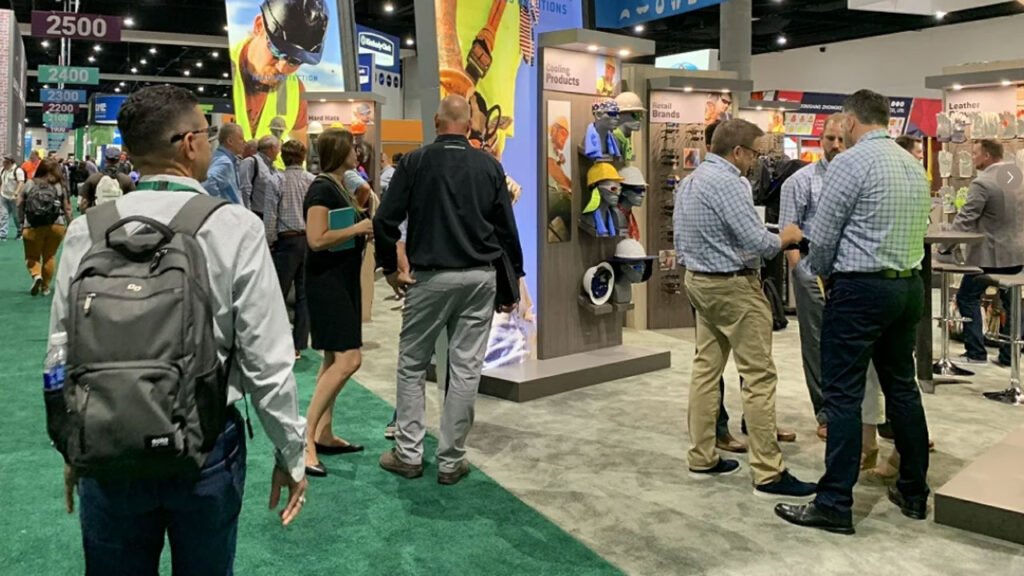
When selling retail, you can decide which categories of tool bags to source based on the characteristics of your brand’s target audience. If your online shop caters to a wide range of professional sectors—including construction, carpentry, electrical work and engineering—we recommend that, prior to procurement, you prioritise ‘durability’ (with a focus on 1680D abrasion-resistant fabric) and incorporate ‘brand-specific features’, such as MOLLE systems and waterproof compartments; this will help your brand stand out from the competition in a crowded market through its user-friendly design.
Allocation of Engineering Tasks

As large-scale engineering projects typically require staff from a variety of trades to work simultaneously, it is important to clearly define your project category and the types of maintenance staff required before procuring equipment, and to allocate resources according to the actual scope of work (you may print your brand logo in a prominent position during procurement to enhance your company’s image).
- Electricians:Specialized Electrician Tool Backpack, Zipper Tool Bag, Hip Tool Bag, MOLLE Tool Bag
- Carpenters:Tool Tote bag、Heavy Duty Hip tool bag、Small tool bag
- Plumbers:Rolling tool bag、Large Tool Backpack、Waterproof Garden Tool Tote
- Auto Repair Technicians :Heavy Duty Rolling tool bag、Multi-pocket Tool Tote bag
- Equipment Maintenance Technicians:Padded Zipper tool bag、Tool Backpack、MOLLE bag
- Construction Site Workers:1680D Tool Tote bag、Small tool bag
- Garden Maintenance Workers:PVC Waterproof Garden Tool Tote, Basic Hip Tool Bag
- Laboratory Maintenance Engineers:EVA Zipper tool case、Small zipper tool pouch
- Rescue & Construction Workers:MOLLE tactical tool bag
Training Institute Promotional Gifts
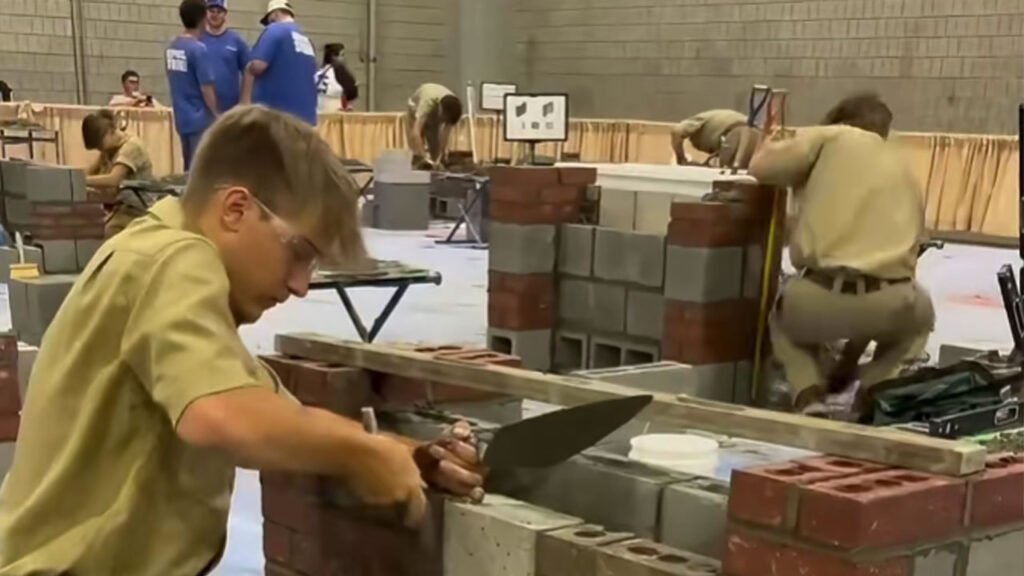
When selecting free giveaways for your organisation’s recruitment campaigns, procurement costs should be a key consideration. Therefore, practical options such as small tool bags, polyester tool bags and belt-mounted tool bags (which can be worn with just a single tool bag) – which require fewer materials, offer flexibility and are cost-effective – should be prioritised. When purchasing these items, ensure your organisation’s logo is printed prominently on the surface to generate ongoing exposure for your training organisation whilst trainees are commuting or carrying out maintenance work.
Avoiding Common Mistakes When Purchasing or Customising Tool Bags
Ignore load-bearing capacity when carrying tools
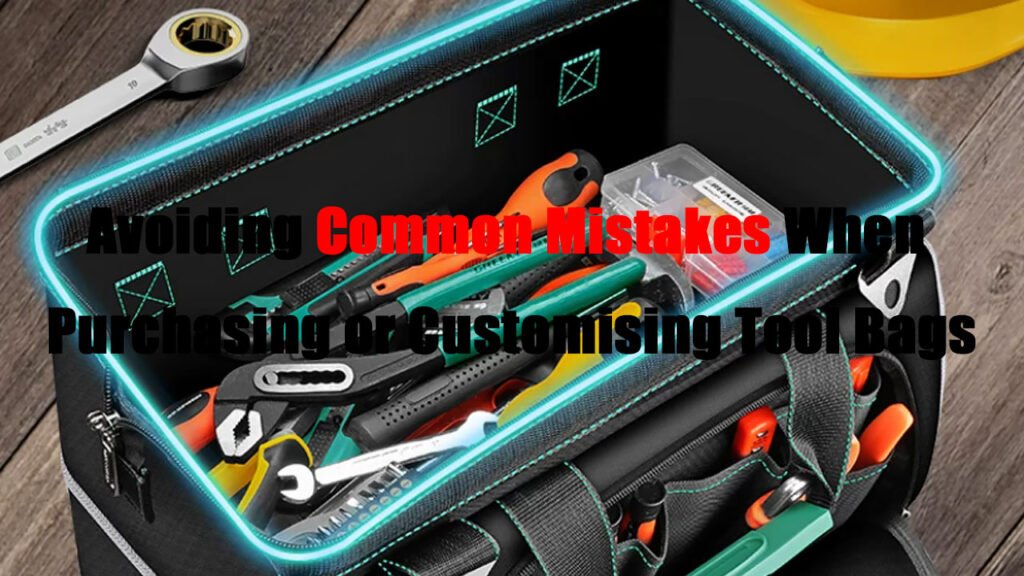
When selecting tool bags, priority should be given to the volume and weight of tools that project staff need to carry during day-to-day maintenance work. If the weight and quantity exceed the bag’s load capacity, there is a high risk of the handles breaking, the seams splitting and the base becoming misshapen during use, which would hinder normal maintenance operations. Therefore, prior to commencing project procurement, usage data should be collated in consultation with the end-users.
Ignore protective features such as water resistance, abrasion resistance and tear resistance
Your project clients may encounter standing water, uneven ground, knocks and scuffs against walls, as well as exposed nails and sharp objects that could cause scratches or tears whilst carrying out their work. These unforeseen circumstances can all affect the performance of tool bags and the condition of the tools inside. Therefore, when purchasing tool bags, it is important to consider their waterproofing, dustproofing and tear-resistance.
The layout of the divided pockets is impractical, and tools are stored haphazardly
Illogically arranged pockets can make retrieving and storing tools particularly cumbersome, and an excessive number of internal fabric pockets can actually reduce the storage space in the main compartment. Therefore, during the customisation stage, please inform us of the intended use of your project, the type of tradespeople involved and the tools they commonly use; we have extensive experience in designing a practical layout for you. The practicality of the pocket layout is more important than the number of pockets; consequently, a higher number of pockets does not necessarily make the bag more practical to use.
How to Choose Tool Bags
Having read this far, I imagine you now have a deeper understanding of the different types, features and materials of tool bags; however, when making a choice, you may still be concerned that a wrong decision could result in the bag being unsuitable for your project. So, here I will teach you a professional ‘6-step method for choosing tool bags’ to help you make the right decisions regarding wholesale, customisation and procurement.
Assessing usage requirements
Do your project staff need a bag with a large capacity and high load-bearing capacity, or one that remains portable so they can access frequently used tools at any time? Before you start purchasing, clarify your project’s specific requirements and make your choice based on these, rather than simply on appearance and price.
- When you need to carry a large quantity of heavy hardware and complete sets of tools, and your arms ache from carrying them by hand for long periods — Rolling Tool Bag
- When climbing ladders, working on suspended ceilings or at height, you need to keep your hands free whilst having frequently used small tools within easy reach — Hip Tool Bag / Tool Backpack
- Construction sites are dusty and full of wood shavings and gravel, making it easy for small screws and drill bits to scatter and get lost — Zipper Tool Bag
- On construction sites, tools need to be accessed quickly; repeatedly opening and closing zips wastes time — Tool Tote Bag
- Frequent outdoor work and field assignments in rainy weather can lead to tools getting wet and rusting, or instruments being damaged by damp — PVC-coated fabric / Cordura nylon waterproof tool bag
- The number of tools required varies; sometimes you need to travel light with just a few items, whilst at other times you need a full set of accessories — MOLLE Tool Bag
- Carrying a multimeter, test probes and precision instruments, which are prone to damage from knocks and bumps during bumpy transport — Padded Zipper Tool Case
- For long-term, heavy-duty use on construction sites, where standard bag corners, handles and shoulder straps are highly susceptible to wear and tear — Full range of tool bags featuring comprehensive reinforcement
- For routine on-site repairs and simple household maintenance, where a large bag isn’t needed and portability and compactness are key — Small Tool Bag
- For carrying tools, a laptop and workwear, balancing commuting and field work — Tool Backpack
- For bulk procurement in engineering projects, where a uniform look is required to distinguish between different work crews — Customised tool bag solutions across all categories
- For work in cramped machine rooms, suspended ceilings and narrow corridors, where large tool bags make it difficult to turn around — Hip Tool Bag + Small Tool Bag
Choose based on the nature of the job
Organise your project clients’ occupational information and make selections based on their job requirements. For example, a carpenter who needs quick on-site access to hammers, set squares and nails, and who frequently performs climbing work, could be equipped with an open-top tool tray, a heavy-duty carpenter’s waist bag and a small zipped accessory pouch. Security engineers, on the other hand, need to carry network cable cutters, testing equipment and a laptop whilst moving around the confined spaces of a server room with ease; they can be equipped with a multi-functional rucksack-style tool bag, an EVA-padded zipped equipment case, MOLLE external pouches and other options tailored to specific trades:
| Occupation & Trade | Core Demands | Compatible Tool Bags |
| Electrician | Lightweight, dustproof & waterproof; hands-free design for high-altitude work | Tool backpack, hip tool bag, small zipper pouch |
| Carpenter / Decoration Worker | Fast tool access, wear-resistant, convenient storage for small hardware parts on person | Open-top tool tote, carpenter hip tool bag |
| HVAC / Plumber | Accommodate long-handled tools, waterproof & moisture-proof, labor-saving transport | Rolling tool bag, waterproof tool tote |
| Auto Repair Technician | Large capacity, heavy load-bearing, storage for full sets of heavy-duty sockets | Heavy-duty rolling tool bag, multi-compartment tool tote |
| Low-Voltage / Security Engineer | Shockproof protection for instruments, fits laptops, compact & flexible | Tool backpack, padded instrument zipper bag |
| Garden Maintenance Worker | Waterproof, stain-resistant, easy to rinse, lightweight | Waterproof garden tool tote, basic hip tool bag |
| Construction Site Worker | Wear-resistant & tear-resistant, large capacity, cost-effective | 1680D heavy-duty open-top tool tote |
| Outdoor Emergency Repair / Rescue Personnel | Modular expandable capacity, external hanging compatible, suitable for harsh outdoor environments | MOLLE modular tool bag |
| Precision Instrument Engineer | Shockproof, dustproof, anti-collision design to protect precision equipment | EVA padded zipper tool case |
Working Environment Reference Selection
The tool bags used in dust-free indoor environments will differ from those used on outdoor construction sites where there is standing water and dust. You can organise your tool bags according to the specific conditions of the site where they will be used:
- On-site construction — wear- and tear-resistant, open-top design for quick access, reinforced edges and corners, high load-bearing capacity
- Fixed workstations in workshops — extra-large capacity, rigid base, multiple compartments, capable of holding heavy-duty socket wrenches
- High-altitude / outdoor electrical emergency repairs — Modular external attachment, waterproof and resistant to ageing, ergonomic back carry, multi-tier organisation
- Data centre low-voltage systems and precision instrument commissioning — Internal shock absorption, fully zip-sealed dust protection
- Long-distance, multi-site fieldwork — Wheeled pull-handle, large capacity, dual-use carry/pull design, reinforced load-bearing
Check Matching of Tool Size and Weight
Organise the tools commonly used by your project clients and categorise them into tool bags according to their weight. This makes it easy to identify their specific uses and avoids situations where, due to incorrect pairing, tools cannot be carried or the weight is too great to support, rendering them unusable in practice.
- Small, lightweight tools (0.05 kg–1.5 kg) — voltage tester, screwdriver set, craft knife, tape measure, wire strippers, mini needle-nose pliers, drill bits and screwdriver bits, tweezers, small terminal pliers
- Medium-sized and medium-weight tools (1.5 kg to 6 kg) — hand-held drills, lithium-ion impact drills, adjustable spanners, pipe cutters, medium-sized pipe wrenches, heat fusion machines, angle grinders, socket sets, crimping pliers
- Heavy-duty tools (6 kg and above) — hammer drills, electric pickaxes, heavy-duty air compressors, large socket wrenches, industrial-grade cutters, large pipe wrenches, heavy-duty automotive torque wrenches, heavy-duty hydraulic tools
Consider how often the tool is used
Tools that are used frequently and are compact in size can be carried in a small tool bag or a belt-mounted tool bag, whilst tools used only once or twice at a time can be stored in a tool tote bag and taken out only when needed. You can therefore choose which tool bags to use based on how often you use the tools:
| Tool Usage Frequency | Tool Access Characteristics | Matching Tool Bag Solutions |
| High-frequency & Frequent Use | Tools need quick instant access; avoid time wasted on zipping/unzipping or taking off bags; tools stay within reach during the whole operation. | Hip tool bagOuter hanging pockets on open-top Tool ToteMOLLE external auxiliary pouches |
| Occasional Use | Dust-proof & loss-proof storage; balance protective storage and medium access efficiency; no need to carry the bag close to the body all the time. | Small zipper tool pouchFront zippered compartment of tool toteQuick-access front pocket of tool backpack |
| Low-frequency Single Use | No need for instant access; prioritize large-capacity storage and protective storage, without occupying outer quick-access compartments. | Main inner compartment of Tool BackpackDeep divided storage compartment of Rolling tool bagSmall sealed storage pouches matched with large bags |
Frequency of movement when used in combination
In situations such as renovation work and electrical repairs, where movement and climbing are required, the ability to move around freely and keep both hands free are key requirements, whereas in fixed-location scenarios such as maintenance in indoor workshops, the ability to carry a large quantity of various tools is more important.
- For climbing work — Hip tool bag, Tool Backpack and MOLLE modular pouches allow you to keep both hands completely free whilst securing frequently used small tools externally, so they can be accessed without having to remove the bag.
- For frequent movement within a room — Small tool bag (cross-body) and lightweight tool backpacks; their compact size allows you to move freely around the room and navigate stairs with ease.
- Working at a fixed location — Tool Tote (open-top tote) and Rolling Tool Bag: these can hold a full set of heavy-duty tools in one go, eliminating the need to repeatedly open and close zips when retrieving items, ensuring efficient tool access. The wheels allow the bag to be pulled along upon arrival at the worksite, saving energy.
- Frequent changes of worksite — Wheeled Tool Backpack (can be pulled or carried on the back) and MOLLE tactical modular tool kit. Featuring a dual-purpose design with wheels and a rucksack strap, it minimises effort when pushing or pulling heavy loads over long distances; in confined spaces, it can be carried on the back and fitted with additional external tool pouches that can be freely added or removed to adjust the load as required.
Nowadays, you can find tool bags that are perfectly suited to virtually any usage requirement or work scenario, allowing your project staff to focus more fully on repair and construction work rather than spending time and energy organising and searching for tools.
Note: Before you begin your project procurement, you can request a few free samples of tool bags from us based on your project requirements (we will also provide guidance on selecting the right type of tool bag), and once you have received the samples, you can pack your tools into them to test their usability; once you are completely satisfied, you can then proceed with bulk procurement.
How to Maintain Tool Bags to Extend Their Lifespan
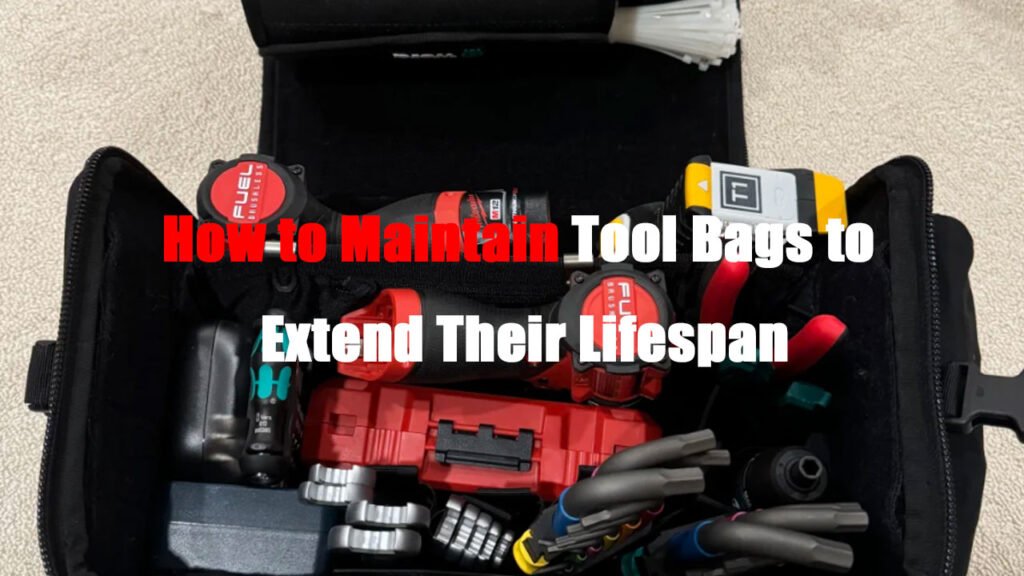
Your project clients will certainly want the tool bags they receive to be durable and to allow them to store their tools easily and safely whilst travelling, thereby improving their work efficiency. However, all of this depends on maintaining good care habits for the tool bags to maximise their service life. Let’s now look at the care instructions for these different types of tool bags; you can provide these to your project clients as a care guide.
Safety precautions when using tool bags on a daily basis
By selecting tool bags appropriately according to the type and weight of the tools carried, their service life can be effectively extended, thereby preventing premature wear caused by the pressure of heavy loads and scratches from sharp objects.
- Tool weight guidelines: When storing heavy tools, such as hammer drills and large pipe wrenches, prioritise placing them on the hard-padded base; avoid concentrating weight on one side to prevent the stitching and handles from tearing, and estimate the weight in advance to avoid overloading and excessive pressure.
- Separate storage of sharp tools: Drill bits, craft knives and sharp metal objects should be placed separately in small zipped pouches; they must not come into direct contact with the main fabric to prevent tearing. If a zipped pouch is full and must be placed in the main compartment, wrap it in kraft paper, fabric or tissue paper before placing it inside.
Please note: Damage to tool bags caused by exceeding their weight capacity due to overloading is the most common issue. This can be avoided in practice by carrying an additional tool bag to distribute the load, thereby preventing damage caused by overloading a single bag.
Cleaning & Maintenance: Remove Residual Stains from Tool Bags
At construction sites, your tool bags can easily become stained with dust, wood shavings, sand, gravel, and other debris. Cleaning these stains after work helps keep your tool bags looking their best, in good condition, and ensures they last longer.
- Oxford Cloth / Nylon: Use a brush to sweep away wood shavings, cement, sand, and gravel, and to remove debris from the gaps in the MOLLE webbing. For stubborn stains, use warm water and a neutral detergent, and gently scrub with a soft brush. Do not use bleach. Hang to dry in the shade; do not dry in direct sunlight or in a dryer (this will accelerate fabric aging and cause the waterproof coating to fail).
- Canvas Material: This can also be cleaned directly with a brush. After cleaning, apply a waterproof spray to the canvas to prevent it from becoming damp or moldy due to prolonged exposure to water during future use.
- PU/PVC synthetic leather: Simply wipe stains with a damp cloth; do not soak or wash with water. You may also apply leather conditioner periodically to prevent drying, cracking, and peeling.
- EVA Hard-Shell Instrument Case: Wipe with a damp cloth; avoid using organic solvents or strong cleaning agents, as they may corrode the cushioning layer.
Note: Tool bags made of almost any material are susceptible to strong, corrosive cleaning agents, which can cause serious damage to the material. Not only do these agents fail to properly maintain the bag, but they also directly shorten its service life.
Tool Bags: Hardware Maintenance
After prolonged use, tool bags typically begin to show cracks and damage first at the seams and stress points. Regularly inspecting these areas and making repairs can effectively extend their service life.
- Handles and Shoulder Straps: Regularly inspect the reinforcement stitching; if any threads come loose, mend them promptly (you can contact a local tailor for repairs).
- Corner Patches: If wear and tear occurs, you can attach wear-resistant patches yourself to protect against friction from the ground (a tailor can also handle this).
- Metal D-rings and wheel brackets: Regularly wipe off mud and sand, and apply a small amount of rust-preventative oil to prevent rust and jamming; clean the wheels of tangled threads, sand, and gravel to ensure smooth pushing and pulling
- Zippers: If the zipper gets stuck, lubricate it with zipper wax or soap to prevent damage to the teeth caused by forceful pulling; if the zipper is not used for an extended period, open and close it periodically to prevent the sliders from warping
Note: When maintaining hardware components, if your client isn’t able to handle it, you can find a nearby tailor’s shop—they can handle the maintenance of hardware components for almost any tool bag.
Cleaning and maintenance: removing residual stains from tool bags
Storage habits have a direct impact on the lifespan of tool bags. Although the damage may not be noticeable in the short term, prolonged exposure to damp conditions or keeping the tool bags in a compressed state when not in use can cause the material to become damp and mouldy, and the outer surface to crease, wrinkle and crack.
- Remove all items from the interior: check the inner compartments and the gaps between the webbing for dust and wood shavings; avoid subjecting the fabric to prolonged strain from heavy objects, and prevent metal parts from oxidising and corroding the fabric; release any tensile stress in the fabric.
- Shape and stabilise the internal filling to prevent crushing, creasing or cracking: loosely stuff each compartment with waste paper or soft cloth to support the bag’s structure and maintain its shape; gently pull the zip to close it, allowing the shoulder straps to lie flat; remove and store any detachable pouches separately to prevent prolonged collapse, which can cause repeated folding of the fabric, fibre breakage and the formation of holes.
- Storage environment and stacking precautions: Store in a cool, dry place, away from damp corners and windows exposed to direct sunlight. Do not stack heavy objects on top of the bag. If the bag is to be left unused for an extended period (more than one month), remove it every two weeks to air it out.
Please note: If condensation appears on the surface of the stored tool bags, this indicates that the current environment is too humid. You should wipe them dry immediately, place them in a well-ventilated area to air-dry naturally, and move them to a different storage location.
Conclusion: Well-maintained tool bags can help your project clients work more efficiently every time they use them, whilst reducing the hassle of organising and searching for tools. Furthermore, proper maintenance extends their service life, thereby reducing the frequency of replacement purchases and helping to build a positive reputation for your project brand through word-of-mouth.
FAQ
What features should I look for in a heavy-duty tool bag?
First and foremost, you should consider durability (abrasion resistance, load-bearing capacity and tear resistance). The material should be made from heavy-duty fabrics such as nylon or canvas with a denier rating of at least 1200D. It should also feature
- Reinforced base and sides: capable of withstanding the weight of heavy tools
- Structural integrity: maintains structural stability and does not collapse during use
- Well-organised layout: minimises the hassle of searching for tools
What are the best tool pouches for electricians?
As electrical work often involves frequent climbing and moving around, when choosing a tool bag, you should look for one that is easy to carry and can be adjusted flexibly, and which can be customised to suit the number of tools you carry on your waist and your personal preferences regarding materials.
Therefore, hip tool bags and MOLLE tool bags are the best choices.
Bring your project vision to life at 367 Tool Bags Manufacturer
By this point, I believe you have fully grasped how to match the right type of tool bags according to the characteristics of your project requirements, as well as how to maintain and store them properly. A sturdy, durable and easy-to-access tool bag allows your end users to focus more energy on their project tasks and accelerate overall project efficiency. Therefore, if you still have any questions regarding tool bags, feel free to contact us immediately — 367 Tool Bags Manufacturing Factory. Our factory was founded and put into formal production back in 2004, granting us extensive hands-on manufacturing experience accumulated over the years. Simply share your concerns and requirements, and our professional technical team will deliver targeted solutions right away. We are also able to provide free physical samples of all styles of tool bags, so you can inspect every detail of product quality in person, or test-fit your actual tools for a real-world usage experience. Once you confirm that our tool bags satisfy all your project demands, we can provide full OEM & ODM customization services, working hand in hand with you to turn your commercial project vision into tangible reality.